


Hugo de Lantins
Released Album
Vocal
-
-
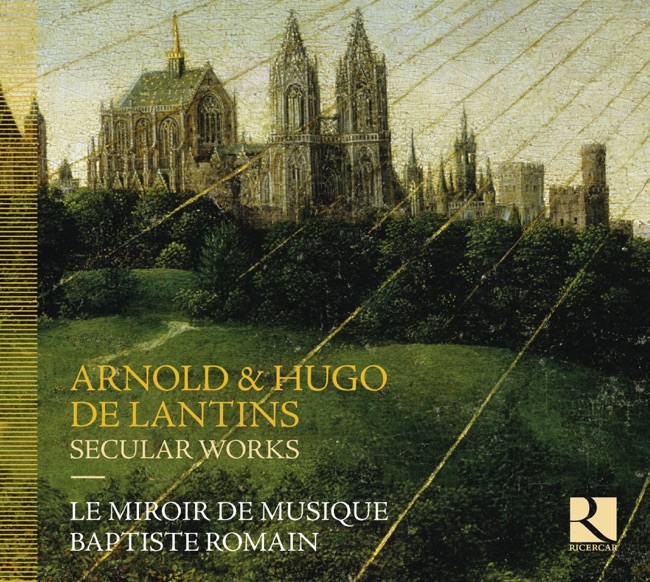 February 26, 2016
 -
 August 28, 2015
Artist Info
Role:ComposerCountry: NetherlandsDeath:1420Period:MedievalGenre:VocalHugo de Lantins was a prominent composer of the early Renaissance period, born in the town of Lantin, Belgium, in the year 1380. Not much is known about his early life, but it is believed that he received his musical education in the region of Flanders, which was renowned for its musical culture during the 14th and 15th centuries. Lantins began his career as a singer and composer in the service of the Duke of Burgundy, Philip the Good, who was a great patron of the arts. He was appointed as a singer in the chapel of the Duke in 1419, and later became the director of music at the court of Burgundy. During his time at the court, Lantins composed a number of works for the chapel, including masses, motets, and chansons. One of Lantins' most famous works is his Missa Verbum Incarnatum, which is a setting of the Ordinary of the Mass. The work is notable for its use of complex polyphonic textures, which were a hallmark of the early Renaissance period. The Missa Verbum Incarnatum is also notable for its use of the cantus firmus technique, which involves taking a pre-existing melody and using it as the basis for a new composition. In this case, Lantins used the melody of a popular secular song as the basis for the mass. Another notable work by Lantins is his motet, Inclina Domine Aurem Tuam, which is a setting of a text from the Book of Psalms. The motet is notable for its use of a canon, which is a technique where two or more voices sing the same melody, but at different times. The use of a canon in Inclina Domine Aurem Tuam is particularly effective, as it creates a sense of musical unity and coherence. Lantins was also known for his chansons, which were secular songs that were popular in the courts of Europe during the Renaissance period. One of his most famous chansons is Belle, Bonne, Sage, which is a love song that is notable for its use of word painting, where the music reflects the meaning of the lyrics. For example, the word "sage" (wise) is set to a more serious and contemplative melody, while the word "bonne" (good) is set to a more lively and upbeat melody. Lantins' music was highly regarded during his lifetime, and he was considered to be one of the leading composers of his time. His music was performed throughout Europe, and he was particularly popular in Italy, where his music was highly influential on the development of the Italian Renaissance style. Despite his success, Lantins' life was not without its challenges. He lived during a time of great political and social upheaval, and his career was often affected by the wars and conflicts that were raging throughout Europe. In addition, he suffered from poor health throughout his life, and he died in 1440 at the relatively young age of 60. Despite these challenges, Lantins' legacy as a composer has endured. His music continues to be performed and studied by musicians and scholars around the world, and his contributions to the development of the early Renaissance style are widely recognized. Hugo de Lantins remains an important figure in the history of classical music, and his music continues to inspire and delight audiences today.More....
Recent Artist Music

Copyright Ⓒ 2013 Davinci Finger. All rights reseved
Service Terms & Policy