


Paul Elwood
Released Album
Chamber
-
 January 25, 2019
 -
 March 24, 2017
 -
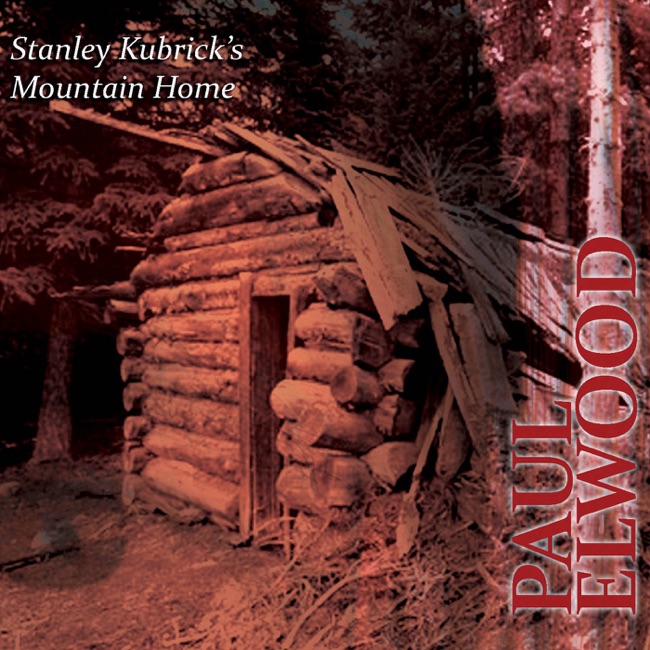 April 26, 2011
Artist Info
Role:ComposerPaul Elwood was a renowned American composer of classical music, born on May 12, 1928, in New York City. He was the son of a music teacher and grew up in a musical family. His father was a pianist, and his mother was a singer. Elwood showed an early interest in music and began playing the piano at the age of five. Elwood's parents recognized his talent and encouraged him to pursue music. He studied piano and composition at the Juilliard School of Music in New York City. He also studied with the famous composer Aaron Copland, who had a significant influence on his music. Elwood's early compositions were influenced by Copland's style, which was characterized by a simple, clear, and direct musical language. Elwood's music was also influenced by the American folk music tradition, which he incorporated into his compositions. Elwood's first major work was his Symphony No. 1, which he composed in 1952. The symphony was well-received and established Elwood as a promising young composer. The work was characterized by its use of folk melodies and its clear, direct musical language. Elwood continued to compose throughout the 1950s and 1960s, producing a series of works that were characterized by their clarity and simplicity. His music was often compared to that of Copland, but Elwood's style was more personal and distinctive. One of Elwood's most famous works is his Piano Concerto, which he composed in 1960. The concerto was commissioned by the pianist Van Cliburn, who premiered the work with the New York Philharmonic Orchestra. The concerto was a critical and commercial success and established Elwood as one of the leading American composers of his generation. Elwood's music continued to evolve throughout the 1970s and 1980s. He began to incorporate more complex harmonies and rhythms into his compositions, while still maintaining his characteristic clarity and directness. One of Elwood's most significant works from this period is his Symphony No. 3, which he composed in 1982. The symphony was commissioned by the Boston Symphony Orchestra and was premiered under the direction of Seiji Ozawa. The work was characterized by its use of complex harmonies and rhythms, as well as its incorporation of elements of jazz and rock music. Elwood continued to compose throughout the 1990s and early 2000s, producing a series of works that were characterized by their emotional depth and complexity. One of his most significant works from this period is his String Quartet No. 2, which he composed in 1998. The quartet was commissioned by the Emerson String Quartet and was premiered at the Tanglewood Music Festival. The work was characterized by its use of complex harmonies and rhythms, as well as its emotional intensity. Elwood's music has been performed by many of the world's leading orchestras and chamber ensembles, including the New York Philharmonic, the Boston Symphony Orchestra, and the Emerson String Quartet. His music has also been recorded by many of the world's leading classical music labels, including Deutsche Grammophon and Sony Classical. Elwood was a recipient of many awards and honors throughout his career, including the Pulitzer Prize for Music in 1963 for his Piano Concerto. He was also a member of the American Academy of Arts and Letters and the American Academy of Arts and Sciences. Elwood died on August 23, 2009, at the age of 81. He left behind a legacy of music that is characterized by its clarity, directness, and emotional depth.More....


Copyright Ⓒ 2013 Davinci Finger. All rights reseved
Service Terms & Policy