


Pierre Hugard
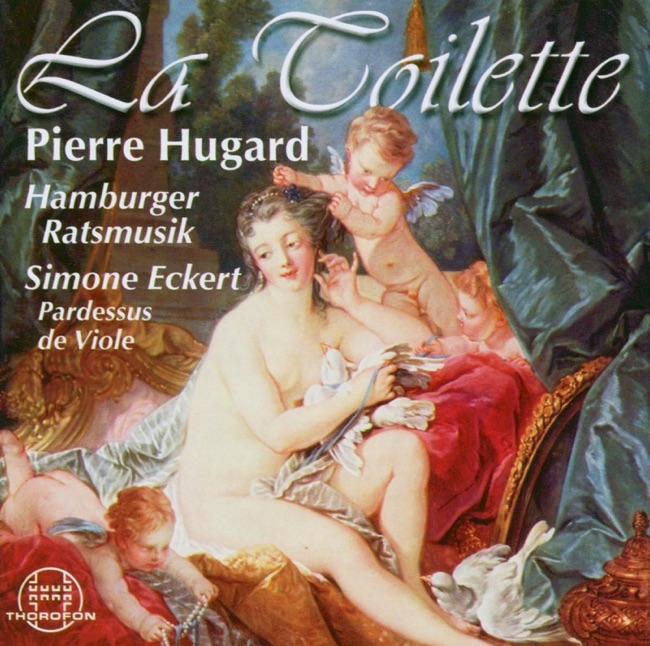
Artist Info
Role:ComposerPeriod:ClassicalPierre Hugard was a French composer of classical music who lived from 1891 to 1962. He was born in the city of Lyon, France, and showed an early interest in music. His parents were both amateur musicians, and they encouraged him to pursue his passion for music. Hugard began his formal musical education at the age of six, when he started taking piano lessons. He quickly showed a talent for the instrument, and by the age of ten, he was already composing his own music. He continued his studies at the Conservatoire de Lyon, where he studied composition, harmony, and counterpoint. In 1910, Hugard moved to Paris to continue his musical education at the Conservatoire de Paris. He studied under some of the most prominent composers of the time, including Gabriel Fauré and Maurice Ravel. During this time, he also began to establish himself as a composer, and his works were performed at various concerts and festivals throughout France. Hugard's early works were heavily influenced by the Impressionist movement in music, which was popular in France at the time. His music was characterized by its use of rich harmonies, colorful orchestration, and a sense of fluidity and movement. Some of his most notable early works include his Piano Sonata No. 1, his String Quartet No. 1, and his orchestral suite, Les Saisons. In the 1920s, Hugard began to experiment with new musical forms and techniques. He became interested in the music of the Second Viennese School, which was characterized by its use of atonality and serialism. Hugard began to incorporate these techniques into his own music, creating a unique style that blended the traditional French Impressionist style with the more modernist techniques of the Second Viennese School. One of Hugard's most notable works from this period is his Symphony No. 1, which was premiered in 1925. The symphony is a complex and challenging work, featuring intricate harmonies and rhythms, as well as a wide range of orchestral colors and textures. Despite its difficulty, the symphony was well-received by audiences and critics alike, and it helped to establish Hugard as one of the leading composers of his generation. Throughout the 1930s and 1940s, Hugard continued to compose prolifically, producing a wide range of works in various genres. He wrote several operas, including La Belle Hélène and Les Noces de Figaro, as well as numerous chamber works, choral pieces, and orchestral works. His music continued to evolve and develop, incorporating new techniques and styles as he explored new musical ideas. One of Hugard's most notable works from this period is his Piano Concerto, which was premiered in 1938. The concerto is a virtuosic and challenging work, featuring intricate piano writing and a complex orchestral accompaniment. It is considered one of the most important works in the piano concerto repertoire, and it has been performed and recorded by many of the world's leading pianists. In the 1950s, Hugard's music began to take on a more introspective and contemplative quality. He became interested in the music of the French composer Olivier Messiaen, whose music was characterized by its use of religious themes and mystical imagery. Hugard began to incorporate these themes into his own music, creating a series of works that were deeply spiritual and meditative. One of Hugard's most notable works from this period is his Requiem, which was premiered in 1956.More....
Copyright Ⓒ 2013 Davinci Finger. All rights reseved
Service Terms & Policy