


Qunihico Hashimoto
Released Album
Symphony
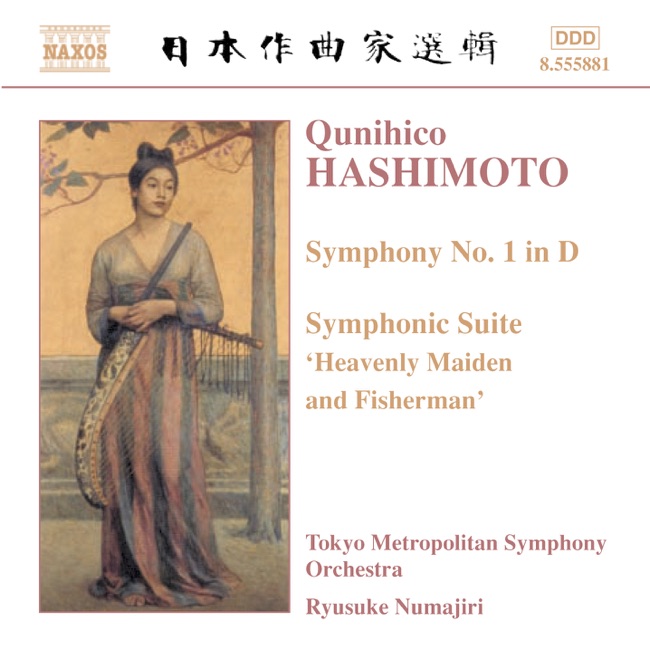
Vocal
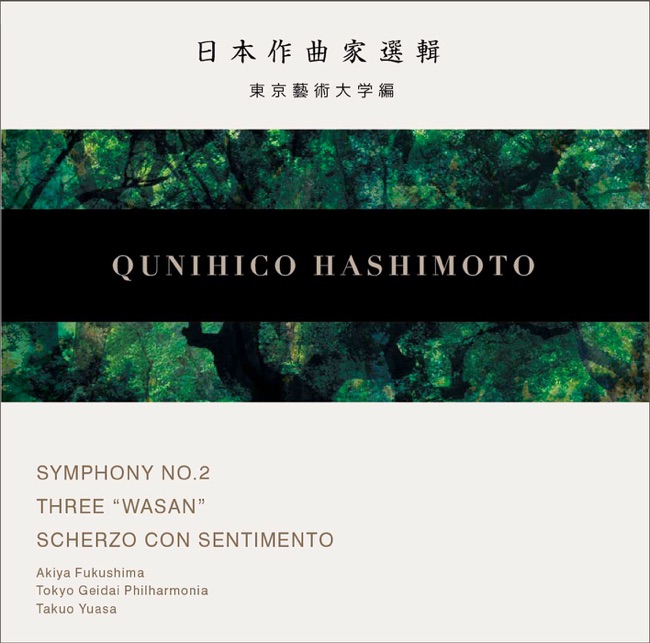
Artist Info
Role:ComposerCountry: JapanBirth:September 14, 1904 in Tokyo, JapanDeath:May 6, 1949 in Kamakura, JapanPeriod:ModernGenre:OrchestralSymphonyQunihico Hashimoto was a Japanese composer who was born on October 17, 1904, in Tokyo, Japan. He was the son of a wealthy businessman and was raised in a family that valued education and culture. From a young age, Hashimoto showed a keen interest in music and began studying the piano at the age of six. He later went on to study composition at the Tokyo Music School, where he was taught by renowned composers such as Saburo Moroi and Akira Ifukube. Hashimoto's early compositions were heavily influenced by Western classical music, particularly the works of German composers such as Bach, Beethoven, and Brahms. However, he also drew inspiration from traditional Japanese music and incorporated elements of it into his compositions. This fusion of Western and Japanese music would become a hallmark of Hashimoto's style. In 1930, Hashimoto won first prize in a national composition competition for his orchestral work "Symphony No. 1." This early success helped establish him as a rising star in the Japanese classical music scene. Over the next few years, he continued to compose orchestral works, including "Symphony No. 2" and "Symphony No. 3," which were well-received by audiences and critics alike. During World War II, Hashimoto was conscripted into the Japanese army and served as a military bandmaster. Despite the difficult circumstances, he continued to compose music and even wrote a symphony while stationed in China. After the war, Hashimoto returned to Japan and resumed his career as a composer. In the post-war years, Hashimoto's music took on a more introspective and contemplative tone. He began to incorporate elements of Japanese Zen Buddhism into his compositions, which led to a more minimalist and meditative style. This can be heard in works such as "Meditation for String Orchestra" and "Sinfonia Nostalgica." One of Hashimoto's most famous works is his "Threnody for Hiroshima," which was composed in 1959 to commemorate the 15th anniversary of the atomic bombing of Hiroshima. The piece is a haunting and powerful meditation on the tragedy of war and the human cost of nuclear weapons. It has since become a staple of the classical music repertoire and is often performed at memorial concerts and events. In addition to his orchestral works, Hashimoto also composed chamber music, choral music, and film scores. He wrote the music for several Japanese films, including "The Ballad of Narayama" and "The Human Condition," both of which were directed by the acclaimed filmmaker Masaki Kobayashi. Hashimoto continued to compose music until his death in 1949 at the age of 85. His legacy as a composer is one of innovation and experimentation, as he sought to fuse the traditions of Western classical music with the rich cultural heritage of Japan. His music continues to be performed and celebrated around the world, and he remains one of the most important figures in the history of Japanese classical music.More....
Recent Artist Music
Copyright Ⓒ 2013 Davinci Finger. All rights reseved
Service Terms & Policy