


Manuel Braulio Canales
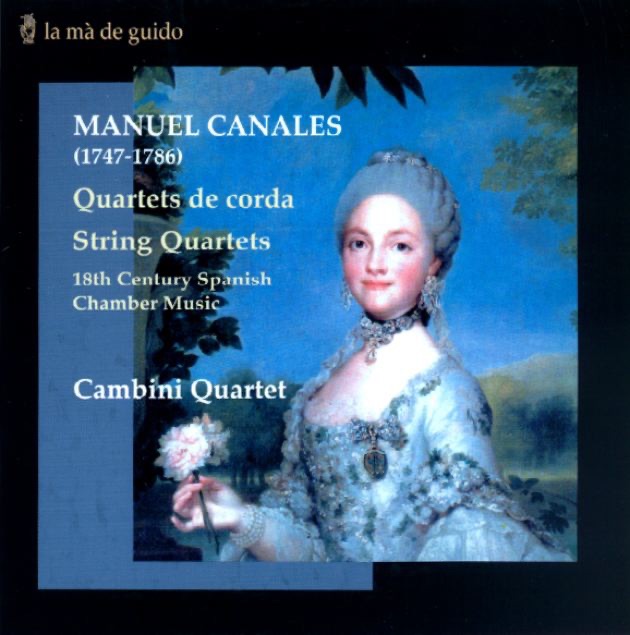
Artist Info
Role:ComposerBirth:1747Death:1786Period:ClassicalGenre:ChamberManuel Braulio Canales was a renowned classical music composer from El Salvador. He was born on January 1, 1878, in the city of San Salvador, the capital of El Salvador. Canales was the son of a prominent Salvadoran family, and his father was a well-known lawyer and politician. From a young age, Canales showed a keen interest in music, and his parents encouraged him to pursue his passion. Canales began his musical education at the age of six, studying piano with his mother. He later studied with several prominent music teachers in El Salvador, including the Italian composer and conductor, Pietro Mascagni. Canales also studied music theory and composition with the Salvadoran composer, Rafael Antonio Castellanos. In 1896, Canales traveled to Europe to further his musical education. He studied at the Paris Conservatory, where he was a student of the renowned composer, Gabriel Fauré. Canales also studied with other prominent composers, including Jules Massenet and Camille Saint-Saëns. During his time in Paris, Canales was exposed to the latest trends in European classical music, and he began to develop his own unique style. Canales returned to El Salvador in 1901 and began to establish himself as a composer and conductor. He founded the National Symphony Orchestra of El Salvador in 1911, which became one of the most important cultural institutions in the country. Canales also served as the director of the National Conservatory of Music in San Salvador, where he taught composition and music theory. Canales' music was heavily influenced by the folk music of El Salvador and other Latin American countries. He incorporated elements of traditional Salvadoran music, such as the marimba and the cumbia, into his compositions. Canales' music was also influenced by the European classical tradition, particularly the works of Mozart, Beethoven, and Brahms. One of Canales' most famous works is his Symphony No. 1, which he composed in 1916. The symphony is a tribute to the people of El Salvador and incorporates elements of Salvadoran folk music. The symphony was premiered by the National Symphony Orchestra of El Salvador and was well-received by audiences and critics alike. Canales also composed several operas, including La hija de Rappaccini (The Daughter of Rappaccini), which was based on a short story by the American author Nathaniel Hawthorne. The opera premiered in San Salvador in 1921 and was later performed in several other Latin American countries. In addition to his work as a composer, Canales was also a prominent conductor. He conducted the National Symphony Orchestra of El Salvador for many years and also conducted orchestras in other Latin American countries. Canales was known for his passionate and expressive conducting style, and he was highly respected by his colleagues and students. Canales continued to compose and conduct music until his death in 1923. He was only 45 years old at the time of his death, but he had already established himself as one of the most important composers in Latin America. Canales' music continues to be performed and celebrated in El Salvador and other Latin American countries, and his legacy as a composer and conductor lives on.More....
Copyright Ⓒ 2013 Davinci Finger. All rights reseved
Service Terms & Policy