


Esaias Reusner
Released Album
Chamber
-
 February 6, 2024
 -
 May 27, 2022
 -
 December 15, 2017
 -
 October 6, 2017
 -
 January 25, 2017
 -
 July 29, 2016
Artist Info
Role:ComposerCountry: GermanyBirth:April 29, 1636 in Lwówek Śląski, PolandDeath:May 1, 1679 in Berlin, GermanyPeriod:BaroqueGenre:ChamberEsaias Reusner was a German Baroque composer and lutenist who lived from 1636 to 1679. He was born in Löwenberg, Silesia, which is now known as Lwówek Śląski, Poland. Reusner was born into a family of musicians, and his father, Esaias Reusner the Elder, was a lutenist and composer as well. Reusner the Elder was a court musician for the Duke of Brieg, and he taught his son how to play the lute from a young age. Reusner the Younger began his musical career as a court musician for the Duke of Brieg, just like his father. He later became a court musician for the Elector of Brandenburg in Berlin, where he remained for the rest of his life. Reusner was highly regarded as a lutenist, and he was known for his virtuosic playing and his ability to improvise. He was also a prolific composer, and he wrote music for the lute, as well as for other instruments such as the harpsichord and the violin. Reusner's music is characterized by its elegance and refinement, as well as its technical complexity. He was influenced by the French lutenist Denis Gaultier, and his music reflects the French style of the time. Reusner's music is also notable for its use of counterpoint, which was a hallmark of Baroque music. One of Reusner's most famous works is his suite in C minor for solo lute, which is known as "Suite No. 1." This suite is comprised of six movements, including a prelude, allemande, courante, sarabande, gigue, and chaconne. The suite is notable for its technical difficulty, as well as its expressive and emotional qualities. The chaconne, in particular, is a virtuosic tour-de-force that showcases Reusner's skill as a composer and a performer. Another notable work by Reusner is his "Partita No. 1" for solo violin. This work is comprised of four movements, including a prelude, allemande, courante, and sarabande. The partita is notable for its use of counterpoint and its technical difficulty, as well as its expressive and emotional qualities. Reusner also wrote music for the harpsichord, including his "Partita No. 2" in G minor. This work is comprised of six movements, including a prelude, allemande, courante, sarabande, gigue, and chaconne. The partita is notable for its use of counterpoint and its technical difficulty, as well as its expressive and emotional qualities. In addition to his instrumental music, Reusner also wrote vocal music, including his "Arien und Lieder" for voice and continuo. This collection of songs includes settings of texts by poets such as Andreas Gryphius and Christian Hoffmann von Hoffmannswaldau. The songs are notable for their expressive and emotional qualities, as well as their use of counterpoint and harmony. Esaias Reusner was a highly regarded composer and lutenist during his lifetime, and his music continues to be performed and studied today. His works are notable for their technical complexity, as well as their expressive and emotional qualities. Reusner's music reflects the French style of the time, and it is characterized by its elegance and refinement.More....
Recent Artist Music
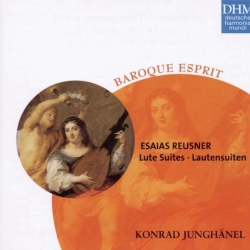
5
1:10

15
5:48
Copyright Ⓒ 2013 Davinci Finger. All rights reseved
Service Terms & Policy