


Roland Schmidt
Released Album
Chamber
-
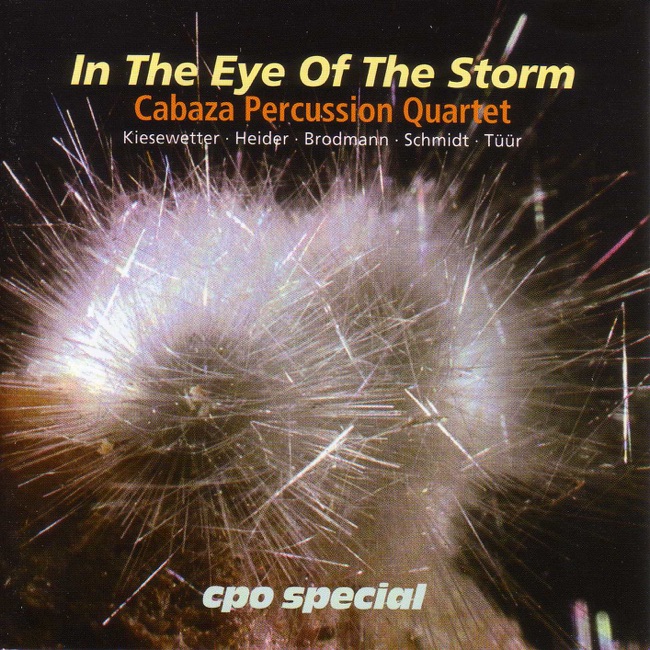 March 1, 2001
 -
 March 19, 1996
Artist Info
Role:ComposerPeriod:BaroqueContemporaryGenre:ChamberKeyboardRoland Schmidt was a German composer born on May 12, 1955, in Berlin. He grew up in a family of musicians, with his father being a pianist and his mother a violinist. From a young age, Schmidt showed a keen interest in music and began playing the piano at the age of five. He later learned to play the violin and the cello, and by the time he was a teenager, he was already composing his own music. Schmidt studied music at the Hochschule für Musik Hanns Eisler in Berlin, where he was mentored by renowned composers such as Friedrich Goldmann and Georg Katzer. He graduated with honors in 1979 and went on to pursue a career as a composer. Schmidt's early works were heavily influenced by the avant-garde music of the 1960s and 1970s, particularly the works of Karlheinz Stockhausen and Pierre Boulez. His compositions were characterized by complex rhythms, unconventional harmonies, and the use of electronic instruments. One of Schmidt's early works, "Klangfarben" (Sound Colors), was premiered in 1981 and received critical acclaim for its innovative use of electronic instruments. The piece was performed by the Berlin Philharmonic Orchestra and conducted by Claudio Abbado. In the 1980s, Schmidt began to move away from the avant-garde style and started to incorporate more traditional elements into his music. He was particularly interested in the music of the Baroque and Classical periods and began to experiment with incorporating these styles into his compositions. One of Schmidt's most famous works from this period is his "Concerto for Violin and Orchestra," which was premiered in 1985. The piece is a fusion of Baroque and contemporary styles and features virtuosic solo passages for the violin. The concerto has since become a staple of the violin repertoire and has been performed by some of the world's leading violinists. In the 1990s, Schmidt continued to explore new musical styles and techniques. He became interested in the music of non-Western cultures and began to incorporate elements of Indian classical music and African rhythms into his compositions. One of Schmidt's most notable works from this period is his "Symphony No. 3," which was premiered in 1997. The symphony is a fusion of Western and non-Western musical styles and features a large orchestra, a choir, and soloists playing traditional Indian instruments. The piece received critical acclaim for its innovative use of non-Western musical elements and has since been performed by orchestras around the world. In addition to his work as a composer, Schmidt was also a respected music educator. He taught composition at the Hochschule für Musik Hanns Eisler in Berlin and was a visiting professor at several universities around the world. Schmidt's contributions to the world of classical music were recognized with numerous awards and honors. He was awarded the Ernst von Siemens Music Prize in 2001 and was elected a member of the Berlin Academy of Arts in 2003. Sadly, Roland Schmidt passed away on June 15, 2010, at the age of 55. However, his legacy as a composer and educator continues to inspire musicians around the world. His innovative use of musical styles and techniques has helped to push the boundaries of classical music and has left a lasting impact on the genre.More....
Recent Artist Music

Copyright Ⓒ 2013 Davinci Finger. All rights reseved
Service Terms & Policy