


Gerard Victory
Artist Info
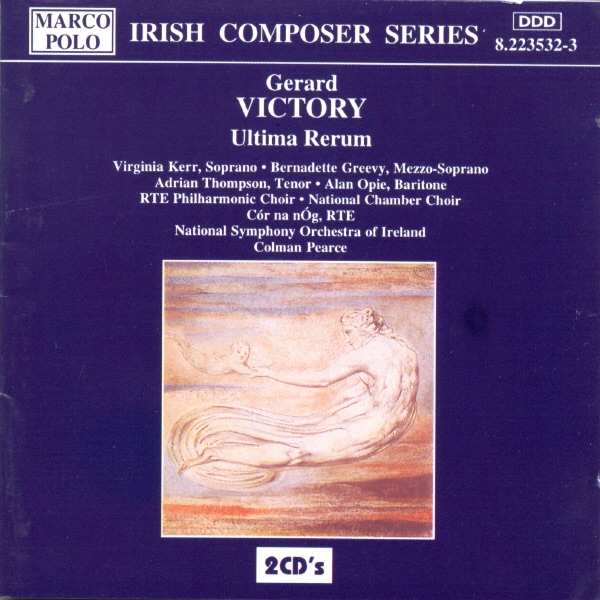
Role:ComposerCountry: IrelandBirth:1921Death:1995Genre:ChoralGerard Victory was a renowned Irish composer of classical music, born on December 24, 1921, in Dublin, Ireland. He was the youngest of six children born to his parents, who were both musicians. His father was a violinist, and his mother was a pianist. From a young age, Victory was exposed to music and began to show a keen interest in it. Victory's musical education began at the age of six when he started taking piano lessons from his mother. He later went on to study at the Royal Irish Academy of Music in Dublin, where he studied composition with John F. Larchet. After completing his studies, Victory went to Paris to study with the renowned composer, Nadia Boulanger. In 1950, Victory returned to Ireland and began his career as a composer. He quickly gained recognition for his work, and in 1952, he won the Feis Ceoil Composition Prize for his String Quartet No. 1. This was the first of many awards and accolades that Victory would receive throughout his career. Victory's music was heavily influenced by his Irish heritage, and he often incorporated traditional Irish melodies and rhythms into his compositions. He was also influenced by the works of other composers, including Stravinsky, Bartok, and Shostakovich. One of Victory's most significant works is his opera, "The Golden Bough," which was premiered in 1955. The opera is based on the book of the same name by James George Frazer and tells the story of a young man who travels to a remote island to find the mythical Golden Bough. The opera was well-received and helped to establish Victory as one of Ireland's leading composers. In addition to his opera, Victory composed a wide range of other works, including orchestral pieces, chamber music, and choral works. Some of his most notable works include his Symphony No. 1, which was premiered in 1961, and his String Quartet No. 2, which was premiered in 1963. Throughout his career, Victory was a prolific composer, and his works were performed by some of the world's leading orchestras and ensembles. He also served as a professor of music at University College Dublin, where he taught composition and music theory. In 1971, Victory was awarded the Arnold Bax Medal for his contributions to Irish music. He was also a member of Aosdána, an Irish association of artists, and was awarded the title of Saoi, the highest honor that can be bestowed upon an artist in Ireland. Despite his success, Victory's life was not without its challenges. He suffered from depression and struggled with alcoholism throughout his career. In 1995, he passed away at the age of 73. Today, Gerard Victory is remembered as one of Ireland's most significant composers of classical music. His works continue to be performed and recorded by musicians around the world, and his legacy lives on through the many students he taught and mentored throughout his career.More....
Copyright Ⓒ 2013 Davinci Finger. All rights reseved
Service Terms & Policy