


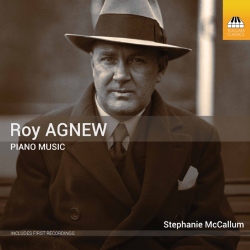
Roy Agnew
Released Album
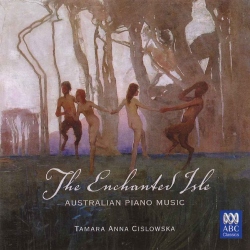
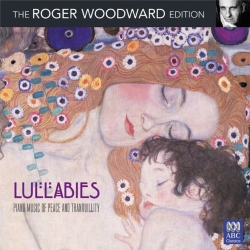
Keyboard
-
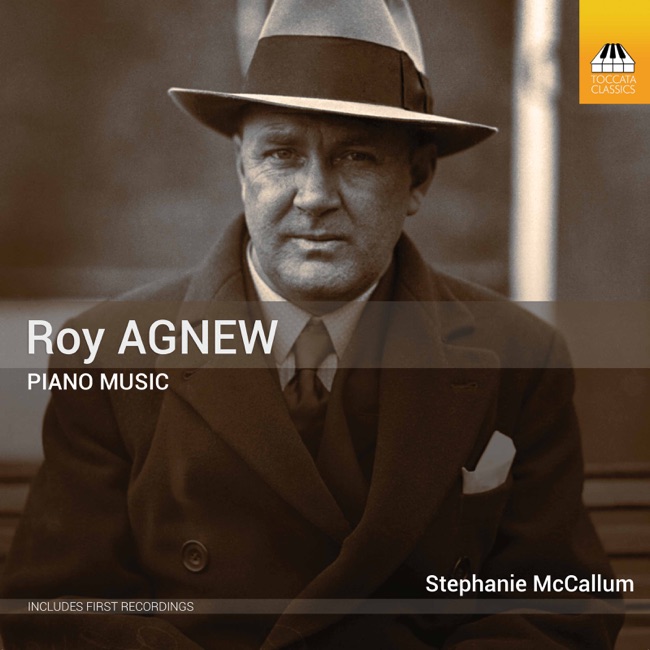 October 4, 2019
 -
 December 14, 2018
 -
 January 17, 2018
 -
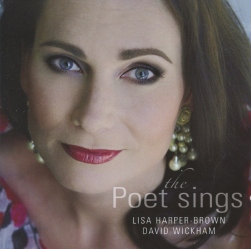
Vocal
-
 March 17, 2012
Artist Info
Role:ComposerCountry: AustraliaBirth:1893Death:1944Roy Agnew was an American composer and pianist who was born on December 17, 1891, in San Francisco, California. He was the son of a prominent businessman and a talented musician, and his parents encouraged him to pursue his passion for music from a young age. Agnew began playing the piano at the age of four and showed a natural talent for the instrument. Agnew's early musical education was primarily focused on the piano, and he studied with several prominent teachers in San Francisco. He also showed an interest in composition from a young age and began writing his own music as a teenager. In 1910, Agnew enrolled at the University of California, Berkeley, where he studied music theory and composition with Charles Cushing. After graduating from Berkeley in 1914, Agnew moved to New York City to pursue a career as a composer and pianist. He quickly established himself as a talented musician and began performing in concerts and recitals throughout the city. In 1916, he made his debut as a composer with the premiere of his Piano Sonata No. 1 at the Aeolian Hall. Over the next several years, Agnew continued to compose and perform, and his music began to gain recognition both in the United States and abroad. In 1920, he was awarded the prestigious Prix de Rome, which allowed him to study composition in Europe for three years. During his time in Europe, Agnew studied with several prominent composers, including Nadia Boulanger and Maurice Ravel. After returning to the United States in 1923, Agnew continued to compose and perform, and his music began to receive critical acclaim. He was particularly known for his piano music, which was characterized by its virtuosity and technical complexity. Some of his most famous works for piano include the Piano Sonata No. 2, the Prelude and Fugue in G Minor, and the Toccata. In addition to his work as a composer and pianist, Agnew was also a respected music educator. He taught at several universities throughout his career, including the University of California, Berkeley, the University of Southern California, and the Juilliard School. He was known for his rigorous teaching style and his emphasis on technical proficiency and musical expression. Throughout his career, Agnew remained committed to the classical tradition and was known for his adherence to traditional forms and structures. However, he also incorporated elements of modernism into his music, particularly in his use of dissonance and unconventional harmonies. Agnew's music was widely performed and recorded during his lifetime, and his legacy continues to be celebrated today. He died on January 1, 1944, in Los Angeles, California, at the age of 52. His contributions to the classical music canon are remembered as a testament to his talent and dedication to the art form.More....
Recent Artist Music

Copyright Ⓒ 2013 Davinci Finger. All rights reseved
Service Terms & Policy