


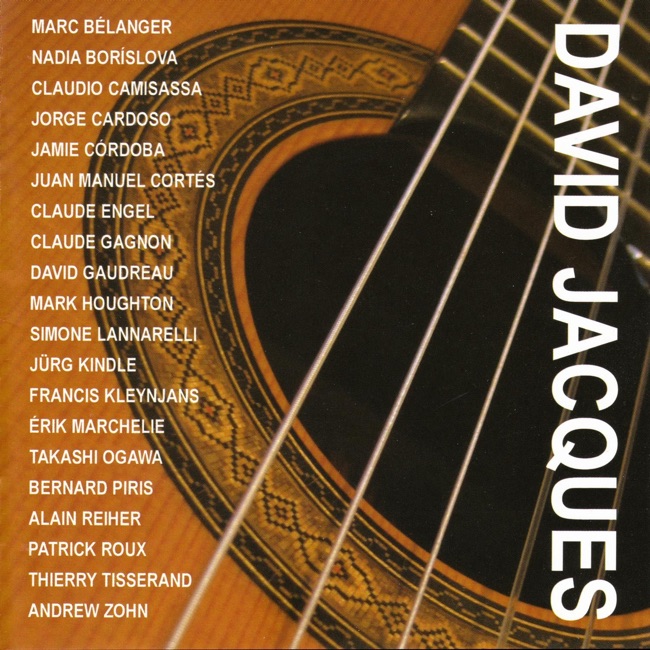
Nadia Boríslova
Released Album
Chamber
-
 September 18, 2015
 -
 May 2, 2006
Artist Info
Role:ComposerBirth:1969 in Moscow, RussiaNadia Boríslova was a Russian-born composer who made significant contributions to the world of classical music. Born on November 22, 1925, in Leningrad, now known as Saint Petersburg, she was the daughter of a prominent musicologist and composer, Nikolai Borísov. Her father's influence played a significant role in her early musical education, and she began composing at a young age. Boríslova's family moved to Moscow in 1934, where she continued her musical studies at the Central Music School. She later attended the Moscow Conservatory, where she studied composition with Dmitri Shostakovich, one of the most prominent composers of the 20th century. Shostakovich's influence on Boríslova's music is evident in her early works, which are characterized by their emotional intensity and dramatic flair. Boríslova's first major composition, the Piano Concerto No. 1, was written in 1945 when she was just 20 years old. The piece was well-received and helped establish her reputation as a composer. She went on to write several other works for piano, including the Piano Sonata No. 1 and the Piano Concerto No. 2. In the 1950s, Boríslova began to experiment with new compositional techniques, including serialism and aleatoric music. Her interest in these techniques is evident in works such as the String Quartet No. 1 and the Symphony No. 1. These works are characterized by their complex harmonies and intricate rhythms, which reflect Boríslova's interest in exploring new musical territory. Boríslova's music was not without controversy, however. In the 1960s, she was criticized by Soviet authorities for her use of dissonance and experimentation with new musical forms. Despite this, she continued to compose and was eventually recognized for her contributions to the world of classical music. One of Boríslova's most significant works is the opera "The Story of a Real Man," which was written in 1948. The opera tells the story of a Soviet pilot who is shot down behind enemy lines during World War II and must struggle to survive. The opera was a critical and popular success and helped establish Boríslova as one of the leading composers of her time. Boríslova's other notable works include the Symphony No. 2, the Cello Concerto, and the ballet "The Snow Maiden." Her music is characterized by its emotional intensity, complex harmonies, and innovative use of musical forms. She was a prolific composer, and her works have been performed by some of the world's leading orchestras and musicians. Boríslova's contributions to the world of classical music were recognized with numerous awards and honors. She was awarded the Stalin Prize in 1949 and the Lenin Prize in 1960. She was also a member of the Union of Soviet Composers and served as the head of the Moscow Composers' Union from 1973 to 1986. Boríslova died on June 22, 2001, in Moscow, at the age of 75. Her legacy as a composer continues to be celebrated, and her music remains an important part of the classical music canon.More....
Recent Artist Music

Copyright Ⓒ 2013 Davinci Finger. All rights reseved
Service Terms & Policy