


Nikoghayos Tigranyan
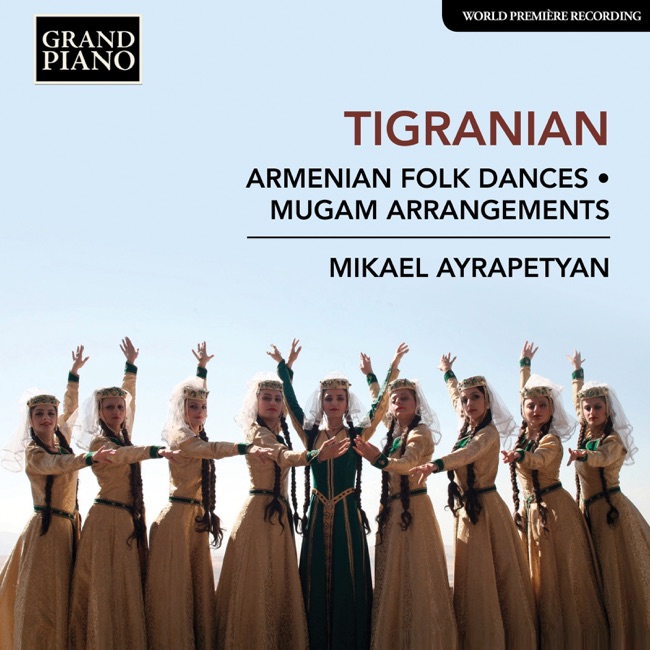
Artist Info
Role:ComposerBirth:1856 in Gyumri, ArmeniaDeath:1951Nikoghayos Tigranyan was a prominent Armenian composer of classical music. He was born on November 14, 1879, in the village of Kütahya, in the Ottoman Empire, which is now modern-day Turkey. Tigranyan was born into a family of musicians, and his father, Hovhannes Tigranyan, was a well-known composer and conductor in the region. Tigranyan's musical education began at a young age, and he showed great promise as a composer and pianist. He studied at the Tiflis Conservatory in Georgia, where he was taught by some of the most prominent musicians of the time, including Sergei Taneyev and Mikhail Ippolitov-Ivanov. Tigranyan's talent was recognized early on, and he was awarded a scholarship to study in Paris, where he continued his musical education at the Paris Conservatory. Tigranyan's early works were heavily influenced by the music of his Armenian heritage, and he often incorporated traditional Armenian folk melodies into his compositions. His first major work, the opera Anoush, premiered in 1912 and was an instant success. The opera tells the story of a young Armenian woman who falls in love with a man from a rival village, and the tragic consequences that follow. Anoush is considered one of the most important works in Armenian classical music and is still performed regularly today. In addition to his operas, Tigranyan composed a number of orchestral works, including symphonies, suites, and tone poems. His Symphony No. 1, which premiered in 1913, was the first symphony ever composed by an Armenian composer. The work is notable for its use of Armenian folk melodies and its incorporation of traditional Armenian instruments, such as the duduk and the zurna. Tigranyan's music was not only popular in Armenia but also gained recognition internationally. His works were performed in major cities throughout Europe, including Paris, Berlin, and Vienna. In 1928, Tigranyan was invited to conduct the Berlin Philharmonic Orchestra, which was a great honor for an Armenian composer at the time. Despite his success, Tigranyan faced many challenges throughout his career. He lived through a period of great political upheaval in Armenia, including the Armenian Genocide, which resulted in the deaths of over one million Armenians. Tigranyan's own family was affected by the genocide, and he lost many relatives and friends during this time. In addition to the political turmoil, Tigranyan also faced personal struggles. He suffered from depression and alcoholism, which affected his health and his ability to compose. Despite these challenges, Tigranyan continued to compose throughout his life, and his later works show a maturity and depth that reflect his life experiences. Tigranyan's final work, the opera David Bek, premiered in 1933, just a few years before his death. The opera tells the story of the Armenian hero David Bek, who led a rebellion against the Persian Empire in the 18th century. The work is considered one of Tigranyan's greatest achievements and is still performed regularly in Armenia. Nikoghayos Tigranyan died on September 20, 1950, in Yerevan, Armenia. He left behind a legacy of music that continues to inspire and influence musicians today. His works are an important part of the Armenian classical music tradition and are celebrated for their use of traditional Armenian melodies and instruments.More....
Recent Artist Music

Copyright Ⓒ 2013 Davinci Finger. All rights reseved
Service Terms & Policy