


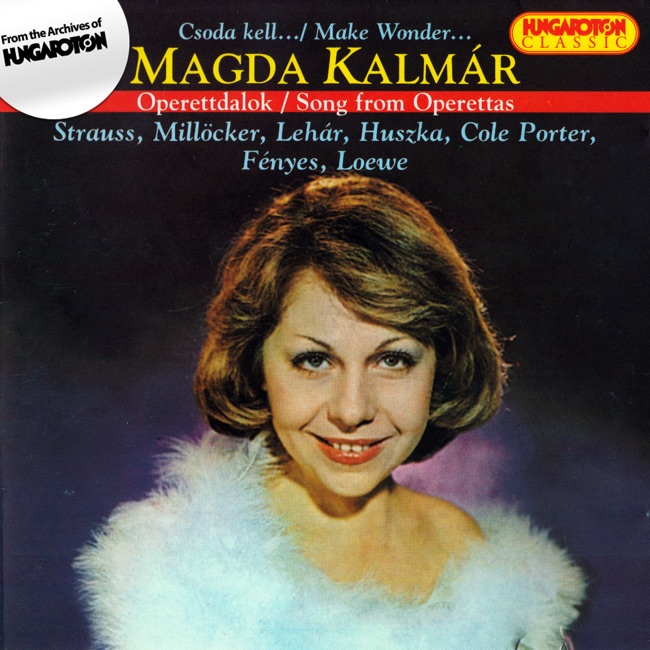
Jenö Huszka
Artist Info
Role:ComposerBirth:April 24, 1875Death:February 2, 1960Period:ModernGenre:OperaJenö Huszka was a Hungarian composer and pianist who lived from 1875 to 1960. He was born in the town of Szeged, Hungary, on January 5, 1875. His father was a music teacher, and his mother was a singer. From a young age, Huszka showed a talent for music, and he began studying piano and composition with his father. Huszka continued his musical education at the Franz Liszt Academy of Music in Budapest, where he studied with some of the most prominent composers of the time, including Hans Koessler and Zoltán Kodály. He graduated from the academy in 1898 and began his career as a composer and pianist. Huszka's early works were heavily influenced by the Romantic style of music, which was popular in Europe at the time. He wrote a number of piano pieces, songs, and chamber music works, which were well-received by audiences and critics alike. In 1903, he composed his first opera, "The Witch," which was based on a Hungarian folk tale. The opera was a success, and it was performed throughout Hungary and other parts of Europe. Over the next few years, Huszka continued to compose operas, including "The Beggar Student" (1908) and "The Gypsy Baron" (1910). These operas were also based on Hungarian folk tales and were popular with audiences. In addition to his operas, Huszka also composed a number of orchestral works, including symphonies, tone poems, and concertos. During World War I, Huszka served in the Hungarian army as a musician. After the war, he continued to compose and perform, and he became a prominent figure in the Hungarian music scene. In 1927, he was appointed as a professor of composition at the Franz Liszt Academy of Music, where he taught until his retirement in 1945. Huszka's later works were influenced by the modernist movement in music, which was emerging in Europe at the time. He began to experiment with new forms and techniques, and his music became more complex and abstract. Some of his most notable works from this period include his "Concerto for Orchestra" (1936) and his "String Quartet No. 2" (1942). Despite his success as a composer, Huszka's music fell out of favor in Hungary after World War II. The communist government that came to power in Hungary in 1949 favored music that was more politically and socially oriented, and Huszka's music was seen as too traditional and conservative. As a result, his music was rarely performed or recorded in Hungary during the communist era. However, in recent years, there has been a renewed interest in Huszka's music, and his works are once again being performed and recorded. His music is now recognized as an important part of the Hungarian classical music tradition, and his contributions to the development of Hungarian opera and orchestral music are widely acknowledged. Jenö Huszka died on March 3, 1960, in Budapest, Hungary. He left behind a legacy of music that continues to inspire and delight audiences around the world. His works are a testament to his talent as a composer and his dedication to the art of music.More....
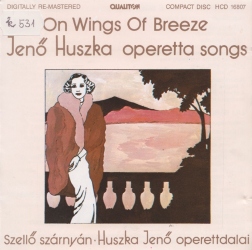
Recent Artist Music
Copyright Ⓒ 2013 Davinci Finger. All rights reseved
Service Terms & Policy