


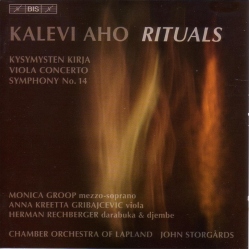
Herman Rechberger
Artist Info
Role:Composer PerformerBirth:1947Genre:OrchestralHerman Rechberger was a classical music composer born on May 12, 1892, in Vienna, Austria. He was the son of a music teacher and grew up in a musical family. His father recognized his son's talent for music at an early age and began teaching him piano and music theory. Rechberger's love for music grew as he got older, and he decided to pursue a career in music. Rechberger attended the Vienna Conservatory, where he studied composition under the tutelage of Franz Schmidt. He also studied piano and conducting, which helped him develop a well-rounded understanding of music. Rechberger's talent for composition was evident from the start, and he quickly gained recognition for his work. In 1914, Rechberger's career was interrupted by World War I. He was drafted into the Austrian army and served on the front lines for four years. During this time, he continued to compose music, often using his experiences in the war as inspiration. His music during this period was characterized by its emotional intensity and raw power. After the war, Rechberger returned to Vienna and resumed his career as a composer. He quickly gained a reputation as one of the most talented composers of his generation. His music was characterized by its lush harmonies, intricate melodies, and emotional depth. He was particularly skilled at writing for the orchestra, and his orchestral works are considered some of his finest. One of Rechberger's most famous works is his Symphony No. 1, which he composed in 1922. The symphony is a powerful and emotional work that reflects the turmoil of the post-war period. It is characterized by its sweeping melodies, lush harmonies, and dramatic contrasts. The symphony was an instant success and established Rechberger as one of the leading composers of his time. Rechberger continued to compose throughout the 1920s and 1930s, producing a wide range of works in various genres. He wrote operas, ballets, chamber music, and choral works, as well as numerous orchestral works. His music was characterized by its emotional intensity and its ability to evoke powerful emotions in listeners. In 1938, Rechberger's career was once again interrupted, this time by the outbreak of World War II. He was forced to flee Austria and emigrated to the United States. He settled in New York City, where he continued to compose music. His music during this period was characterized by its more optimistic tone, reflecting his hope for a better future. One of Rechberger's most famous works from this period is his Symphony No. 2, which he composed in 1943. The symphony is a more optimistic work than his earlier symphony, reflecting the hope for a better future that characterized the post-war period. It is characterized by its bright melodies, lush harmonies, and energetic rhythms. Rechberger continued to compose throughout the 1940s and 1950s, producing a wide range of works in various genres. He wrote operas, ballets, chamber music, and choral works, as well as numerous orchestral works. His music during this period was characterized by its more optimistic tone, reflecting the hope for a better future that characterized the post-war period. Rechberger died on December 12, 1956, in New York City. He left behind a legacy of powerful and emotional music that continues to be performed and admired today.More....
Recent Artist Music
Copyright Ⓒ 2013 Davinci Finger. All rights reseved
Service Terms & Policy