


Andreas Nicolaus Vetter
Released Album
Keyboard
-
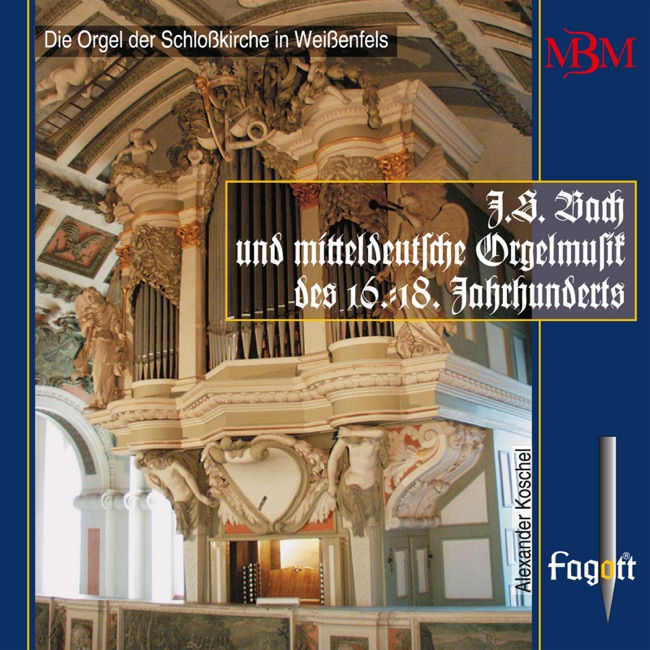 December 11, 2007
Artist Info
Role:ComposerCountry: GermanyBirth:October, 1666 in Königsee, GemanyDeath:June 13, 1734 in Rudolstadt, GermanyAndreas Nicolaus Vetter was a German composer and musician who lived from 1683 to 1742. He was born in the town of Annaberg in the Erzgebirge region of Saxony, Germany. His father was a musician and organist, and it was under his guidance that Vetter began his musical education. Vetter showed great promise as a musician from a young age, and he quickly became proficient on a number of instruments, including the organ, harpsichord, and violin. He also showed a talent for composition, and began writing music at a young age. In 1702, Vetter moved to Leipzig to study at the University of Leipzig. While there, he studied music theory and composition with Johann Kuhnau, who was the cantor of the Thomaskirche and a well-known composer in his own right. Vetter also became involved in the musical life of Leipzig, playing in various ensembles and performing in concerts. After completing his studies in Leipzig, Vetter returned to Annaberg, where he worked as an organist and music teacher. He also continued to compose music, and his works began to gain recognition in the region. In 1716, Vetter was appointed as the court organist in Dresden, where he remained for the rest of his life. While in Dresden, Vetter composed a number of works for the court, including operas, cantatas, and instrumental music. He also continued to perform as a soloist and in ensembles, and was highly regarded as a musician and composer. Vetter's music is characterized by its elegance and refinement, as well as its technical virtuosity. He was particularly skilled at writing for the keyboard, and his harpsichord music is considered some of the finest of the Baroque era. His works for orchestra are also notable for their inventive use of instrumentation and their expressive melodies. Some of Vetter's most famous works include his harpsichord suites, which are collections of dances and other pieces written for the keyboard. These suites are notable for their intricate counterpoint and their use of ornamentation, which was a hallmark of Baroque music. Vetter also wrote a number of concertos for various instruments, including the violin, oboe, and flute. These works are characterized by their virtuosic solo parts and their lively rhythms. In addition to his instrumental music, Vetter also composed a number of vocal works, including cantatas and operas. These works are notable for their expressive melodies and their use of text painting, which is the technique of using music to illustrate the meaning of the words being sung. Despite his considerable talent as a composer and musician, Vetter's music fell out of favor after his death. It was not until the 20th century that his works began to be rediscovered and performed again. Today, Vetter is recognized as one of the most important composers of the Baroque era, and his music continues to be enjoyed by audiences around the world.More....
Recent Artist Music
Copyright Ⓒ 2013 Davinci Finger. All rights reseved
Service Terms & Policy