


W.N. Duckworth
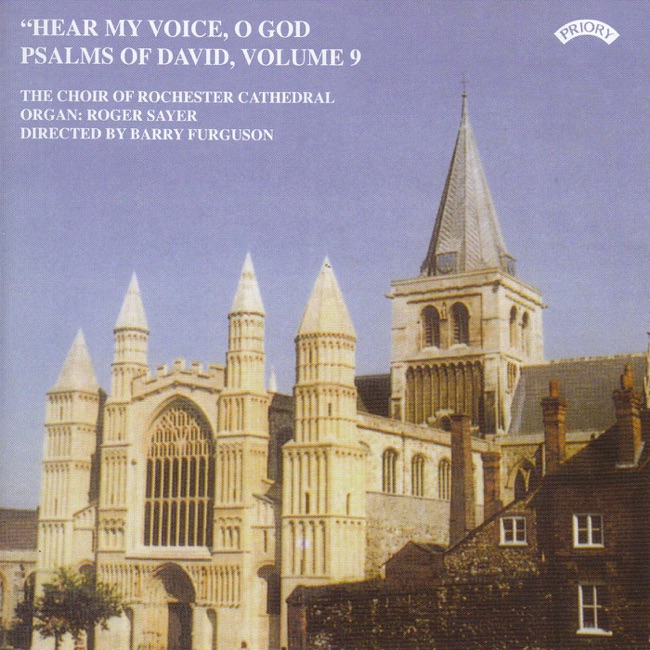
Artist Info
Role:ComposerGenre:ChoralW.N. Duckworth was a renowned classical music composer who made significant contributions to the world of music. Born on August 28, 1943, in New York City, Duckworth grew up in a family that was passionate about music. His father was a jazz pianist, and his mother was a singer. This early exposure to music played a significant role in shaping his musical career. Duckworth began his musical journey by learning to play the piano at a young age. He was a gifted musician and quickly developed a love for classical music. He went on to study music at the University of Illinois, where he earned a Bachelor of Music degree in 1965. He then pursued a Master of Music degree at the University of Illinois, which he completed in 1967. After completing his studies, Duckworth began his career as a composer. He was known for his unique style, which blended elements of classical music with electronic music. His compositions were often experimental and pushed the boundaries of traditional classical music. One of Duckworth's most significant contributions to the world of music was his work with computer-generated music. He was one of the pioneers of computer-generated music and was instrumental in developing software that could create music. His work in this field was groundbreaking and helped to pave the way for future generations of composers. Duckworth's compositions were often inspired by his love of nature. He was particularly interested in the sounds of birds and incorporated these sounds into his music. His compositions were also influenced by his interest in mathematics and science. He often used mathematical formulas to create his music, which gave his compositions a unique and complex sound. Throughout his career, Duckworth composed a wide range of music, including orchestral works, chamber music, and electronic music. Some of his most notable works include "The Time Curve Preludes," "Southern Harmony," and "Cathedral." "The Time Curve Preludes" is a collection of 24 preludes for piano that were composed between 1974 and 1978. The pieces are known for their complex rhythms and use of mathematical formulas. The collection is considered one of Duckworth's most significant works and has been performed by pianists around the world. "Southern Harmony" is a choral work that was composed in 1980. The piece is based on traditional Southern hymns and features a blend of choral and electronic music. The work is known for its haunting melodies and unique sound. "Cathedral" is an electronic music composition that was created in 1972. The piece is inspired by the sounds of a cathedral and features a blend of electronic and natural sounds. The work is considered one of Duckworth's most experimental compositions and is often cited as an example of his innovative approach to music. Duckworth's contributions to the world of music were recognized with numerous awards and honors. He was a recipient of the Guggenheim Fellowship, the National Endowment for the Arts Fellowship, and the American Academy of Arts and Letters Award. He was also a member of the American Academy of Arts and Sciences. In addition to his work as a composer, Duckworth was also a respected music educator. He taught at several universities, including Columbia University, the University of California, San Diego, and Bucknell University. He was known for his innovative teaching methods and was a mentor to many aspiring composers.More....
Recent Artist Music
Copyright Ⓒ 2013 Davinci Finger. All rights reseved
Service Terms & Policy