


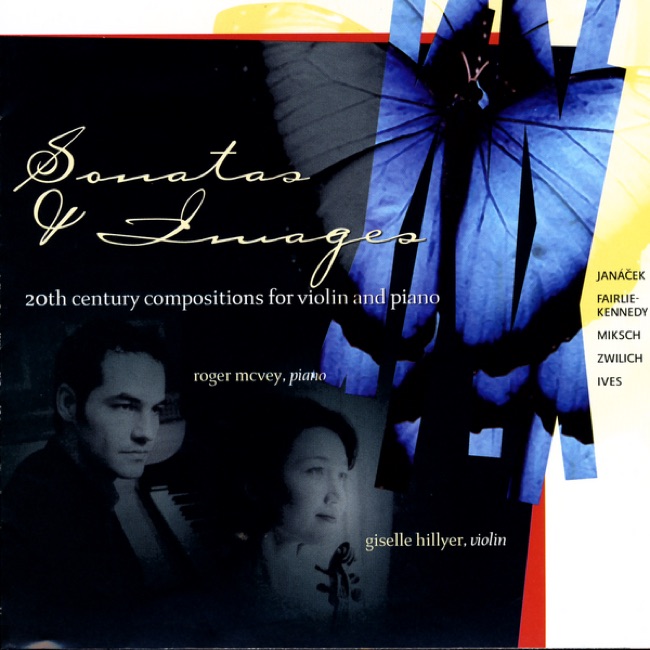
Margaret Fairlie-Kennedy
Released Album
Chamber
-
 November 10, 2015
 -
 March 30, 2010
 -
 August 30, 2005
Artist Info
Role:ComposerBirth:1925Margaret Fairlie-Kennedy was a British composer and pianist who lived from 1896 to 1967. She was born in London to a family of musicians, and her father was a well-known conductor. From a young age, Fairlie-Kennedy showed a talent for music, and she began studying piano and composition at an early age. Fairlie-Kennedy's early compositions were influenced by the Romantic era, and she was particularly drawn to the music of Chopin and Liszt. She also had a strong interest in the music of her contemporaries, including Debussy and Ravel. Her early works were well-received, and she began to gain a reputation as a promising young composer. In 1920, Fairlie-Kennedy married the composer and conductor Constant Lambert, and the two became an important part of the British music scene. They were both associated with the group of composers known as the "Bright Young Things," who were known for their avant-garde approach to music. Fairlie-Kennedy's compositions during this period were marked by a more experimental approach, and she began to incorporate elements of jazz and popular music into her work. She also began to explore new forms, such as the suite and the ballet. One of Fairlie-Kennedy's most notable works from this period was her ballet "The Fairy Queen," which was based on the play by Shakespeare. The ballet was a critical and commercial success, and it helped to establish Fairlie-Kennedy as one of the leading composers of her generation. In the 1930s, Fairlie-Kennedy's music became more introspective, and she began to focus on smaller-scale works, such as chamber music and songs. Her compositions during this period were marked by a more lyrical and intimate style, and she continued to experiment with new forms and techniques. One of Fairlie-Kennedy's most notable works from this period was her song cycle "The Garden of Proserpine," which was based on the poem by Algernon Charles Swinburne. The cycle was praised for its beauty and emotional depth, and it remains one of Fairlie-Kennedy's most beloved works. During World War II, Fairlie-Kennedy's music took on a more patriotic tone, and she composed a number of works that were inspired by the war effort. She also became involved in the British Red Cross, and she worked tirelessly to support the war effort through her music. After the war, Fairlie-Kennedy continued to compose, but her output slowed down considerably. She focused more on teaching and mentoring young composers, and she became an important figure in the British music scene. Fairlie-Kennedy's music has been praised for its beauty, emotional depth, and technical skill. She was a master of many different forms and styles, and her work continues to be performed and admired today.More....
Recent Artist Music
1
12:20

3

1:32
Copyright Ⓒ 2013 Davinci Finger. All rights reseved
Service Terms & Policy