


Behzad Ranjbaran
Released Album
Concerto
-
 February 9, 2018
 -
 April 27, 2004
Choral
-
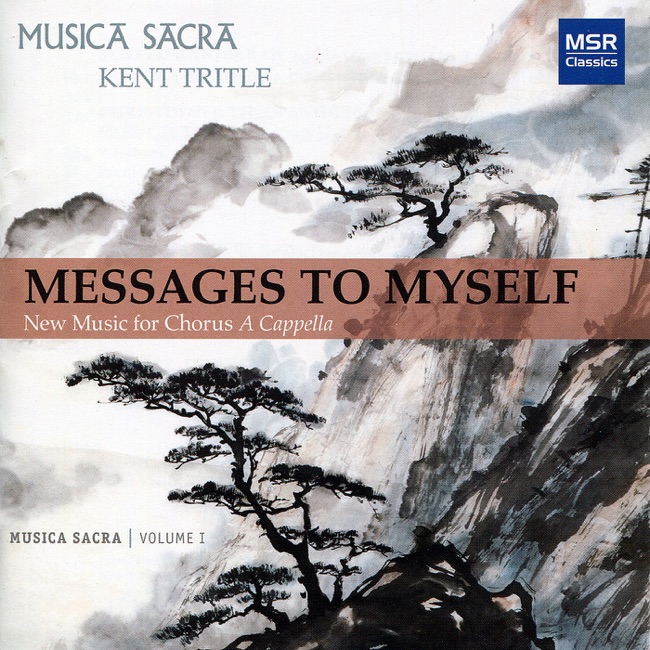 December 11, 2012
Ballet
-
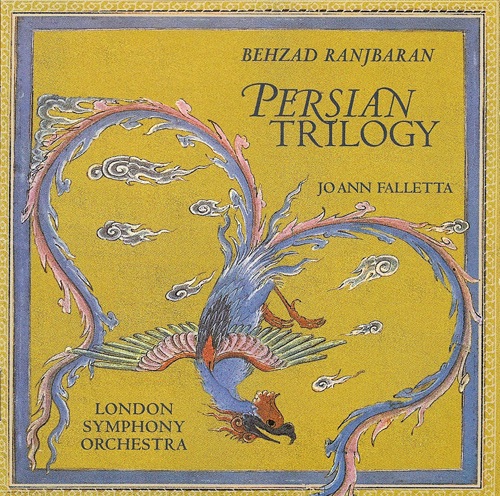 October 26, 2004
Artist Info
Role:ComposerPeriod:ContemporaryGenre:ChamberBehzad Ranjbaran is a renowned Iranian-American composer of classical music. He was born on August 31, 1955, in Tehran, Iran. Ranjbaran grew up in a family of musicians, and his father was a well-known violinist in Iran. From a young age, Ranjbaran showed a keen interest in music and began studying the violin and piano. He also showed a talent for composition, and by the age of 14, he had already written several pieces of music. In 1974, Ranjbaran moved to the United States to pursue his musical education. He enrolled at Indiana University, where he studied composition with Bernhard Heiden and Juan Orrego-Salas. He also studied violin with Franco Gulli and chamber music with Menahem Pressler. After completing his undergraduate studies, Ranjbaran went on to earn a master's degree in composition from Indiana University. Ranjbaran's early compositions were heavily influenced by the music of his native Iran. He incorporated elements of Persian music into his works, such as the use of modal scales and rhythmic patterns. His music also reflected his interest in Western classical music, particularly the works of composers such as Bach, Beethoven, and Brahms. One of Ranjbaran's early works, "Persian Trilogy," was written for orchestra and premiered in 1980. The piece consists of three movements, each of which is based on a different Persian folk melody. The work was well-received and helped establish Ranjbaran as a composer to watch. In 1983, Ranjbaran moved to New York City to pursue a career as a composer. He quickly became involved in the city's vibrant music scene and began collaborating with musicians and ensembles. He also began teaching at the Juilliard School, where he remains on the faculty today. Throughout the 1980s and 1990s, Ranjbaran continued to compose works that blended elements of Persian and Western classical music. One of his most notable works from this period is "Seemorgh," a concerto for Persian instruments and orchestra. The piece was commissioned by the New York Philharmonic and premiered in 1992. It features traditional Persian instruments such as the santur, tar, and ney, as well as Western instruments such as the violin and cello. In the late 1990s, Ranjbaran began to shift away from his earlier style and began exploring more abstract and experimental forms of composition. His works from this period are characterized by their use of complex rhythms and harmonies, as well as their incorporation of electronic and computer-generated sounds. One of Ranjbaran's most recent works is "Songs of Eternity," a choral piece that premiered in 2019. The work is based on the poetry of Rumi, a 13th-century Persian poet and mystic. The piece features a choir, soloists, and orchestra, and incorporates elements of Persian and Western classical music. Throughout his career, Ranjbaran has received numerous awards and honors for his work as a composer. He has been awarded grants from the National Endowment for the Arts and the Guggenheim Foundation, among others. He has also been commissioned by some of the world's leading orchestras and ensembles, including the New York Philharmonic, the Philadelphia Orchestra, and the London Symphony Orchestra. In addition to his work as a composer, Ranjbaran is also an accomplished violinist. He has performed as a soloist with many of the world's leading orchestras, including the New York Philharmonic and the London Symphony Orchestra.More....
Recent Artist Music



Copyright Ⓒ 2013 Davinci Finger. All rights reseved
Service Terms & Policy