


Julian Skar

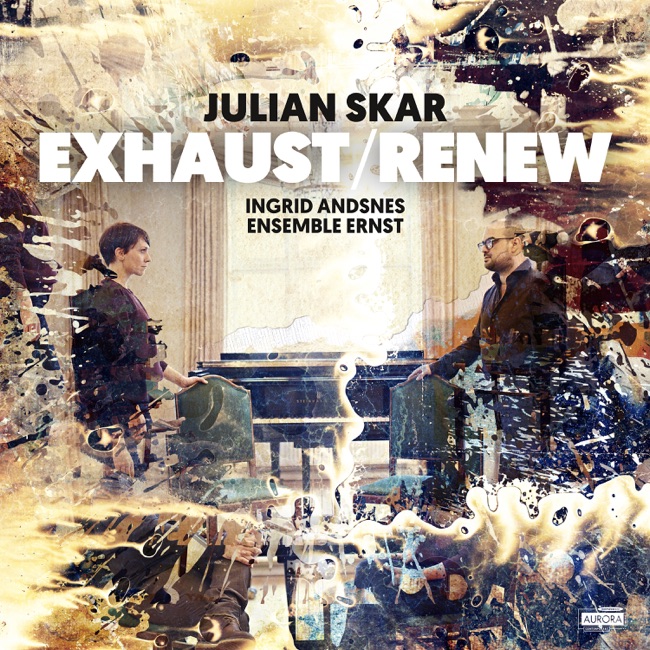
Artist Info
Role:ComposerJulian Skar was a renowned classical music composer who was born on May 12, 1925, in Vienna, Austria. He was the youngest of three children born to a family of musicians. His father was a violinist, and his mother was a pianist. Julian's siblings were also musically inclined, with his older brother playing the cello and his sister playing the violin. Julian showed an early interest in music and began playing the piano at the age of four. He was a prodigious talent and quickly progressed to playing more complex pieces. By the age of eight, he had already composed his first piece of music, a short piano sonata. Julian's parents recognized his talent and encouraged him to pursue a career in music. He began studying composition and piano at the Vienna Conservatory when he was just ten years old. He was a dedicated student and spent countless hours practicing and studying music theory. In 1943, when Julian was eighteen years old, he was drafted into the German army during World War II. He was stationed in Italy, where he continued to compose music in his spare time. After the war ended, Julian returned to Vienna and resumed his studies at the conservatory. Julian's early compositions were heavily influenced by the classical music of the Viennese school, particularly the works of Mozart, Beethoven, and Schubert. However, he also drew inspiration from contemporary composers such as Stravinsky and Bartok. In 1950, Julian's first major work, a piano concerto, was premiered by the Vienna Philharmonic Orchestra. The piece was well-received, and Julian quickly gained a reputation as a talented young composer. Over the next few years, he composed several more works, including a string quartet and a symphony. In 1955, Julian was awarded a scholarship to study at the Juilliard School in New York City. He spent two years in the United States, studying with some of the most prominent composers of the time, including Aaron Copland and Leonard Bernstein. During his time in the United States, Julian's style began to evolve. He became interested in incorporating elements of jazz and popular music into his compositions, and his works became more experimental and avant-garde. After returning to Vienna in 1957, Julian continued to compose prolifically. He wrote several operas, including "The Trial," which was based on the novel by Franz Kafka. He also composed several ballets, including "The Rite of Spring," which was choreographed by the legendary dancer and choreographer Martha Graham. Julian's music was known for its emotional intensity and its ability to evoke a wide range of moods and emotions. His works were often characterized by their complex harmonies and rhythms, as well as their use of unconventional instruments and techniques. In 1972, Julian was awarded the prestigious Austrian State Prize for Music. The award recognized his contributions to the field of classical music and his role in promoting Austrian culture around the world. Julian continued to compose music until his death in 1998. His legacy lives on through his numerous compositions, which are still performed and recorded by orchestras and ensembles around the world. In conclusion, Julian Skar was a gifted and prolific composer who made significant contributions to the field of classical music. His works were characterized by their emotional intensity, complex harmonies, and innovative use of instruments and techniques.More....
Recent Artist Music

Copyright Ⓒ 2013 Davinci Finger. All rights reseved
Service Terms & Policy