


Josef Renner
Released Album
Keyboard
-
 April 12, 2024
 -
 July 30, 2021
 -
 September 30, 2016
 -
 September 11, 2015
 -
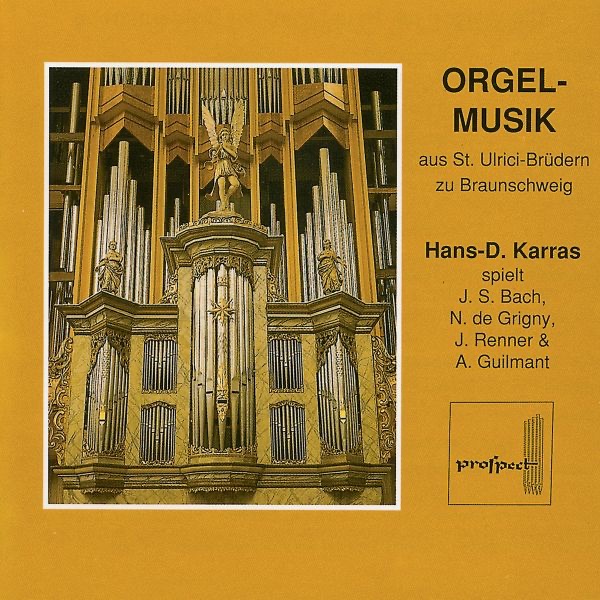 1990
1990
Choral
-
 March 17, 2017
Artist Info
Role:ComposerBirth:1868Death:1934Josef Renner was a classical music composer born on January 1, 1893, in Vienna, Austria. He was the son of a musician and grew up in a musical family. His father, also named Josef Renner, was a violinist in the Vienna Philharmonic Orchestra, and his mother was a pianist. Renner showed an early interest in music and began playing the piano at the age of four. Renner's musical education began at the Vienna Conservatory, where he studied piano, composition, and conducting. He was a talented student and quickly gained recognition for his musical abilities. In 1913, he graduated from the conservatory with honors and began his career as a composer. Renner's early works were heavily influenced by the Romantic composers of the time, such as Brahms and Wagner. He wrote several pieces for piano, including his Sonata in A minor, which was well-received by critics and audiences alike. Renner also composed several chamber music pieces, including his String Quartet in D minor, which was performed by the Vienna Philharmonic Orchestra. In 1914, Renner was drafted into the Austrian army to serve in World War I. He was stationed in Italy and saw combat on the front lines. During his time in the army, Renner continued to compose music, often using his experiences in the war as inspiration. One of his most famous works from this period is his Symphony No. 1, which was dedicated to the soldiers who fought in the war. After the war, Renner returned to Vienna and continued to compose music. He began to experiment with different styles and techniques, incorporating elements of jazz and folk music into his compositions. In 1922, he wrote his Piano Concerto No. 1, which was a departure from his earlier works and showcased his versatility as a composer. Renner's career continued to flourish throughout the 1920s and 1930s. He wrote several operas, including his most famous work, The Magic Flute, which was based on the Mozart opera of the same name. He also composed several ballets, including The Nutcracker, which was later adapted into a popular Christmas ballet. In 1938, Renner's life was upended by the Anschluss, the annexation of Austria by Nazi Germany. Renner, who was Jewish, was forced to flee the country and seek refuge in the United States. He settled in New York City and continued to compose music, often drawing on his experiences as a refugee and immigrant. Renner's later works were more experimental and avant-garde, incorporating elements of atonality and serialism. He wrote several pieces for electronic instruments, including his Electronic Symphony, which was one of the first works of its kind. Renner continued to compose music until his death in 1967. His legacy as a composer is marked by his versatility and willingness to experiment with different styles and techniques. His works continue to be performed and studied by musicians and music scholars around the world.More....
Recent Artist Music
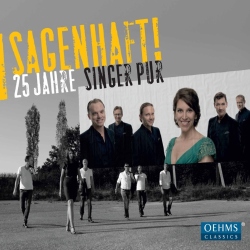
4
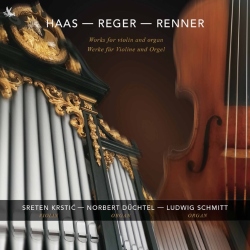
Interlude for violin & organ in F major, Op. 85
Interludium F-Dur Op. 85 für Violine und Orgel
6:20
Copyright Ⓒ 2013 Davinci Finger. All rights reseved
Service Terms & Policy