


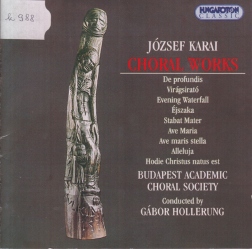
Jósef Karai
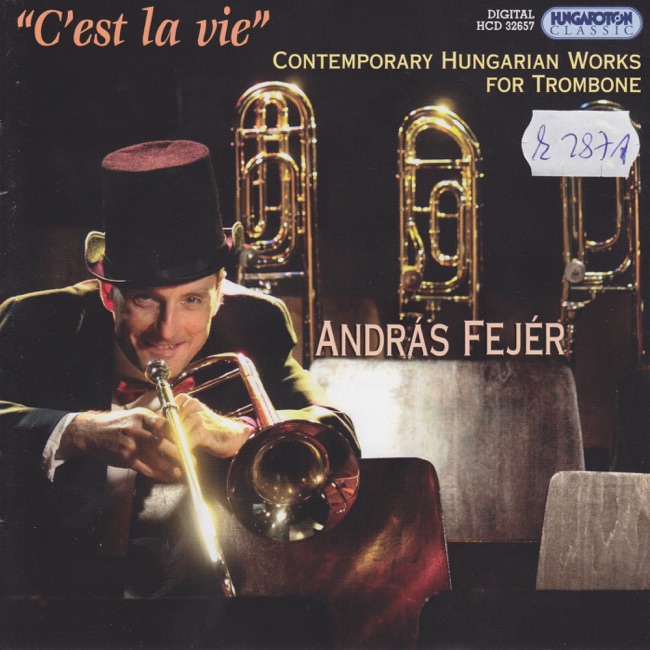
Artist Info
Role:ComposerBirth:1927Jósef Karai was a Hungarian composer and pianist who lived from 1902 to 1966. He was born in Budapest, Hungary, and showed an early interest in music. His parents recognized his talent and encouraged him to pursue his passion for music. Karai began his musical education at the Franz Liszt Academy of Music in Budapest, where he studied piano with István Thomán and composition with Zoltán Kodály. Karai's early compositions were influenced by the folk music of Hungary, which he had grown up listening to. He was particularly interested in the music of the Roma people, who had a strong presence in Hungary. Karai's compositions often incorporated elements of Roma music, such as the use of the cimbalom, a traditional Hungarian instrument. Karai's first major success as a composer came in 1926, when his Piano Concerto No. 1 was premiered in Budapest. The concerto was well-received by audiences and critics alike, and established Karai as a rising star in the Hungarian music scene. Over the next few years, Karai continued to compose and perform, and his reputation as a composer grew. In 1930, Karai was awarded the Franz Liszt Prize, one of the most prestigious awards for composers in Hungary. The prize recognized his contributions to Hungarian music and his talent as a composer. Karai continued to compose throughout the 1930s, and his works were performed by some of the leading orchestras and musicians in Hungary. Karai's music was characterized by its lyricism and emotional depth. He was particularly skilled at writing for the piano, and many of his works featured the instrument prominently. His music was also notable for its use of Hungarian folk melodies and rhythms, which gave it a distinctive flavor. During World War II, Karai continued to compose and perform, despite the difficult circumstances. He was briefly imprisoned by the Nazis in 1944, but was released after a few weeks. After the war, Karai resumed his career as a composer and pianist, and his music continued to be well-received by audiences and critics. In the 1950s, Karai's music began to receive international recognition. His Piano Concerto No. 2 was premiered in Paris in 1951, and was well-received by French audiences. Karai also began to receive commissions from orchestras and musicians outside of Hungary, which helped to further raise his profile. Karai's later works were more experimental than his earlier compositions. He began to incorporate elements of serialism and atonality into his music, which gave it a more modernist flavor. Despite this, his music remained deeply rooted in Hungarian folk traditions, and he continued to use folk melodies and rhythms in his compositions. Karai died in 1966, at the age of 64. He left behind a legacy of music that continues to be performed and admired today. His works are characterized by their emotional depth, lyricism, and use of Hungarian folk traditions, and they remain an important part of the Hungarian classical music canon.More....
Recent Artist Music
Copyright Ⓒ 2013 Davinci Finger. All rights reseved
Service Terms & Policy