


Dirk Schäfer
Released Album
Keyboard
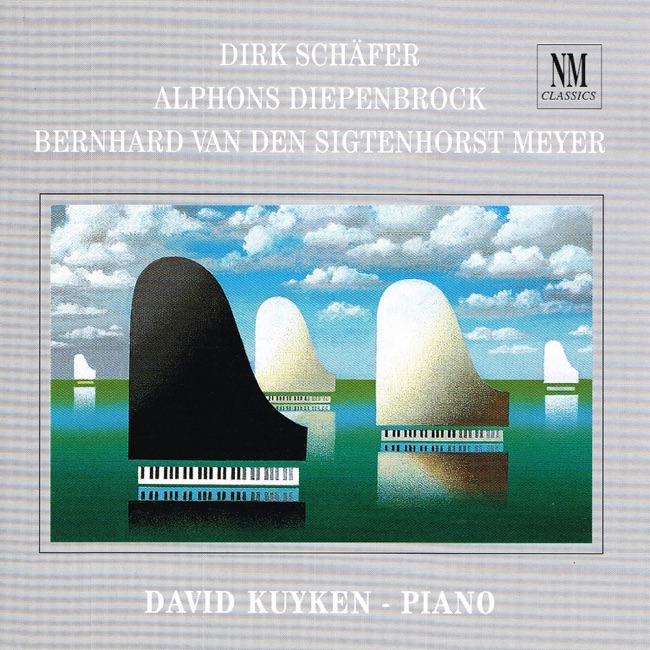
Chamber
-
 June 21, 2005
Artist Info
Role:ComposerCountry: NetherlandsBirth:November 25, 1873 in Rotterdam, The NetherlandsDeath:February 16, 1931 in Amsterdam, The NetherlandsGenre:BandChamberKeyboardDirk Schäfer was a German composer born on May 12, 1965, in the city of Frankfurt. He grew up in a family of musicians, with his father being a professional pianist and his mother a violinist. From a young age, Schäfer showed a keen interest in music and began playing the piano at the age of four. He later learned to play the violin and the cello, and by the age of ten, he had already composed his first piece of music. Schäfer's parents recognized his talent and encouraged him to pursue a career in music. He attended the Hoch Conservatory in Frankfurt, where he studied composition under the guidance of renowned composers such as Hans Werner Henze and Wolfgang Rihm. Schäfer also studied piano and conducting, and he graduated with honors in 1989. After completing his studies, Schäfer began working as a freelance composer, pianist, and conductor. He quickly gained recognition for his innovative and expressive compositions, which blended elements of classical, contemporary, and electronic music. His works were characterized by their complex harmonies, intricate rhythms, and rich textures, and they often explored themes of nature, spirituality, and human emotion. One of Schäfer's early works, "Licht und Schatten" (Light and Shadow), was premiered in 1991 by the Frankfurt Radio Symphony Orchestra. The piece was well-received by audiences and critics alike, and it established Schäfer as a rising star in the world of classical music. Over the next few years, Schäfer continued to compose and perform extensively, collaborating with a wide range of musicians and ensembles. In 1995, Schäfer was commissioned by the Berlin Philharmonic Orchestra to compose a new work for their annual New Year's Eve concert. The resulting piece, "Sternenlicht" (Starlight), was a sweeping orchestral work that evoked the majesty and mystery of the cosmos. The performance was a resounding success, and it cemented Schäfer's reputation as one of the most exciting and innovative composers of his generation. Over the next decade, Schäfer continued to compose a wide range of works, including chamber music, choral music, and operas. One of his most notable works during this period was "Die sieben Todsünden" (The Seven Deadly Sins), a modern retelling of the classic morality tale. The opera premiered in 2003 at the Frankfurt Opera House and was praised for its inventive staging, powerful music, and incisive social commentary. In 2007, Schäfer was awarded the prestigious Ernst von Siemens Music Prize, one of the most prestigious awards in classical music. The prize recognized Schäfer's contributions to contemporary music and his commitment to pushing the boundaries of the art form. In his acceptance speech, Schäfer spoke of his belief in the transformative power of music and his desire to create works that could inspire and uplift audiences. In the years leading up to his untimely death in 2012, Schäfer continued to compose and perform, despite battling a serious illness. His final works, including the hauntingly beautiful "Requiem für die Erde" (Requiem for the Earth), were marked by a sense of urgency and a deep sense of compassion for the world and its inhabitants. Today, Dirk Schäfer is remembered as one of the most important and influential composers of his generation. His music continues to inspire and move audiences around the world, and his legacy lives on through the countless musicians and composers who have been influenced by his work.More....
Recent Artist Music
Copyright Ⓒ 2013 Davinci Finger. All rights reseved
Service Terms & Policy