


Marco Aureliano de Ferranti
Released Album
Chamber
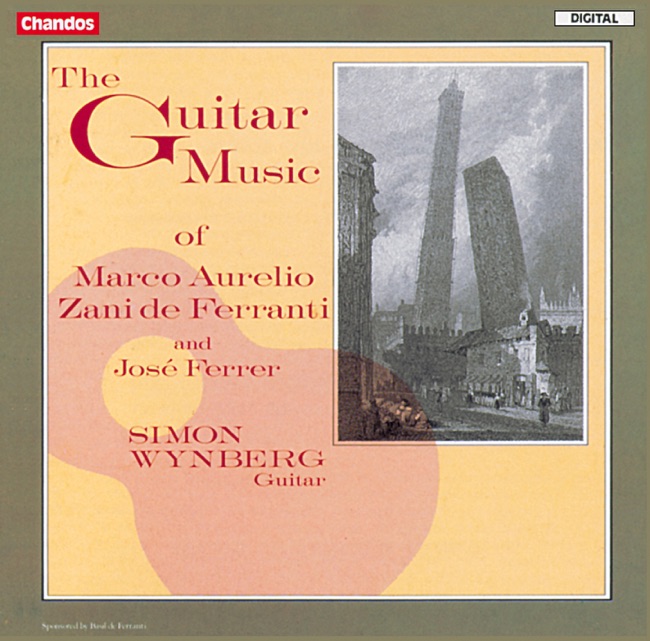
Artist Info
Role:ComposerPeriod:RomanticGenre:ChamberMarco Aureliano de Ferranti was a classical music composer born on October 10, 1845, in Rome, Italy. He was the son of a wealthy Italian family, and his father was a prominent lawyer. Ferranti showed an early interest in music and began studying piano and composition at a young age. Ferranti's musical education began at the Conservatorio di Santa Cecilia in Rome, where he studied under the tutelage of some of the most prominent composers of the time, including Giovanni Pacini and Giuseppe Baini. He quickly showed a talent for composition, and his early works were well-received by his teachers and peers. After completing his studies at the conservatory, Ferranti began to establish himself as a composer in his own right. He wrote a number of works for piano, including several sonatas and a set of variations on a theme by Beethoven. He also composed a number of chamber works, including string quartets and a piano trio. Ferranti's early works were heavily influenced by the Romantic composers of the time, particularly Chopin and Liszt. His music was characterized by its virtuosity and emotional intensity, and he quickly gained a reputation as one of the most promising young composers in Italy. In 1870, Ferranti moved to Paris, where he continued to compose and perform. He quickly became a fixture in the city's musical scene, and his works were performed by some of the most prominent musicians of the time, including the pianist Camille Saint-Saëns. Ferranti's music continued to evolve during his time in Paris. He began to incorporate elements of French impressionism into his compositions, and his works became more harmonically complex and experimental. He also began to experiment with orchestration, and his orchestral works became increasingly ambitious and grand in scale. One of Ferranti's most famous works from this period is his Symphony No. 1 in D minor, which was premiered in Paris in 1882. The symphony is a sprawling, four-movement work that showcases Ferranti's mastery of orchestration and his ability to create complex, multi-layered textures. The work was well-received by critics and helped to establish Ferranti as one of the leading composers of his time. Ferranti continued to compose throughout the rest of his life, and his later works continued to push the boundaries of classical music. He wrote a number of operas, including the critically acclaimed La Fiamma, which premiered in Milan in 1901. He also wrote a number of choral works, including a setting of the Requiem Mass that is considered one of his masterpieces. Ferranti's music was characterized by its emotional intensity, its technical virtuosity, and its willingness to experiment with new forms and techniques. He was a true innovator in the world of classical music, and his works continue to be performed and admired to this day. Ferranti died on January 12, 1914, in Paris, France. He left behind a legacy of groundbreaking compositions that continue to inspire and challenge musicians and audiences alike. His contributions to the world of classical music are immeasurable, and his influence can still be felt in the works of composers today.More....
Recent Artist Music
Copyright Ⓒ 2013 Davinci Finger. All rights reseved
Service Terms & Policy