


Grete von Zieritz
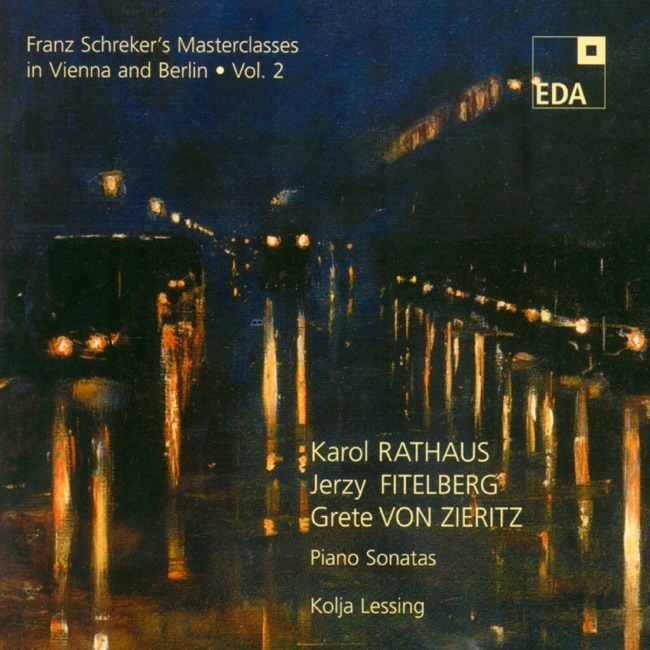
Artist Info
Role:ComposerBirth:March 10, 1899 in Vienna, AustriaDeath:July 17, 2001Period:ModernGenre:ChamberKeyboardVocalGrete von Zieritz was a German composer and pianist who was born on May 3, 1899, in Berlin, Germany. She was the daughter of a wealthy family and grew up in a musical environment. Her father was a music lover and her mother was a singer. Grete von Zieritz started playing the piano at a young age and showed great talent. She received her first piano lessons from her mother and later studied with several renowned pianists. In 1917, Grete von Zieritz started studying composition with the composer Paul Juon at the Berlin Hochschule für Musik. She also studied piano with the pianist and composer Ferruccio Busoni. During her studies, she composed several works, including a piano concerto, a string quartet, and a sonata for violin and piano. After completing her studies, Grete von Zieritz started working as a pianist and composer. She performed as a soloist and chamber musician in Germany and other European countries. She also composed music for various ensembles, including orchestras, chamber groups, and solo instruments. Grete von Zieritz's music is characterized by a lyrical and expressive style. She was influenced by the Romantic tradition and the music of composers such as Brahms, Schumann, and Chopin. Her compositions are often melodic and harmonically rich, with a strong sense of form and structure. One of Grete von Zieritz's most famous works is her Piano Concerto in A minor, Op. 43. The concerto was composed in 1928 and premiered in Berlin in 1929. It is a virtuosic work that showcases the pianist's technical abilities and musical sensitivity. The concerto is in three movements and features a solo piano part that is both challenging and expressive. Another notable work by Grete von Zieritz is her String Quartet No. 1 in D minor, Op. 20. The quartet was composed in 1923 and premiered in Berlin in 1924. It is a dramatic and emotional work that explores the full range of the string quartet's capabilities. The quartet is in four movements and features a variety of textures and moods. Grete von Zieritz also composed several works for solo piano, including her Sonata in B minor, Op. 25. The sonata was composed in 1925 and is a virtuosic and expressive work that showcases the pianist's technical abilities and musical sensitivity. The sonata is in three movements and features a variety of textures and moods. In addition to her compositions, Grete von Zieritz was also a respected music educator. She taught piano and composition at the Berlin Hochschule für Musik and the Stern Conservatory in Berlin. She also wrote several articles and essays on music theory and composition. Grete von Zieritz's career was cut short by the rise of the Nazi regime in Germany. She was forced to leave her teaching position at the Berlin Hochschule für Musik in 1933 because of her Jewish heritage. She continued to compose and perform, but her opportunities were limited. In 1943, she was arrested by the Gestapo and sent to the Theresienstadt concentration camp. She survived the war and returned to Berlin, but her health was severely affected by her experiences. Grete von Zieritz died on March 26, 1972, in Berlin, Germany. Her music is still performed and recorded today, and she is remembered as a talented and expressive composer who made significant contributions to the classical music tradition.More....
Recent Artist Music
Copyright Ⓒ 2013 Davinci Finger. All rights reseved
Service Terms & Policy