


Örjan Högberg
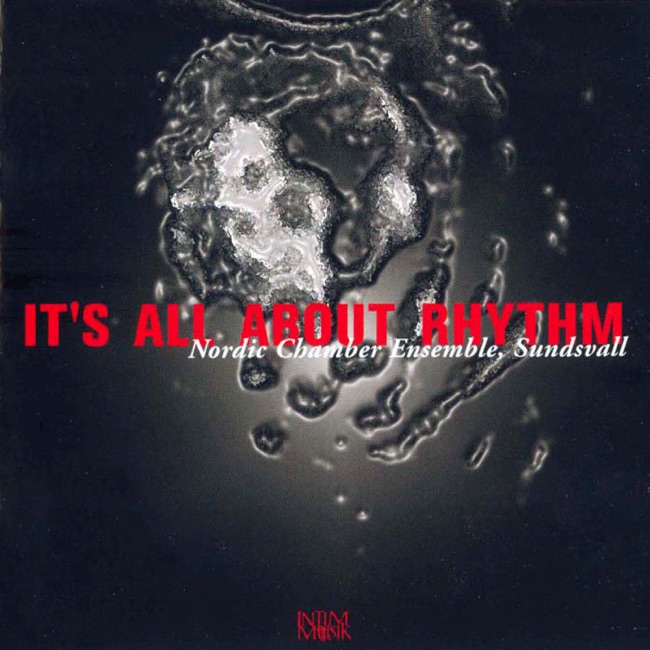
Artist Info
Role:ComposerBirth:1953Örjan Högberg was a Swedish composer who was born on May 22, 1952, in the city of Stockholm. He grew up in a family of musicians, with his father being a pianist and his mother a singer. From a young age, Högberg showed a keen interest in music and began playing the piano at the age of six. Högberg's musical education began at the Royal College of Music in Stockholm, where he studied composition under the tutelage of Ingvar Lidholm. He later went on to study at the Sibelius Academy in Helsinki, Finland, where he was taught by Einojuhani Rautavaara. Högberg's early works were heavily influenced by the avant-garde movement of the 1960s and 1970s, and he was known for his experimental approach to composition. His music often featured unconventional instrumentation and complex rhythmic structures, and he was particularly interested in exploring the possibilities of electronic music. One of Högberg's most notable early works was his 1976 composition "Klangbilder," which was written for a chamber ensemble and featured a range of unusual instruments, including a prepared piano and a waterphone. The piece was well-received by critics and helped to establish Högberg as a rising star in the Swedish classical music scene. Throughout the 1980s and 1990s, Högberg continued to produce a steady stream of innovative and challenging works. He was particularly interested in exploring the intersection between traditional classical music and electronic music, and many of his compositions featured a blend of acoustic and electronic elements. One of Högberg's most significant works from this period was his 1989 composition "Mikrokosmos," which was written for a large ensemble and featured a range of electronic instruments, including synthesizers and samplers. The piece was praised for its innovative use of technology and its complex, multi-layered textures. In addition to his work as a composer, Högberg was also a respected music educator. He taught composition at the Royal College of Music in Stockholm for many years, and his students included several notable Swedish composers, including Karin Rehnqvist and Anders Hillborg. Despite his many accomplishments, Högberg's career was tragically cut short when he passed away in 1998 at the age of 46. However, his legacy as a pioneering composer and educator continues to live on, and his music remains an important part of the Swedish classical music canon. Some of Högberg's other notable works include: - "Sinfonia Concertante" (1982), a concerto for violin, cello, and orchestra that features a range of unconventional playing techniques and extended instrumental techniques. - "Klangbilder II" (1984), a sequel to Högberg's earlier "Klangbilder" composition that features a similar range of unusual instruments and textures. - "Sinfonia" (1991), a large-scale orchestral work that features a complex, multi-layered structure and a range of unconventional instrumental techniques. - "Concerto for Piano and Orchestra" (1995), a virtuosic work that showcases Högberg's skill as a pianist and his ability to blend traditional classical music with more experimental elements. Overall, Örjan Högberg was a highly innovative and influential composer who helped to push the boundaries of classical music in Sweden and beyond. His music remains an important part of the contemporary classical music canon, and his legacy continues to inspire new generations of composers and musicians.More....
Recent Artist Music
Copyright Ⓒ 2013 Davinci Finger. All rights reseved
Service Terms & Policy