


David Kechley
Released Album
Chamber
-
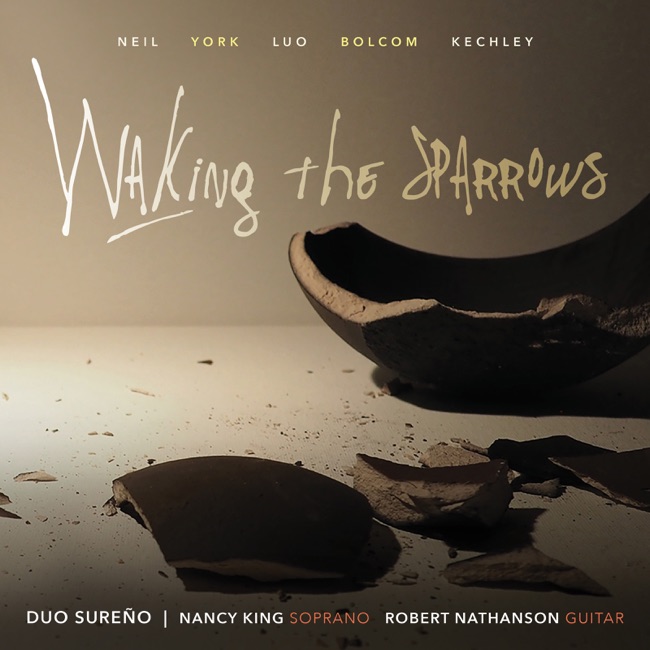 July 13, 2018
 -
 September 25, 2012
 -
 February 15, 2000
 -
 November 24, 1998
 -
 January 1, 1998
 -
 October 1, 1996
Symphony
-
 April 27, 2018
Artist Info
Role:Composer PerformerBirth:1947 in Seattle, WAPeriod:ContemporaryGenre:ChamberDavid Kechley is an American composer of classical music who was born on August 20, 1947, in New York City. He grew up in a musical family, with his father being a jazz pianist and his mother a singer. Kechley began playing the piano at a young age and later learned to play the trumpet and guitar. He attended the University of California, Berkeley, where he earned a Bachelor of Arts degree in music in 1969. He then went on to earn a Master of Arts degree in music composition from San Francisco State University in 1972. Kechley's early compositions were influenced by the avant-garde music of the 1960s and 1970s, particularly the works of John Cage and Karlheinz Stockhausen. He was also influenced by the minimalist music of Steve Reich and Philip Glass. Kechley's early works were characterized by their use of unconventional instruments and techniques, such as the use of found objects as percussion instruments and the use of extended techniques on traditional instruments. One of Kechley's early works, "The Persistence of Memory," was written for a chamber ensemble and premiered in 1972. The piece was inspired by the surrealist paintings of Salvador Dali and featured unconventional instrumentation, including a bicycle wheel and a typewriter. The piece was well-received and helped establish Kechley as a promising young composer. In the 1980s, Kechley's style began to evolve, and he began incorporating more traditional elements into his compositions. He began writing more tonal music and using more conventional instrumentation. One of his most well-known works from this period is "The Persistence of Memory II," which was written for a chamber ensemble and premiered in 1984. The piece is a reworking of his earlier work, "The Persistence of Memory," and features a more traditional instrumentation, including strings, woodwinds, and percussion. Kechley's music continued to evolve throughout the 1990s and 2000s. He began incorporating more electronic elements into his compositions, including synthesizers and computer-generated sounds. He also began writing more large-scale works, including symphonies and operas. One of Kechley's most ambitious works is his opera, "The Ghosts of Versailles," which premiered in 2009. The opera is based on the play "The Guilty Mother" by Pierre-Augustin Caron de Beaumarchais and features a libretto by William M. Hoffman. The opera is set in the afterlife and features a cast of historical figures, including Marie Antoinette, Beaumarchais, and Mozart. The opera was well-received and helped establish Kechley as one of the leading composers of his generation. Kechley's music has been performed by some of the world's leading orchestras and ensembles, including the Boston Symphony Orchestra, the San Francisco Symphony, and the New York Philharmonic. He has also received numerous awards and honors for his work, including a Guggenheim Fellowship and a grant from the National Endowment for the Arts. In addition to his work as a composer, Kechley has also been a dedicated teacher and mentor to young composers. He has taught at a number of universities and conservatories, including the University of Oregon, the University of California, Santa Cruz, and the New England Conservatory of Music. Overall, David Kechley is a composer who has made significant contributions to the world of classical music. His music is characterized by its innovative use of instrumentation and its incorporation of electronic elements.More....
Recent Artist Music



Copyright Ⓒ 2013 Davinci Finger. All rights reseved
Service Terms & Policy