


Harold Gomberg
Artist Info
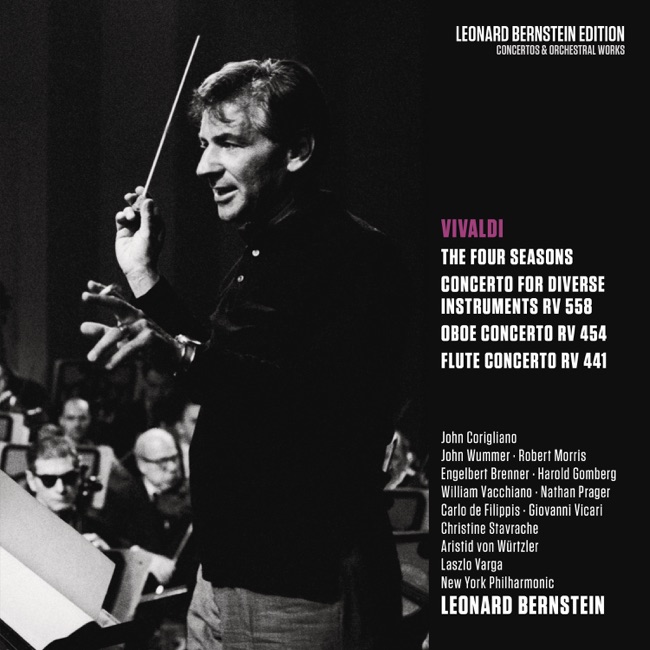
Harold Gomberg was an American oboist who was born on June 22, 1920, in Chicago, Illinois. He was the son of Russian immigrants and grew up in a musical family. His father played the violin, and his mother was a pianist. Gomberg began playing the oboe at the age of 12 and quickly showed a natural talent for the instrument. Gomberg attended the Curtis Institute of Music in Philadelphia, where he studied with Marcel Tabuteau, who was considered one of the greatest oboists of the 20th century. Tabuteau was known for his innovative teaching methods, and Gomberg was one of his most promising students. Gomberg graduated from Curtis in 1941 and immediately began his professional career as an oboist. Gomberg's first major job was with the Pittsburgh Symphony Orchestra, where he played from 1941 to 1943. He then joined the United States Army and served in the Army Band during World War II. After the war, Gomberg returned to Pittsburgh and played with the Pittsburgh Symphony Orchestra until 1947. In 1947, Gomberg moved to New York City and joined the New York Philharmonic as its principal oboist. He held this position for 38 years, until his retirement in 1985. During his tenure with the New York Philharmonic, Gomberg became one of the most respected and admired oboists in the world. He was known for his beautiful tone, impeccable technique, and musical sensitivity. Gomberg was also a prolific soloist and chamber musician. He performed with many of the world's leading orchestras, including the Boston Symphony Orchestra, the Chicago Symphony Orchestra, and the London Symphony Orchestra. He also played with the Chamber Music Society of Lincoln Center and was a founding member of the New York Woodwind Quintet. Gomberg's most famous performance was his solo in the second movement of Aaron Copland's "Appalachian Spring." This piece, which was written for Martha Graham's ballet of the same name, has become one of the most iconic works of American classical music. Gomberg's oboe solo, which is played over a simple, haunting melody, perfectly captures the beauty and simplicity of the Appalachian landscape. Gomberg was also a dedicated teacher and mentor. He taught at the Juilliard School and the Manhattan School of Music, and many of his students went on to become successful oboists in their own right. Gomberg was known for his kindness, generosity, and patience, and he was beloved by his students and colleagues alike. In recognition of his contributions to the world of classical music, Gomberg received many awards and honors throughout his career. He was awarded the National Medal of Arts in 1986, and he was inducted into the American Classical Music Hall of Fame in 1998. He was also awarded honorary doctorates from the Curtis Institute of Music and the Manhattan School of Music. Gomberg retired from the New York Philharmonic in 1985, but he continued to perform and teach until his death in 1989. He was 69 years old. Gomberg's legacy as one of the greatest oboists of the 20th century lives on through his recordings, his students, and the countless musicians who were inspired by his artistry and dedication to his craft.More....
Recent Artist Music
Copyright Ⓒ 2013 Davinci Finger. All rights reseved
Service Terms & Policy