


João Domingos Bontempo
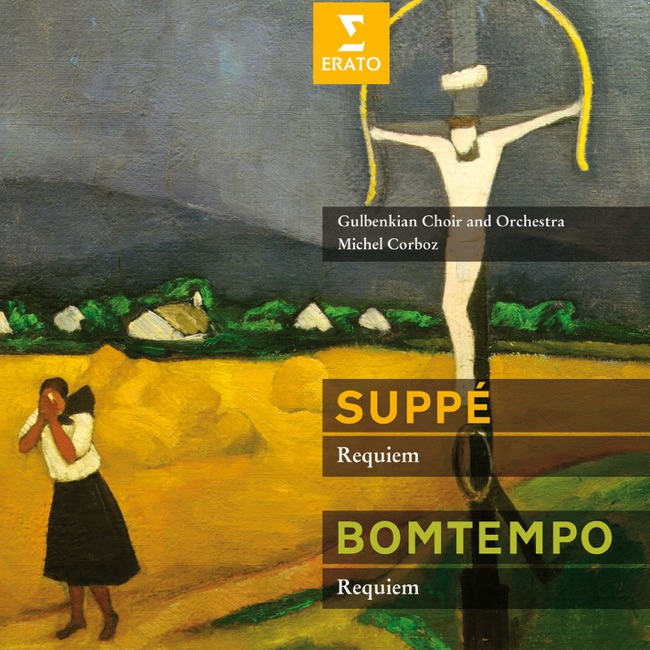
Artist Info
Role:ComposerBirth:1775Death:1842João Domingos Bontempo is a Brazilian composer and pianist who was born on August 22, 1956, in São Paulo, Brazil. He grew up in a family of musicians, with his father being a violinist and his mother a pianist. Bontempo began his musical studies at a young age, starting with the piano at the age of six. He later studied composition with Willy Corrêa de Oliveira and Camargo Guarnieri, two of Brazil's most prominent composers. Bontempo's early works were heavily influenced by Brazilian folk music and the music of his contemporaries. He was particularly interested in the use of traditional Brazilian rhythms and melodies in his compositions. His first major work, "Cantiga," was written in 1978 and was based on a traditional Brazilian folk song. The piece was well-received and helped establish Bontempo as a promising young composer. In the 1980s, Bontempo began to explore more experimental forms of composition. He was particularly interested in the use of electronic music and computer-generated sounds. His work during this period was characterized by a blend of traditional and modern elements, with a focus on exploring new sounds and textures. One of Bontempo's most significant works from this period is "Música para o Fim do Mundo" (Music for the End of the World), which was written in 1985. The piece is a multimedia work that combines live performance with electronic music and video projections. It was inspired by the idea of a post-apocalyptic world and explores themes of destruction and rebirth. In the 1990s, Bontempo continued to experiment with new forms of composition. He began to incorporate elements of jazz and rock music into his work, creating a unique blend of styles. His compositions during this period were characterized by a sense of playfulness and experimentation, with a focus on exploring new sounds and textures. One of Bontempo's most significant works from this period is "Concerto para Piano e Orquestra" (Concerto for Piano and Orchestra), which was written in 1993. The piece is a fusion of classical and jazz music, with a focus on improvisation and spontaneity. It was well-received by audiences and helped establish Bontempo as a leading figure in Brazilian contemporary music. In the 2000s, Bontempo continued to push the boundaries of classical music. He began to incorporate elements of Brazilian popular music into his work, creating a unique blend of styles. His compositions during this period were characterized by a sense of nostalgia and a focus on exploring the cultural heritage of Brazil. One of Bontempo's most significant works from this period is "Cantos de Abertura" (Opening Songs), which was written in 2002. The piece is a tribute to the indigenous peoples of Brazil and incorporates elements of their music and culture. It was well-received by audiences and helped establish Bontempo as a leading figure in Brazilian contemporary music. Bontempo's work has been recognized both nationally and internationally. He has received numerous awards and honors, including the Prêmio Carlos Gomes, Brazil's most prestigious music award, and the Prix Ars Electronica, one of the most important awards in the field of electronic music. In addition to his work as a composer, Bontempo is also a respected pianist. He has performed extensively throughout Brazil and internationally, both as a soloist and as a member of various ensembles. Overall, João Domingos Bontempo is a significant figure in Brazilian contemporary music.More....
Recommend Playlist


Copyright Ⓒ 2013 Davinci Finger. All rights reseved
Service Terms & Policy