


Ede Terényi
Released Album
Chamber
-
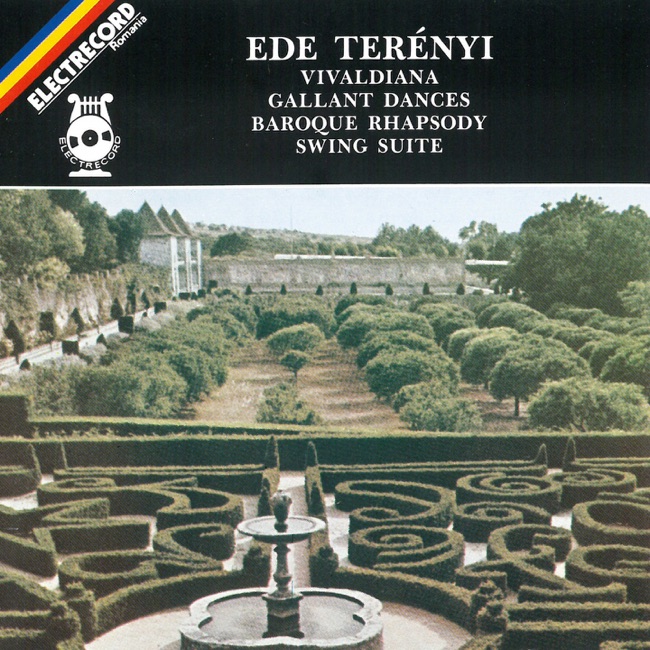
-
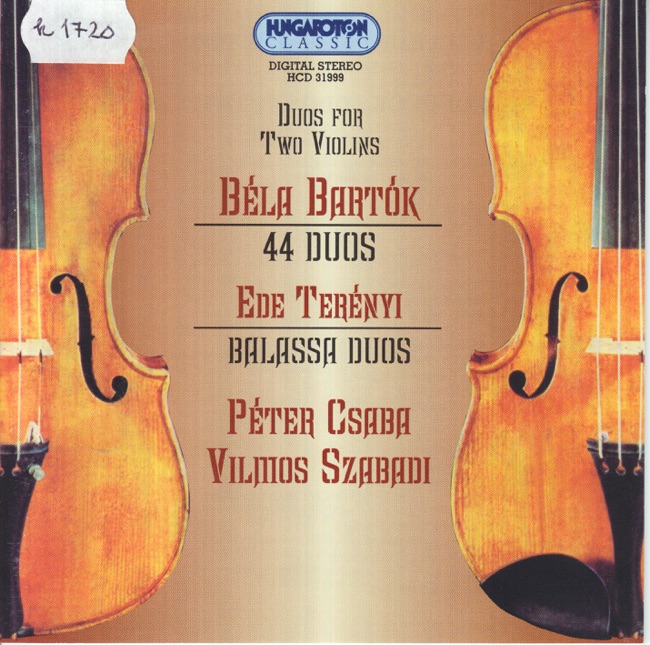 March 27, 2001
Artist Info
Role:ComposerCountry: RomaniaBirth:1935Period:ModernGenre:ChamberConcertoEde Terényi was a Hungarian composer and music educator who was born on August 22, 1932, in Budapest, Hungary. He was the son of a musicologist and a pianist, and his parents encouraged him to pursue a career in music from a young age. Terényi began studying the piano and composition at the Franz Liszt Academy of Music in Budapest when he was just 14 years old. Terényi's early compositions were heavily influenced by the music of Béla Bartók and Zoltán Kodály, two of Hungary's most famous composers. He was particularly drawn to Bartók's use of folk music in his compositions, and he began incorporating elements of Hungarian folk music into his own works. In 1956, Terényi graduated from the Franz Liszt Academy of Music with a degree in composition. He then went on to study musicology at the University of Budapest, where he earned a doctorate in 1961. During this time, he also worked as a music critic for various Hungarian newspapers and magazines. Terényi's early compositions were well-received in Hungary, and he quickly gained a reputation as one of the country's most promising young composers. In 1958, he won the Erkel Prize, one of Hungary's most prestigious awards for composers. This was followed by a number of other awards and honors, including the Kossuth Prize in 1973 and the Bartók-Pásztory Award in 1982. Throughout his career, Terényi remained committed to incorporating elements of Hungarian folk music into his compositions. He believed that folk music was an important part of Hungary's cultural heritage, and he sought to preserve and promote it through his music. Many of his works are based on traditional Hungarian folk songs and dances, and he often used folk instruments such as the cimbalom and the tárogató in his compositions. One of Terényi's most famous works is his Concerto for Cimbalom and Orchestra, which he composed in 1979. The cimbalom is a traditional Hungarian instrument that is similar to a hammered dulcimer, and Terényi was one of the first composers to write a concerto for the instrument. The piece is characterized by its virtuosic cimbalom solos and its use of Hungarian folk melodies. Another notable work by Terényi is his String Quartet No. 5, which he composed in 1987. The piece is based on a traditional Hungarian folk song called "The Peacock," and it is known for its complex rhythms and intricate harmonies. The quartet has been performed by many of the world's leading string quartets, including the Emerson Quartet and the Tokyo Quartet. In addition to his work as a composer, Terényi was also a respected music educator. He taught composition and music theory at the Franz Liszt Academy of Music for many years, and he was known for his innovative teaching methods. He believed that music education should be accessible to everyone, regardless of their background or level of musical ability. Terényi continued to compose and teach until his death on January 27, 1997, at the age of 64. He left behind a legacy of innovative and influential compositions that continue to be performed and studied by musicians around the world. His commitment to preserving and promoting Hungarian folk music has also had a lasting impact on the country's cultural heritage.More....
Recent Artist Music
Copyright Ⓒ 2013 Davinci Finger. All rights reseved
Service Terms & Policy