


Joachim Nicolas Eggert
Released Album
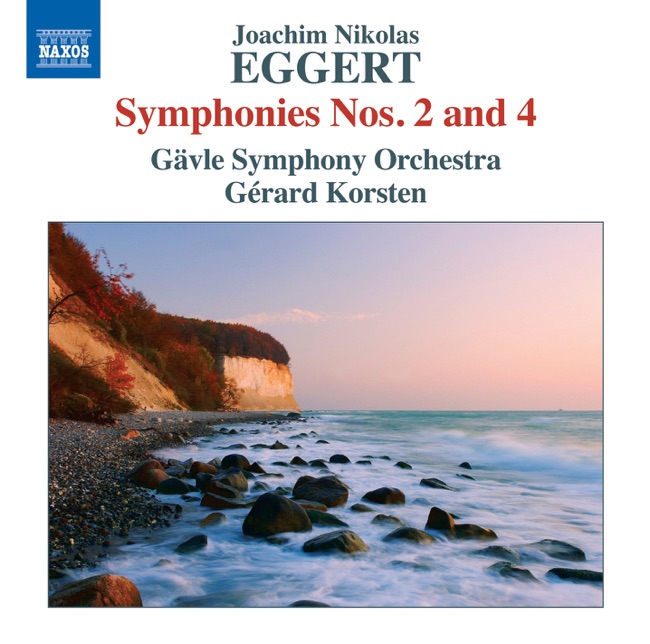
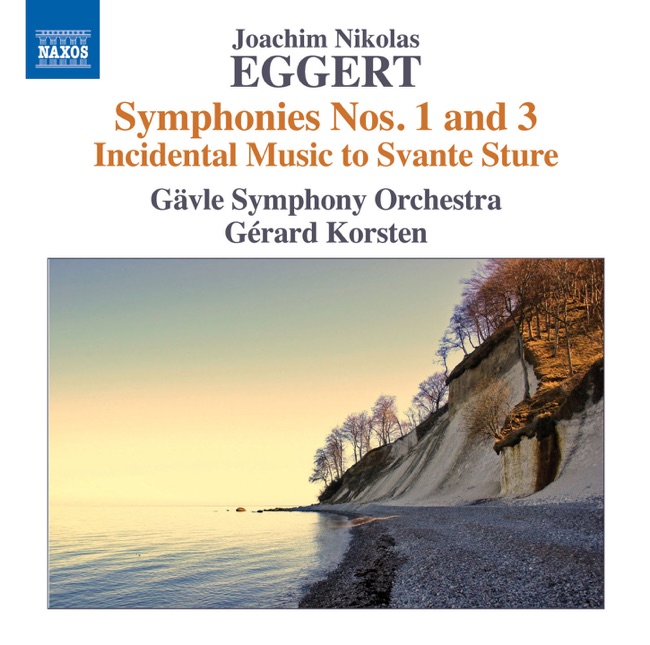
Symphony
-
 December 11, 2015
Orchestral
Artist Info
Role:ComposerBirth:February 22, 1779 in Gingst, PomeraniaDeath:April 14, 1813 in Kisa, SwedenPeriod:ClassicalJoachim Nicolas Eggert was a Swedish composer born on February 29, 1779, in Göttingen, Germany. His father, Johann Nikolaus Eggert, was a musician and composer who worked as a court musician in Göttingen. Eggert's mother, Maria Elisabeth, was a singer. Eggert's family moved to Sweden when he was a child, and he grew up in Stockholm. Eggert showed an early interest in music and began studying piano and violin at a young age. He also studied composition with the Swedish composer Johann Gottlieb Naumann. In 1798, Eggert entered the Royal Swedish Academy of Music, where he studied composition with Joseph Martin Kraus. Eggert's early works were influenced by the classical style of Haydn and Mozart. He wrote several symphonies, including his Symphony No. 1 in C major, which was premiered in 1800. The symphony was well-received and helped establish Eggert as a composer to watch. In 1802, Eggert traveled to Vienna to study with the composer Johann Georg Albrechtsberger. While in Vienna, Eggert was exposed to the music of Beethoven, which had a profound impact on his own compositions. Eggert's Symphony No. 2 in D major, which he wrote after returning to Sweden, shows the influence of Beethoven's symphonies. Eggert's most famous work is his Symphony No. 3 in E-flat major, which he wrote in 1809. The symphony is sometimes called the "Eroica of the North" because of its grandeur and heroic themes. The symphony was premiered in Stockholm in 1810 and was a great success. It remains one of Eggert's most popular works. In addition to his symphonies, Eggert wrote several operas, including his most famous work, The Fishermen, which was premiered in 1819. The opera is based on a Swedish folk tale and tells the story of a fisherman who falls in love with a mermaid. The opera was a critical and commercial success and helped establish Eggert as one of Sweden's leading composers. Eggert also wrote several chamber music works, including his String Quartet No. 1 in C major, which was premiered in 1804. The quartet shows Eggert's mastery of the classical style and his ability to write music that is both elegant and expressive. Eggert's later works show a move towards the Romantic style of music. His Symphony No. 4 in C minor, which he wrote in 1817, is a darker and more dramatic work than his earlier symphonies. The symphony shows Eggert's willingness to experiment with new forms and styles. Eggert's career was cut short when he died of tuberculosis on April 1, 1813, at the age of 34. Despite his short life, Eggert left behind a significant body of work that continues to be performed and admired today. His music is known for its elegance, expressiveness, and mastery of the classical style. Eggert's influence can be heard in the works of later Swedish composers, including Franz Berwald and Hugo Alfvén.More....
Recent Artist Music
Copyright Ⓒ 2013 Davinci Finger. All rights reseved
Service Terms & Policy