


Kaiser Ferdinand III
Artist Info
Role:ComposerBirth:1608Death:1657Kaiser Ferdinand III was a prominent composer of the Baroque era, born on July 9, 1608, in Graz, Austria. He was the eldest son of Archduke Charles II of Austria and Maria Anna of Bavaria. Ferdinand III was a member of the Habsburg dynasty, which was one of the most influential families in Europe during the 16th and 17th centuries. Ferdinand III was born into a family of musicians, and his father was a patron of the arts. He received his early musical education from his father and his uncle, Archduke Leopold V. Ferdinand III showed a great interest in music from a young age and was a talented musician. He learned to play the violin, the lute, and the harpsichord. In 1625, Ferdinand III was appointed as the Archbishop of Olomouc, a position that he held until 1637. During his time as the Archbishop, he continued to pursue his passion for music and composed several works. He also established a music school in Olomouc, which became one of the most prestigious music schools in Europe. In 1637, Ferdinand III was elected as the King of Hungary, and in 1638, he became the Holy Roman Emperor. He was a patron of the arts and supported many musicians and composers during his reign. He was also a composer himself and composed several works, including operas, oratorios, and instrumental music. One of Ferdinand III's most famous works is his opera, La Clemenza di Tito, which was first performed in Vienna in 1653. The opera is based on the life of the Roman Emperor Titus and is considered one of the finest examples of Baroque opera. The opera was a great success and was performed throughout Europe. Ferdinand III was also a prolific composer of instrumental music. He composed several sonatas, suites, and concertos for various instruments, including the violin, the harpsichord, and the organ. His instrumental music is characterized by its virtuosity and its use of counterpoint. Ferdinand III was a devout Catholic and composed several works of sacred music. He composed several masses, motets, and hymns, which were performed in churches throughout Europe. His sacred music is characterized by its grandeur and its use of polyphony. Ferdinand III died on April 2, 1657, in Vienna, Austria. He was succeeded by his son, Leopold I. Ferdinand III's legacy as a composer and patron of the arts continues to be celebrated today. His music is still performed and recorded, and his contributions to the development of Baroque music are widely recognized.More....
Recent Artist Music
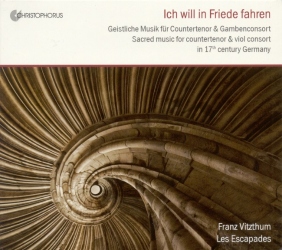
2
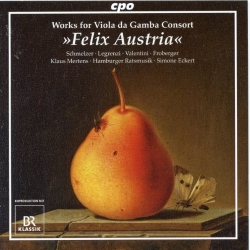
Jesus' Corona Virginum
Hymnus Jesu Corona Virginum, for baritone, 4 violas da gamba and basso continuo
5:16
Copyright Ⓒ 2013 Davinci Finger. All rights reseved
Service Terms & Policy