


Natanael Berg
Released Album
Symphony
Orchestral
Artist Info
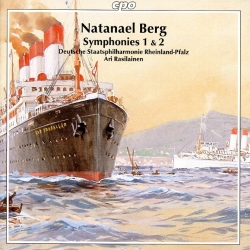
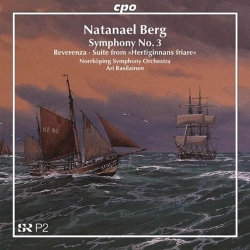
Role:ComposerCountry: SwedenBirth:February 9, 1879 in Stockholm, SwedenDeath:October 14, 1957 in Stockholm, SwedenNatanael Berg was a Swedish composer born on February 28, 1879, in Stockholm. He was the son of a music teacher and grew up in a musical family. Berg began his musical education at a young age, studying piano and violin with his father. He later studied at the Royal College of Music in Stockholm, where he was a student of the composer and conductor Johan Lindegren. Berg's early compositions were influenced by the Romantic style of the late 19th century. However, he soon began to develop his own unique style, which was characterized by a blend of Romanticism and modernism. His music was often characterized by lush harmonies, complex rhythms, and a sense of drama and intensity. One of Berg's early successes was his opera "Frida" (1905), which was based on a play by the Swedish writer Selma Lagerlöf. The opera was well-received and helped to establish Berg as a major figure in Swedish music. He went on to compose several more operas, including "Gunnar Hedes saga" (1911) and "Kung Eriks visor" (1916). In addition to his operas, Berg also composed a number of orchestral works, including his Symphony No. 1 (1915) and Symphony No. 2 (1920). These works were notable for their use of complex harmonies and rhythms, as well as their dramatic and emotional intensity. Berg was also a prolific composer of chamber music, including several string quartets and piano trios. His chamber music was characterized by its intricate counterpoint and use of chromatic harmonies. Despite his success as a composer, Berg was also a controversial figure in Swedish music. He was known for his outspoken views on music and politics, and he often clashed with the establishment. In particular, he was critical of the conservative musical establishment in Sweden, which he felt was stifling creativity and innovation. Berg's most controversial work was his "Symphony No. 3" (1928), which was inspired by the Russian Revolution. The symphony was seen as a political statement, and it was banned by the Swedish government for several years. Berg was also criticized for his use of dissonance and unconventional harmonies, which were seen as too radical by some. Despite these controversies, Berg remained a major figure in Swedish music throughout his career. He continued to compose until his death in 1957, leaving behind a legacy of innovative and emotionally powerful music. Today, he is remembered as one of the most important Swedish composers of the 20th century.More....
Recent Artist Music
Copyright Ⓒ 2013 Davinci Finger. All rights reseved
Service Terms & Policy