


Kalervo Tuukkanen
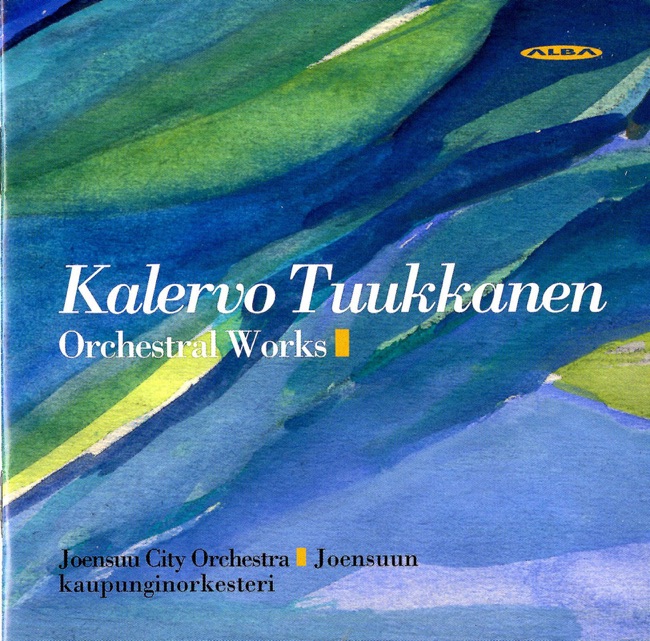
Artist Info
Role:ComposerBirth:1909Death:1979Period:ModernGenre:ConcertoOrchestralKalervo Tuukkanen was a Finnish composer born on August 22, 1912, in the city of Helsinki. He was the son of a music teacher and grew up in a musical family. His father, Juho Tuukkanen, was a well-known conductor and composer in Finland, and his mother, Aino Tuukkanen, was a pianist. Tuukkanen began his musical studies at a young age, learning to play the piano and violin. He later studied composition at the Sibelius Academy in Helsinki, where he was a student of Aarre Merikanto. Tuukkanen graduated from the academy in 1937 and went on to study in Paris with Nadia Boulanger. Tuukkanen's early works were influenced by the neoclassical style of Stravinsky and Hindemith. His first major composition, the Suite for Orchestra, was premiered in 1939 and received critical acclaim. The suite was followed by several other orchestral works, including the Symphony No. 1, which was premiered in 1942. During World War II, Tuukkanen served in the Finnish army as a musician. He composed several works during this time, including the Suite for String Orchestra, which was premiered in 1944. After the war, Tuukkanen continued to compose and became known for his choral works. His most famous choral work, the Cantata for the 10th Anniversary of the United Nations, was premiered in 1955 and was performed in several countries around the world. Tuukkanen's music was characterized by its clarity and simplicity. He often used folk melodies and rhythms in his compositions, and his works were known for their lyricism and emotional depth. His music was also influenced by his love of nature, and he often used natural sounds and imagery in his works. In addition to his compositions, Tuukkanen was also a respected music educator. He taught at the Sibelius Academy from 1945 to 1977 and was a professor of composition from 1961 to 1977. Many of his students went on to become successful composers in their own right. Tuukkanen's later works were more experimental and avant-garde. He began to incorporate electronic music into his compositions and experimented with new forms and techniques. His Symphony No. 6, which was premiered in 1972, was one of his most experimental works and featured electronic sounds and unconventional instrumentation. Tuukkanen continued to compose until his death in 2000. His legacy as a composer and educator lives on, and his works continue to be performed and studied around the world.More....
Copyright Ⓒ 2013 Davinci Finger. All rights reseved
Service Terms & Policy