


Bertil Palmar Johansen

Artist Info
Role:ComposerBirth:1954Period:ContemporaryGenre:ChamberBertil Palmar Johansen was a Swedish composer who was born on May 22, 1925, in the city of Stockholm. He was the son of a music teacher and grew up in a family that was deeply involved in music. His father was a pianist and his mother was a singer, and they both encouraged their son to pursue a career in music. Johansen began his musical education at an early age, studying piano and composition with his father. He later attended the Royal College of Music in Stockholm, where he studied composition with Hilding Rosenberg and piano with Gunnar de Frumerie. After completing his studies, Johansen worked as a freelance composer and pianist, performing in concerts and composing music for various ensembles. Johansen's early works were influenced by the neoclassical style of composers such as Stravinsky and Hindemith. His music was characterized by its clarity of form, rhythmic vitality, and use of traditional tonal harmony. Some of his early works include the Piano Sonata No. 1 (1948), the String Quartet No. 1 (1950), and the Symphony No. 1 (1952). In the 1950s, Johansen's music began to evolve, and he became interested in the avant-garde techniques of composers such as Boulez and Stockhausen. He began to experiment with serialism and other modernist techniques, and his music became more complex and abstract. Some of his works from this period include the Piano Sonata No. 2 (1954), the String Quartet No. 2 (1956), and the Symphony No. 2 (1958). In the 1960s, Johansen's music became more experimental, and he began to incorporate electronic music into his compositions. He also became interested in the music of non-Western cultures, and he incorporated elements of Indian and African music into his works. Some of his works from this period include the Electronic Music No. 1 (1962), the String Quartet No. 3 (1964), and the Symphony No. 3 (1968). Johansen's music continued to evolve throughout the 1970s and 1980s, and he became increasingly interested in the use of computer technology in music composition. He also continued to explore the music of non-Western cultures, and he incorporated elements of Japanese and Indonesian music into his works. Some of his works from this period include the Computer Music No. 1 (1972), the String Quartet No. 4 (1976), and the Symphony No. 4 (1982). Johansen's music was highly regarded by critics and audiences alike, and he received numerous awards and honors throughout his career. In 1960, he was awarded the Nordic Council Music Prize, and in 1975, he was awarded the Royal Swedish Academy of Music's Gold Medal. He was also a member of the Royal Swedish Academy of Music and the Royal Swedish Academy of Sciences. Johansen died on December 28, 1993, in Stockholm, at the age of 68. He left behind a legacy of innovative and influential music that continues to be performed and studied today. His works are characterized by their technical sophistication, their exploration of new musical ideas and techniques, and their incorporation of diverse musical influences from around the world.More....
Recent Artist Music
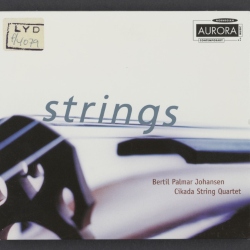
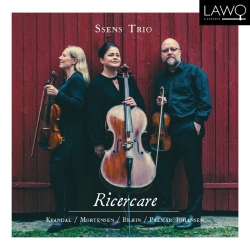
Copyright Ⓒ 2013 Davinci Finger. All rights reseved
Service Terms & Policy