


Heino Jurisalu
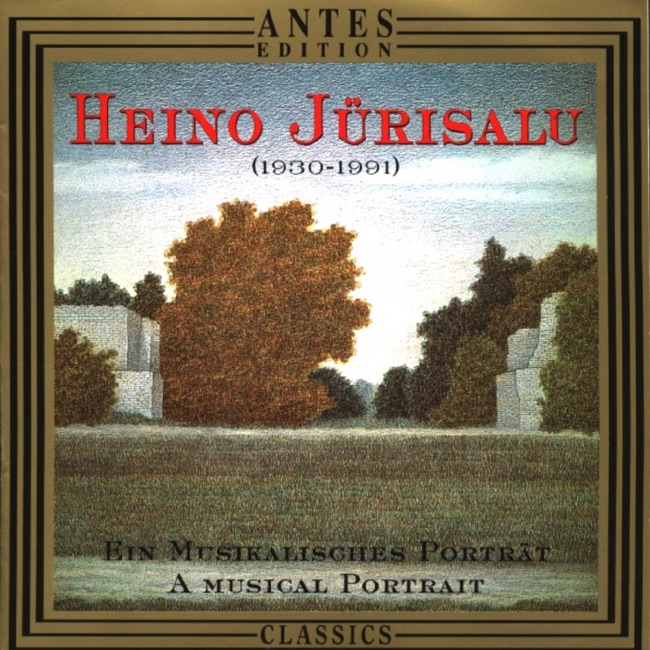
Artist Info
Role:ComposerHeino Jurisalu was a renowned Estonian composer who was born on August 28, 1930, in Tallinn, Estonia. He was the son of a music teacher and grew up in a family that was deeply involved in music. His father, Johannes Jurisalu, was a well-known conductor and composer, and his mother, Helene Jurisalu, was a pianist and music teacher. Jurisalu began his musical education at a young age, studying piano and music theory with his mother. He later attended the Tallinn Music School, where he studied composition with Heino Eller, one of Estonia's most prominent composers. Jurisalu continued his studies at the Tallinn Conservatory, where he studied composition with Eugen Kapp and conducting with Roman Matsov. Jurisalu's early works were heavily influenced by the Estonian folk music tradition, and he often incorporated folk melodies and rhythms into his compositions. His first major work, the Symphony No. 1, was premiered in 1957 and was well-received by audiences and critics alike. The symphony was notable for its use of folk melodies and its innovative orchestration. Throughout the 1960s and 1970s, Jurisalu continued to compose works that were inspired by Estonian folk music. His compositions during this period included the ballet "The Legend of Kalevipoeg," the opera "The Last Ferry," and the cantata "The Song of the Sea." These works were characterized by their lush harmonies, intricate rhythms, and evocative melodies. In the 1980s, Jurisalu's style began to evolve, and he began to incorporate more modernist elements into his compositions. His works during this period included the Symphony No. 4, which was premiered in 1984, and the Concerto for Violin and Orchestra, which was premiered in 1987. These works were notable for their use of dissonance, complex rhythms, and unconventional forms. Jurisalu's later works were characterized by their introspective and meditative qualities. His Symphony No. 5, which was premiered in 1990, was a deeply personal work that reflected on the composer's own mortality. The work was notable for its use of minimalist techniques and its spare, contemplative textures. Jurisalu's contributions to Estonian music were significant, and he was widely regarded as one of Estonia's most important composers. His works were performed by orchestras and ensembles throughout Europe and the United States, and he received numerous awards and honors for his contributions to music. Jurisalu passed away on January 22, 2011, at the age of 80. His legacy as a composer and educator continues to inspire generations of musicians in Estonia and beyond.More....
Recent Artist Music
Copyright Ⓒ 2013 Davinci Finger. All rights reseved
Service Terms & Policy