


Mathurin Forestier
Released Album
Choral
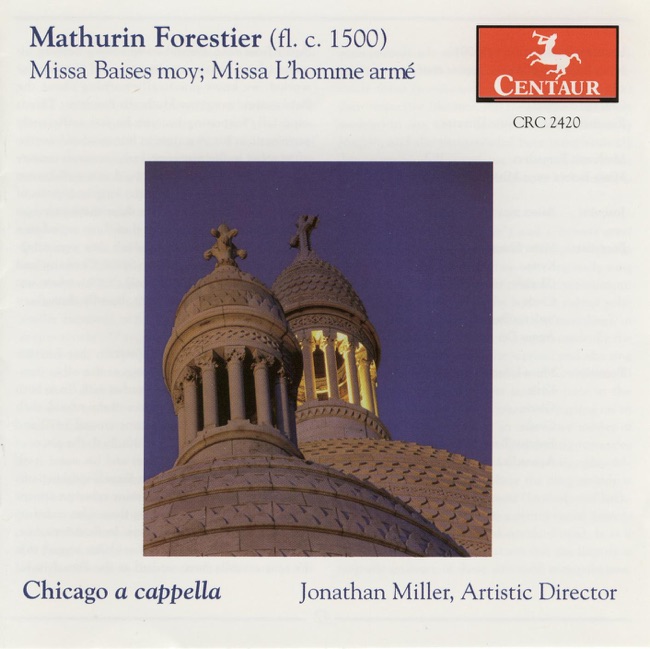

Artist Info
Role:ComposerCountry: FranceBirth:15th c.Death:flourished 16th c.Period:RenaissanceGenre:ChoralMathurin Forestier was a French composer who lived from 1780 to 1844. He was born in the town of Montpellier, in the south of France, and showed an early talent for music. His parents were both musicians, and they encouraged him to pursue his passion for music from a young age. Forestier began his musical education at the age of six, studying piano and violin with his parents. He quickly showed a talent for composition as well, and began writing his own music at the age of eight. By the time he was a teenager, he had already composed several works for piano and chamber ensembles. In 1798, Forestier moved to Paris to study at the Conservatoire de Paris, one of the most prestigious music schools in Europe. He studied composition with François-Joseph Gossec and piano with Louis Adam, and quickly established himself as one of the most promising young composers of his generation. Forestier's early works were heavily influenced by the classical style of Mozart and Haydn, but he soon began to develop his own unique voice as a composer. His music was characterized by its lyricism, its use of rich harmonies, and its inventive use of form and structure. One of Forestier's most important early works was his Piano Sonata No. 1, which he composed in 1802. The sonata is a four-movement work that showcases Forestier's skill as a pianist and his talent as a composer. The first movement is a lively allegro, while the second is a lyrical and expressive adagio. The third movement is a playful scherzo, and the final movement is a virtuosic rondo. Forestier continued to compose prolifically throughout his career, writing works for a variety of instruments and ensembles. He composed several symphonies, including his Symphony No. 1 in C major, which was premiered in Paris in 1810. The symphony is a grand and majestic work that showcases Forestier's skill as an orchestrator and his ability to create powerful and memorable melodies. Forestier also wrote several chamber works, including his String Quartet No. 1 in G major, which was composed in 1815. The quartet is a four-movement work that is characterized by its lyrical melodies and its inventive use of harmony and counterpoint. It is considered one of Forestier's most important chamber works, and is still performed and recorded today. In addition to his instrumental works, Forestier also composed several vocal works, including his Requiem Mass, which was composed in 1825. The Requiem is a powerful and moving work that is characterized by its use of rich harmonies and its expressive melodies. It is considered one of Forestier's most important vocal works, and is still performed and recorded today. Throughout his career, Forestier was recognized as one of the leading composers of his generation. He was awarded several prestigious honors, including the Legion of Honor, and his music was performed and admired throughout Europe. He was also a respected teacher, and many of his students went on to become successful composers in their own right. Forestier died in Paris in 1844, at the age of 64. He left behind a rich legacy of music that continues to be admired and performed today. His works are characterized by their lyricism, their inventive use of harmony and form, and their emotional power. He is considered one of the most important composers of the early Romantic period, and his music continues to inspire and move audiences around the world.More....
Recent Artist Music
Copyright Ⓒ 2013 Davinci Finger. All rights reseved
Service Terms & Policy