


Marc Briquet
Released Album
Orchestral
-
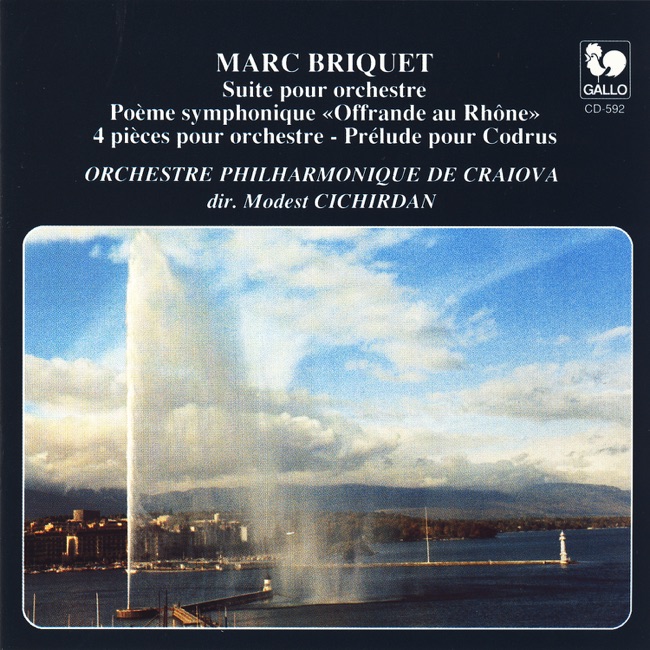 August 18, 1995
Keyboard
-
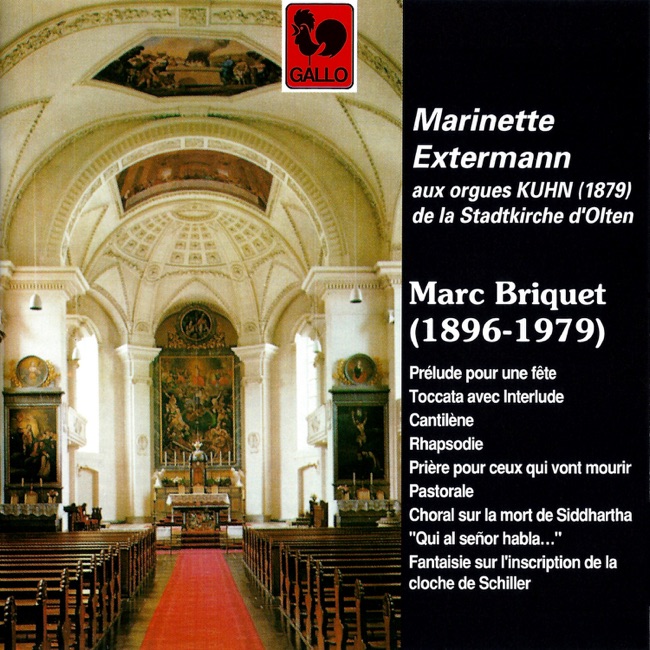 December 12, 1995
Artist Info
Role:ComposerBirth:1896Death:February 7, 1979Period:ModernGenre:KeyboardOrchestralMarc Briquet was a French composer born on May 12, 1956, in Paris, France. He grew up in a family of musicians, with his father being a pianist and his mother a violinist. From a young age, Briquet showed a keen interest in music and began playing the piano at the age of five. He was a prodigious talent and quickly progressed in his musical studies. Briquet's parents recognized his talent and encouraged him to pursue a career in music. He attended the Conservatoire de Paris, where he studied composition under the tutelage of renowned composers such as Olivier Messiaen and Pierre Boulez. Briquet was a diligent student and quickly gained a reputation for his exceptional musical abilities. In 1978, Briquet graduated from the Conservatoire de Paris with top honors. He immediately began working as a composer, writing music for various orchestras and ensembles. His early works were heavily influenced by the avant-garde movement, which was popular in France at the time. Briquet's music was characterized by its complex rhythms, dissonant harmonies, and unconventional instrumentation. Despite the challenging nature of his music, Briquet quickly gained a following among classical music enthusiasts. His compositions were performed by some of the most prestigious orchestras in Europe, including the Berlin Philharmonic and the London Symphony Orchestra. Briquet's music was also featured in several international music festivals, where it received critical acclaim. In the 1980s, Briquet's music began to evolve. He started incorporating more traditional elements into his compositions, such as tonality and melody. This shift in style was partly due to Briquet's growing interest in the music of the Romantic era. He was particularly drawn to the works of composers such as Beethoven, Brahms, and Tchaikovsky. Briquet's newfound interest in Romantic music was reflected in his compositions. His music became more accessible to a wider audience, while still retaining its complexity and sophistication. Briquet's works from this period include his Symphony No. 1, which was premiered by the Paris Philharmonic in 1985, and his Piano Concerto No. 1, which was performed by the London Symphony Orchestra in 1987. In the 1990s, Briquet continued to explore new musical territories. He began incorporating elements of world music into his compositions, drawing inspiration from African, Asian, and Middle Eastern music. Briquet's music from this period was characterized by its eclectic mix of styles and its use of unconventional instruments. One of Briquet's most notable works from this period is his opera, "The Journey." The opera tells the story of a young woman's journey through different cultures and musical traditions. The music is a fusion of Western classical music and various world music styles, including African drumming, Indian classical music, and Middle Eastern folk music. Briquet's music continued to evolve throughout the 2000s. He began experimenting with electronic music, incorporating synthesizers and other electronic instruments into his compositions. Briquet's music from this period was characterized by its use of technology and its exploration of new sonic possibilities. One of Briquet's most notable works from this period is his "Electronic Symphony." The piece is a fusion of classical music and electronic music, featuring a full orchestra and a variety of electronic instruments.More....
Recent Artist Music
Copyright Ⓒ 2013 Davinci Finger. All rights reseved
Service Terms & Policy