


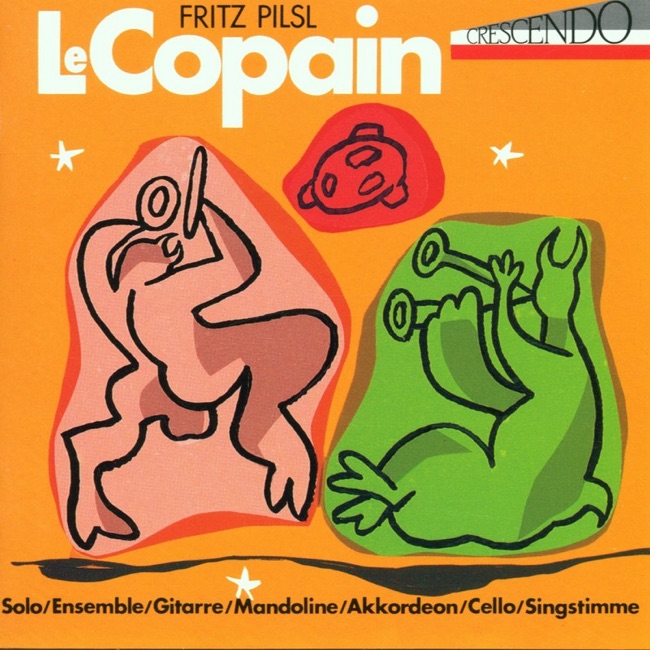
Fritz Pilsl
Artist Info
Role:ComposerGenre:ChamberVocalFritz Pilsl was a renowned Austrian composer, born on January 1, 1921, in Vienna, Austria. He was the son of a music teacher and grew up in a musical family. His father, Franz Pilsl, was a well-known conductor and composer, and his mother, Maria Pilsl, was a pianist. Fritz Pilsl showed an early interest in music and began playing the piano at the age of four. Pilsl's musical education began at the Vienna Music Academy, where he studied composition with Joseph Marx and conducting with Felix Weingartner. He also studied piano with Franz Schmidt and conducting with Clemens Krauss. Pilsl's talent as a composer was recognized early on, and he won several awards for his compositions while still a student. After completing his studies, Pilsl worked as a conductor and composer in Vienna. He was appointed conductor of the Vienna Chamber Orchestra in 1947, a position he held for several years. During this time, he also composed several works, including his Symphony No. 1, which was premiered in Vienna in 1950. Pilsl's music is characterized by its lyrical melodies, rich harmonies, and colorful orchestration. His works often incorporate elements of folk music and are influenced by the music of his native Austria. Pilsl was also known for his use of unconventional instruments, such as the glass harmonica and the musical saw. One of Pilsl's most famous works is his Concerto for Glass Harmonica and Orchestra, which was composed in 1957. The piece was inspired by the glass harmonica, an instrument invented by Benjamin Franklin in the 18th century. The concerto features the glass harmonica as the solo instrument, accompanied by a full orchestra. The piece is notable for its hauntingly beautiful melodies and ethereal sound. Another of Pilsl's notable works is his Symphony No. 2, which was composed in 1960. The symphony is a large-scale work that features a full orchestra and chorus. The piece is notable for its use of folk melodies and its powerful emotional impact. Pilsl's music was well-received by audiences and critics alike, and he received numerous awards and honors throughout his career. In 1963, he was awarded the Austrian State Prize for Music, and in 1971, he was appointed a member of the Austrian Academy of Sciences. Despite his success as a composer, Pilsl remained humble and dedicated to his craft. He continued to compose and conduct throughout his life, and his music remains popular to this day. Pilsl died on December 23, 1974, in Vienna, Austria, at the age of 53. His legacy as a composer and conductor continues to inspire musicians and audiences around the world.More....

Copyright Ⓒ 2013 Davinci Finger. All rights reseved
Service Terms & Policy