


Francisco Xavier Fajer Garcia
Released Album
Vocal
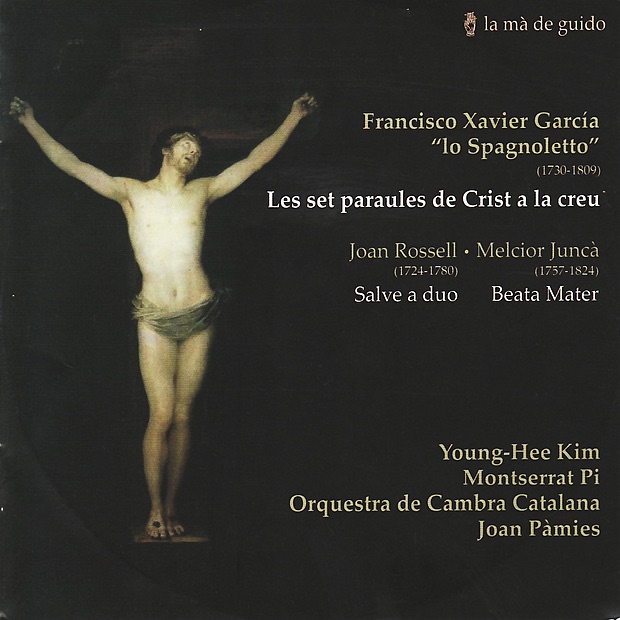
Opera
-
 October 21, 2022
Artist Info
Role:ComposerCountry: SpainBirth:December 2, 1730Death:April 9, 1809 in Saragossa, SpainFrancisco Xavier Fajer Garcia was a renowned classical music composer who was born on December 3, 1730, in the city of Puebla, Mexico. He was the son of a Spanish musician, Francisco Fajer, who was the maestro de capilla (music director) of the Cathedral of Puebla. Fajer Garcia grew up in a musical family and was exposed to music from a young age. He showed a natural talent for music and began his formal training under his father's guidance. Fajer Garcia's musical education continued in Mexico City, where he studied with the renowned composer Manuel de Sumaya. He also studied with the Italian composer Giovanni Battista Martini in Bologna, Italy, where he honed his skills in counterpoint and composition. Fajer Garcia's training in Italy was a significant influence on his musical style, which was characterized by a blend of Italian and Spanish musical traditions. Fajer Garcia returned to Mexico in 1756 and was appointed as the maestro de capilla of the Cathedral of Puebla, succeeding his father in the position. He held this position for over 40 years and was responsible for the musical direction of the cathedral's choir and orchestra. During his tenure, Fajer Garcia composed numerous works for the cathedral, including masses, motets, and hymns. One of Fajer Garcia's most significant works is his Missa Mexicana, which was composed in 1760. The Missa Mexicana is a mass that incorporates elements of Mexican folk music, such as the use of indigenous instruments like the maracas and the huéhuetl (a type of drum). The Missa Mexicana was groundbreaking in its use of indigenous elements in a European musical form and is considered a landmark work in the history of Mexican music. Fajer Garcia's other notable works include his Miserere, which is a setting of the penitential psalm Miserere mei, Deus. The Miserere is a complex and challenging work that showcases Fajer Garcia's mastery of counterpoint and harmony. Another notable work is his Stabat Mater, which is a setting of the medieval hymn Stabat Mater dolorosa. The Stabat Mater is a poignant and emotional work that reflects Fajer Garcia's deep religious faith. Fajer Garcia's music was highly regarded during his lifetime and was performed not only in Mexico but also in Spain and Italy. His music was also influential in the development of Mexican music, as he incorporated elements of Mexican folk music into his compositions. Fajer Garcia's legacy continues to this day, and his music is still performed and studied by musicians and scholars around the world. In conclusion, Francisco Xavier Fajer Garcia was a significant figure in the history of classical music and Mexican music. He was a talented composer who blended Italian and Spanish musical traditions and incorporated elements of Mexican folk music into his compositions. His works, such as the Missa Mexicana and the Miserere, are still performed and studied today and continue to inspire musicians and audiences alike. Fajer Garcia's contributions to music are a testament to his talent and his dedication to his craft.More....
Recent Artist Music


Copyright Ⓒ 2013 Davinci Finger. All rights reseved
Service Terms & Policy