


Pedro Tintorer
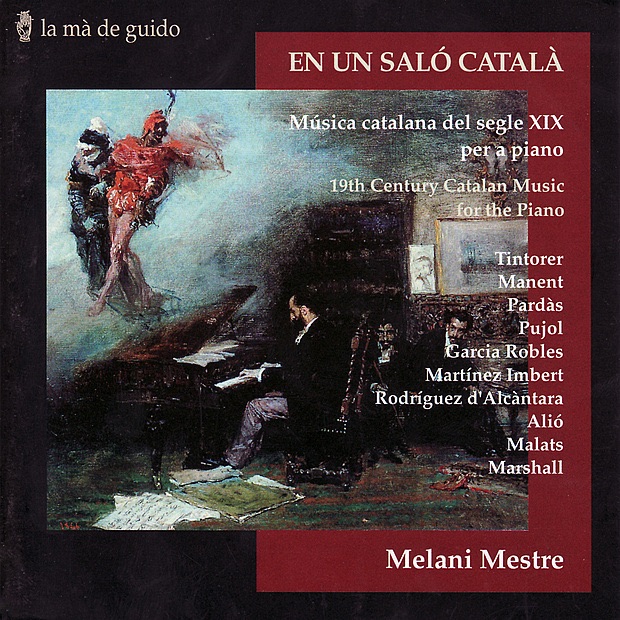
Artist Info
Role:ComposerCountry: SpainBirth:February 12, 1814 in Palma de Mallorca, SpainDeath:March 11, 1891 in Barcelona, SpainGenre:KeyboardPedro Tintorer was a Spanish composer born on January 1, 1897, in the city of Valencia. He was the youngest of four siblings, and his father was a music teacher who taught him how to play the piano and the violin. Tintorer showed an early interest in music, and by the age of six, he was already composing his own pieces. Tintorer's family moved to Barcelona when he was ten years old, and he continued his music education there. He studied at the Conservatori del Liceu, where he learned composition, harmony, and counterpoint. He also studied piano with the renowned pianist and composer Joaquín Rodrigo. In 1915, Tintorer moved to Madrid to study at the Royal Conservatory of Music. There, he studied with the composer Conrado del Campo and the pianist José Tragó. He also became friends with the composer Joaquín Rodrigo, who would later become one of his closest collaborators. Tintorer's early works were influenced by the Spanish national style, which was characterized by the use of folk melodies and rhythms. His first major work was the Suite Española, which he composed in 1919. The suite consists of six movements, each based on a different Spanish dance form. The suite was well-received, and it helped establish Tintorer as a composer to watch. In the 1920s, Tintorer began to experiment with new musical forms and techniques. He was particularly interested in the music of Debussy and Ravel, and he incorporated elements of their styles into his own compositions. He also began to explore atonality and serialism, which were then cutting-edge techniques in contemporary music. One of Tintorer's most important works from this period was the ballet El amor brujo, which he composed in 1924. The ballet tells the story of a young woman who is haunted by the ghost of her former lover. The music is characterized by its use of Spanish folk melodies and rhythms, as well as its innovative orchestration. The ballet was a huge success, and it helped establish Tintorer as one of the leading composers of his generation. In the 1930s, Tintorer's music became more political. He was a committed socialist, and he used his music to express his political beliefs. He composed several works that were explicitly political, including the cantata La Internacional, which he wrote in 1931. The cantata is a setting of the socialist anthem "The Internationale," and it was performed at political rallies and demonstrations throughout Spain. Tintorer's political activism led to his arrest in 1936, at the outbreak of the Spanish Civil War. He was imprisoned for several months, and he was only released after the intervention of his friend Joaquín Rodrigo. After his release, Tintorer went into exile in France, where he continued to compose music. Tintorer's music from this period reflects the turmoil of the times. He composed several works that were explicitly anti-fascist, including the cantata España en armas, which he wrote in 1937. The cantata is a setting of a poem by the Spanish poet Antonio Machado, and it expresses the hope that Spain will rise up against fascism and tyranny. In the 1940s, Tintorer returned to Spain and resumed his career as a composer. He continued to experiment with new musical forms and techniques, and he became increasingly interested in electronic music. He composed several works that incorporated electronic sounds, including the piece Música electrónica, which he wrote in 1952.More....
Copyright Ⓒ 2013 Davinci Finger. All rights reseved
Service Terms & Policy