


Heinz Tiessen
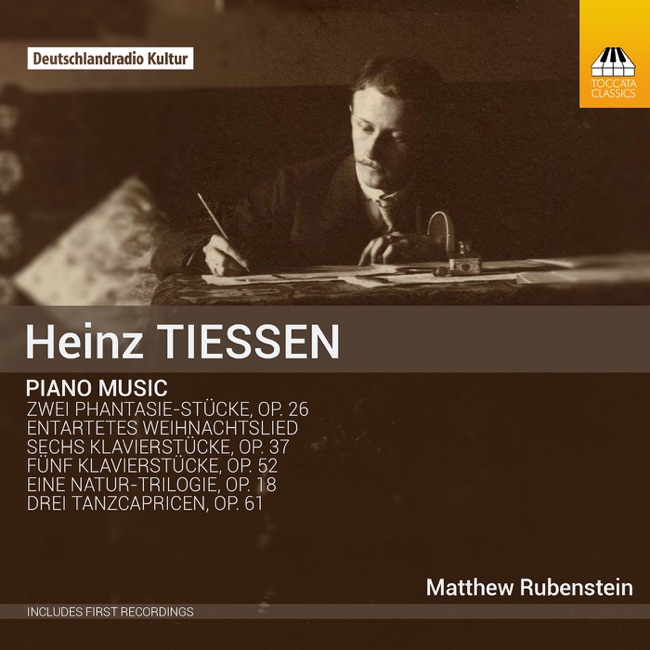
Artist Info
Role:Composer ConductorCountry: GermanyBirth:April 10, 1887 in Königsberg, GermanyDeath:November 29, 1971 in Berlin, GermanyPeriod:ModernGenre:OrchestralSymphonyVocalHeinz Tiessen was a German composer and conductor who was born on June 13, 1887, in Königsberg, East Prussia. He was the son of a music teacher and grew up in a musical family. Tiessen began his musical education at a young age, studying piano and composition with his father. He later studied at the Berlin Academy of Music with Max Bruch and Philipp Jarnach. In 1912, Tiessen became the conductor of the Berlin Philharmonic Orchestra, a position he held until 1914. During this time, he also composed several works, including his Symphony No. 1, which was premiered in 1913. The symphony was well-received and established Tiessen as a promising young composer. In 1914, Tiessen was drafted into the German army and served in World War I. He was wounded in battle and spent several months in a military hospital. After the war, Tiessen returned to Berlin and resumed his career as a composer and conductor. Throughout the 1920s and 1930s, Tiessen composed a number of works in a variety of genres, including orchestral music, chamber music, and vocal music. His music was influenced by a number of different styles, including Romanticism, Impressionism, and Expressionism. Tiessen was also interested in incorporating elements of folk music into his compositions, and he often used folk melodies and rhythms in his works. One of Tiessen's most famous works is his Symphony No. 2, which was premiered in 1927. The symphony is a large-scale work that features a wide range of musical ideas and moods. It begins with a slow, brooding introduction that gradually builds in intensity, leading to a lively and energetic first movement. The second movement is a lyrical and expressive adagio, while the third movement is a lively scherzo. The final movement is a grand and triumphant finale that brings the symphony to a thrilling conclusion. Tiessen also composed a number of works for the stage, including several operas and ballets. His opera Der Golem, which was premiered in 1926, is based on the Jewish legend of the creature made of clay. The opera features a powerful and dramatic score that captures the dark and mysterious atmosphere of the story. In addition to his work as a composer, Tiessen was also a respected conductor. He conducted a number of orchestras throughout his career, including the Berlin State Opera and the Berlin Radio Symphony Orchestra. Tiessen was known for his precise and energetic conducting style, and he was highly regarded by his colleagues and audiences alike. During World War II, Tiessen's music was banned by the Nazi regime, and he was forced to go into hiding. He continued to compose in secret, however, and after the war, he emerged as one of Germany's leading composers. Tiessen's music was once again performed and recorded, and he received numerous honors and awards for his contributions to German music. Tiessen died on October 16, 1971, in Berlin, at the age of 84. He left behind a rich legacy of music that continues to be performed and admired by musicians and audiences around the world. His works are characterized by their emotional depth, technical skill, and innovative use of musical language, and they remain an important part of the classical music repertoire.More....
Recent Artist Music

Copyright Ⓒ 2013 Davinci Finger. All rights reseved
Service Terms & Policy