


Emanuel Nunes
Released Album
Keyboard
-
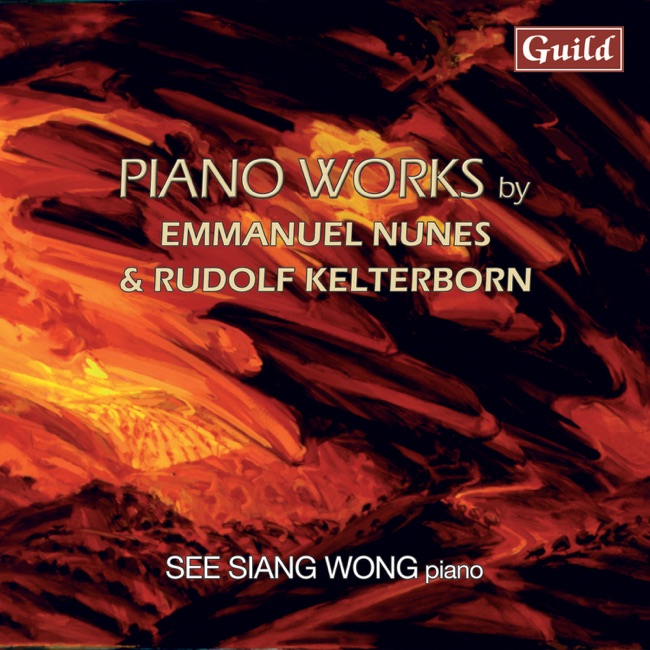 April 8, 2008
Chamber
Artist Info
Role:ComposerCountry: PortugalBirth:August 31, 1941 in Lisbon, PortugalPeriod:ContemporaryGenre:Avant-GardeChamberChoralOrchestralEmanuel Nunes was a Portuguese composer who was born on August 31, 1941, in Lisbon, Portugal. He was the son of a composer and conductor, Artur Santos Nunes, who was also a professor at the Lisbon Conservatory. Nunes grew up in a musical family and began his musical education at a young age. He studied piano, composition, and conducting at the Lisbon Conservatory, where he was a student of Jorge Peixinho. In 1963, Nunes moved to Paris to continue his studies at the Conservatoire de Paris. He studied composition with Olivier Messiaen and conducting with Pierre Boulez. During this time, he also attended the Darmstadt Summer Courses, where he was exposed to the latest developments in contemporary music. Nunes' early works were influenced by the serialism of Boulez and the spectralism of Grisey and Murail. His music was characterized by complex textures, microtonal harmonies, and extended techniques. His first major work, "Musique en Ruines," was premiered in 1968 and was well-received by critics. In the 1970s, Nunes began to incorporate elements of Portuguese folk music into his compositions. He also began to experiment with new forms of notation, including graphic notation and text-based scores. His works from this period, such as "Litanies du Feu et de la Mer" and "L'Arbre de Vie," were highly innovative and established him as one of the leading composers of his generation. In the 1980s, Nunes' music became more introspective and meditative. He began to explore the use of silence and space in his compositions, as well as the relationship between sound and memory. His works from this period, such as "Minnesang" and "Lichtung," were characterized by their spare textures and haunting melodies. Nunes' later works were marked by a return to more traditional forms and structures. He began to incorporate elements of tonality and melody into his compositions, while still retaining his characteristic harmonic complexity. His works from this period, such as "La Main Invisible" and "Deux Poèmes de Mallarmé," were praised for their emotional depth and expressive power. Throughout his career, Nunes received numerous awards and honors for his contributions to contemporary music. He was awarded the Grand Prix National de la Musique in 1994 and was made a Chevalier de l'Ordre des Arts et des Lettres in 1996. He was also a member of the Academia das Ciências de Lisboa and the Académie des Beaux-Arts. Emanuel Nunes passed away on September 2, 2012, in Paris, France. He left behind a rich legacy of innovative and influential compositions that continue to inspire and challenge musicians and audiences alike.More....
Recent Artist Music
Copyright Ⓒ 2013 Davinci Finger. All rights reseved
Service Terms & Policy