


Andrei Eshpai
Released Album
Concerto
-
 April 15, 2014
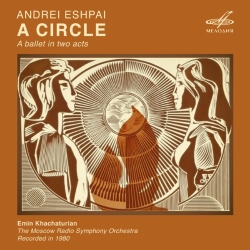
Ballet
-
 May 15, 2020
 -
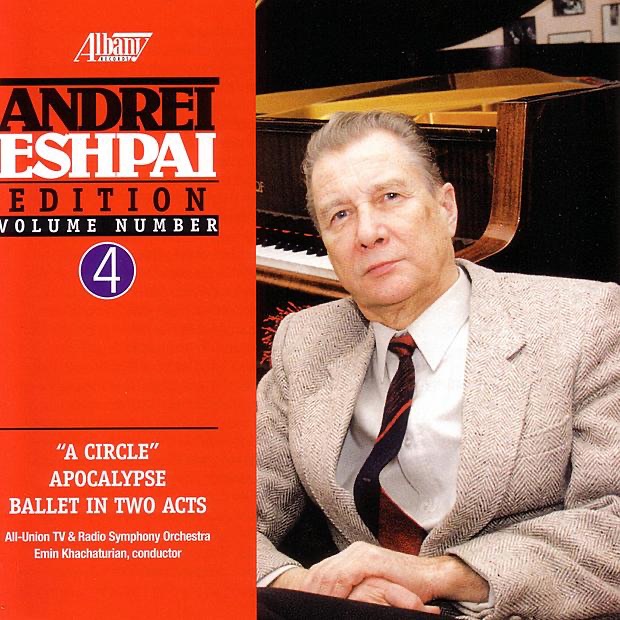 December 19, 2000
Symphony
-
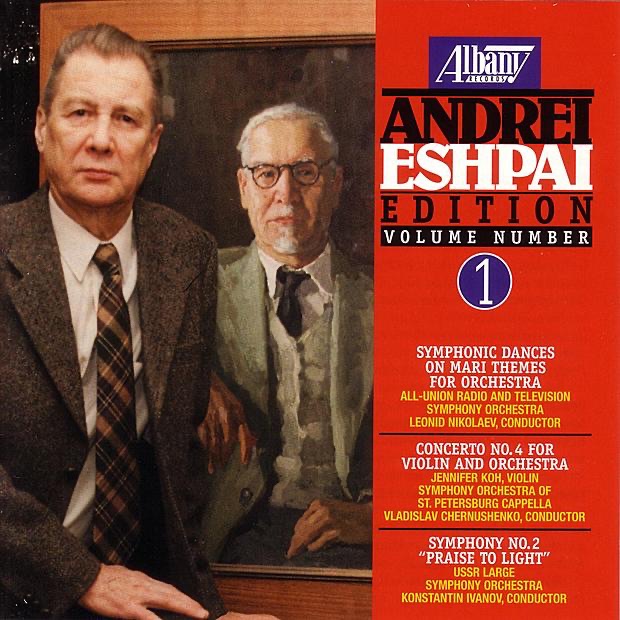 May 26, 1998
Artist Info
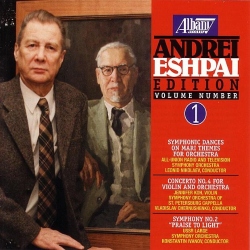
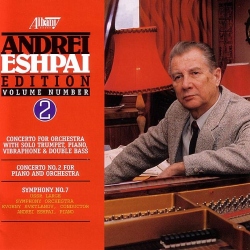
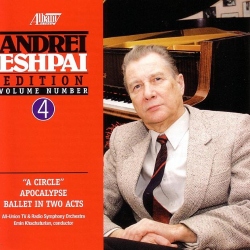
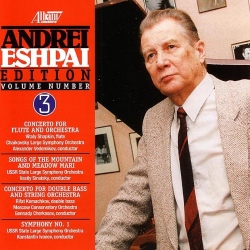
Role:Composer PerformerBirth:1925Death:2015Period:ModernGenre:ConcertoKeyboardSymphonyAndrei Eshpai was a prominent Russian composer of the 20th century, known for his unique style that blended traditional Russian folk music with modern classical techniques. Born on January 15, 1925, in the city of Kazan, Eshpai grew up in a family of musicians. His father was a composer and conductor, and his mother was a pianist. From a young age, Eshpai showed a keen interest in music and began studying the piano and violin. Eshpai's musical education began at the Kazan Conservatory, where he studied composition under the tutelage of Boris Arapov. He graduated in 1949 and went on to study at the Moscow Conservatory under the guidance of Dmitri Shostakovich. It was during this time that Eshpai began to develop his unique style, which combined elements of Russian folk music with modernist techniques. Eshpai's early works were heavily influenced by the folk music of his native Tatarstan. His first major composition, the Tatar Suite for Orchestra, was written in 1950 and premiered the following year. The suite was a huge success and established Eshpai as a rising star in the world of classical music. Throughout the 1950s and 1960s, Eshpai continued to compose works that blended traditional folk music with modernist techniques. His music was characterized by its use of unconventional harmonies, complex rhythms, and intricate textures. Some of his most notable works from this period include the Symphony No. 1, the Concerto for Violin and Orchestra, and the Symphony No. 2. In the 1970s, Eshpai's music began to take on a more experimental tone. He began incorporating electronic music into his compositions, and his works became more abstract and avant-garde. Some of his most notable works from this period include the Symphony No. 3, the Concerto for Cello and Orchestra, and the Symphony No. 4. Despite his experimental tendencies, Eshpai remained committed to his roots in Russian folk music. He continued to incorporate folk melodies and rhythms into his compositions, even as he explored new and unconventional techniques. His music was celebrated for its ability to bridge the gap between traditional and modernist styles, and he was widely regarded as one of the most innovative composers of his time. Eshpai's later years were marked by a return to more traditional forms. He composed a number of operas, including The Idiot, based on the novel by Fyodor Dostoevsky, and The Master and Margarita, based on the novel by Mikhail Bulgakov. He also wrote a number of choral works, including the Requiem for the Victims of Hiroshima and the Cantata for the 40th Anniversary of the Victory in the Great Patriotic War. Throughout his career, Eshpai received numerous awards and honors for his contributions to classical music. He was awarded the title of People's Artist of the USSR in 1974 and was awarded the State Prize of the USSR in 1985. He was also a member of the Russian Academy of Arts and Sciences and the International Society for Contemporary Music. Andrei Eshpai passed away on April 8, 2015, at the age of 90. He left behind a legacy of innovative and groundbreaking music that continues to inspire and influence composers around the world. His unique blend of traditional folk music and modernist techniques has earned him a place among the most important composers of the 20th century, and his contributions to the world of classical music will be remembered for generations to come.More....
Recent Artist Music
2
13:22

Copyright Ⓒ 2013 Davinci Finger. All rights reseved
Service Terms & Policy