


Carlo Giorgio Garofalo
Released Album
Symphony
-
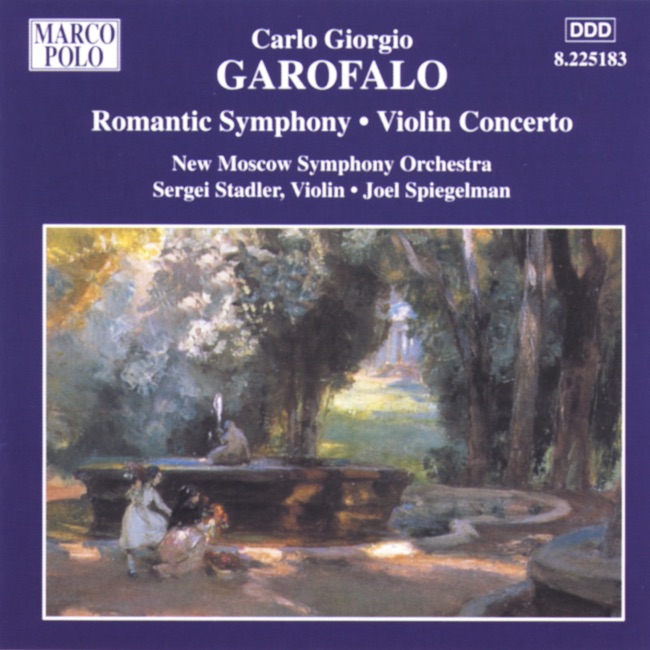 August 31, 2010
 -
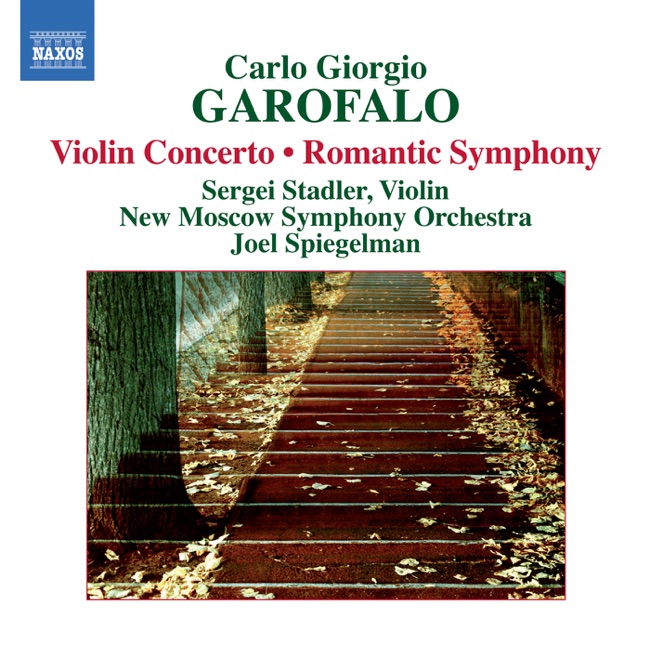 August 24, 2010
Artist Info
Role:ComposerBirth:August 5, 1886Death:1962Genre:ConcertoSymphonyCarlo Giorgio Garofalo was an Italian classical music composer born on October 12, 1956, in Naples, Italy. He was the youngest of three children born to a family of musicians. His father was a pianist, and his mother was a singer. Garofalo's parents recognized his musical talent at an early age and encouraged him to pursue a career in music. Garofalo began his musical education at the age of six, studying piano with his father. He showed a natural aptitude for the instrument and quickly progressed. At the age of ten, he began studying composition with the renowned Italian composer, Franco Donatoni. Donatoni recognized Garofalo's talent and encouraged him to continue his studies. Garofalo attended the Conservatory of Naples, where he studied composition with the Italian composer, Aldo Clementi. He also studied piano with the Italian pianist, Bruno Canino. Garofalo's time at the conservatory was a formative period in his musical development. He was exposed to a wide range of musical styles and began to develop his own unique voice as a composer. After completing his studies at the conservatory, Garofalo began to establish himself as a composer. His early works were characterized by their complexity and experimentation with form and structure. He was influenced by the avant-garde composers of the time, such as Pierre Boulez and Karlheinz Stockhausen. Garofalo's breakthrough came in 1985 with the premiere of his work, "Quattro Pezzi per Orchestra." The piece was well-received by critics and established Garofalo as a major figure in the Italian contemporary music scene. The work showcased Garofalo's unique voice as a composer, with its intricate rhythms and complex harmonies. Throughout the 1980s and 1990s, Garofalo continued to compose works that were characterized by their complexity and experimentation. He was known for his use of unconventional instruments and his incorporation of electronic music into his compositions. His works were performed by some of the world's leading orchestras and ensembles, including the London Symphony Orchestra and the Ensemble Intercontemporain. In the early 2000s, Garofalo's style began to shift. He began to incorporate more traditional elements into his compositions, such as tonality and melody. His works became more accessible to audiences, while still retaining his unique voice as a composer. One of Garofalo's most notable works from this period is his "Concerto for Violin and Orchestra." The piece was commissioned by the Italian violinist, Salvatore Accardo, and premiered in 2005. The concerto is characterized by its lyrical melodies and virtuosic violin writing. It has become one of Garofalo's most popular works and is frequently performed by orchestras around the world. Garofalo continued to compose up until his death in 2018. His later works continued to incorporate traditional elements while still retaining his unique voice as a composer. He was widely regarded as one of the most important Italian composers of his generation and his works continue to be performed and recorded by musicians around the world. In conclusion, Carlo Giorgio Garofalo was a highly influential Italian composer who made significant contributions to the contemporary music scene. His works were characterized by their complexity and experimentation, and he was known for his use of unconventional instruments and incorporation of electronic music into his compositions.More....
Recent Artist Music
Copyright Ⓒ 2013 Davinci Finger. All rights reseved
Service Terms & Policy