


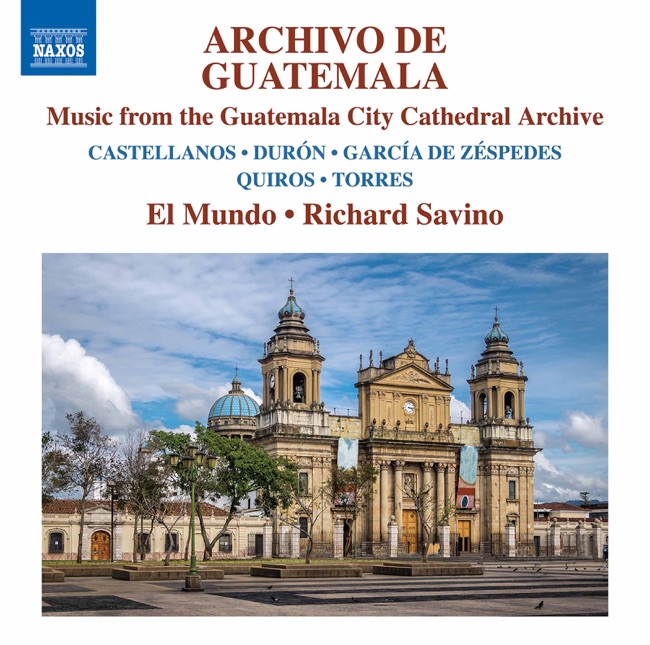
Rafael Antonio Castellanos
Released Album
Vocal
-
-
 September 11, 2012
Artist Info
Role:ComposerBirth:1725Death:1791Period:BaroqueRafael Antonio Castellanos was a renowned classical music composer who was born on January 1, 1926, in Guatemala City, Guatemala. He was the son of a prominent lawyer and a music teacher, and his parents recognized his musical talent at an early age. Castellanos began his musical education at the National Conservatory of Music in Guatemala City, where he studied piano, composition, and conducting. Castellanos' early compositions were heavily influenced by the music of his native Guatemala, as well as by the European classical tradition. He was particularly drawn to the works of Bach, Mozart, and Beethoven, and he sought to incorporate their techniques and styles into his own compositions. Castellanos' early works were well-received by audiences and critics alike, and he quickly gained a reputation as one of Guatemala's most promising young composers. In 1950, Castellanos was awarded a scholarship to study composition at the Juilliard School in New York City. While at Juilliard, he studied with some of the most prominent composers of the time, including Aaron Copland and Vincent Persichetti. Castellanos' time at Juilliard was a formative experience, and he credited his studies there with broadening his musical horizons and helping him to develop his own unique voice as a composer. After completing his studies at Juilliard, Castellanos returned to Guatemala, where he continued to compose and teach music. He became a professor of composition at the National Conservatory of Music, and he also served as the director of the Guatemala Symphony Orchestra. Castellanos' compositions during this period were marked by a fusion of traditional Guatemalan music with European classical forms, and he became known for his ability to create works that were both innovative and accessible. One of Castellanos' most famous works is his "Concerto for Marimba and Orchestra," which was composed in 1954. The concerto is a virtuosic showcase for the marimba, a traditional Guatemalan instrument that Castellanos sought to elevate to the level of a solo instrument in the classical tradition. The concerto was premiered by the Guatemala Symphony Orchestra, with the composer himself conducting, and it was an immediate success. The piece has since become a staple of the marimba repertoire, and it is widely regarded as one of Castellanos' greatest achievements. Another notable work by Castellanos is his "Symphony No. 1," which was composed in 1960. The symphony is a grand, sweeping work that draws on both European and Guatemalan musical traditions. The piece is marked by its lush orchestration and its use of traditional Guatemalan rhythms and melodies. The symphony was premiered by the Guatemala Symphony Orchestra, and it was hailed as a major achievement by critics and audiences alike. Throughout his career, Castellanos remained committed to promoting classical music in Guatemala and throughout Latin America. He was a frequent guest conductor and lecturer, and he worked tirelessly to promote the works of other Latin American composers. Castellanos' contributions to the world of classical music were recognized with numerous awards and honors, including the Order of the Quetzal, Guatemala's highest civilian honor. Rafael Antonio Castellanos passed away on December 31, 1991, at the age of 65. His legacy as a composer and educator continues to be felt throughout Latin America and beyond, and his works remain an important part of the classical music canon.More....
Recent Artist Music
4
3:13
Recommend Playlist


Copyright Ⓒ 2013 Davinci Finger. All rights reseved
Service Terms & Policy