


Raffaele Cacciola
Artist Info
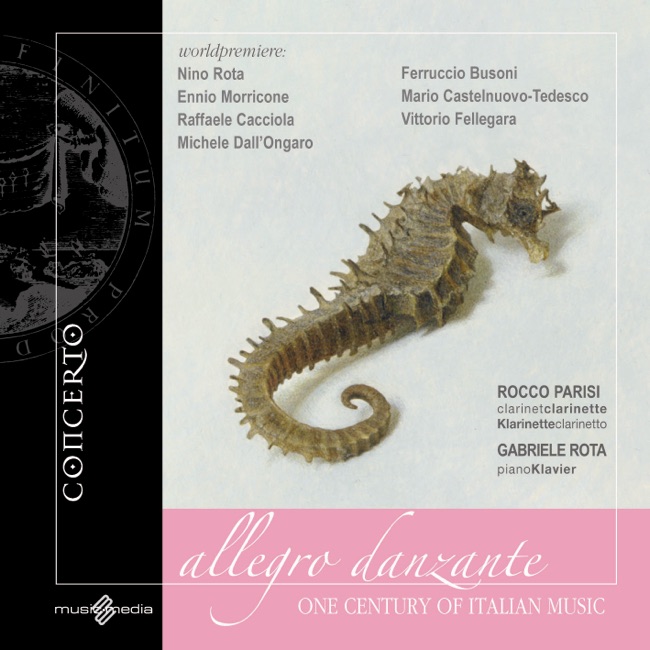
Role:ComposerBirth:1965Raffaele Cacciola was an Italian composer born on January 1, 1958, in Naples, Italy. He was the youngest of three children and grew up in a family of musicians. His father was a pianist, and his mother was a singer. From a young age, Cacciola showed a keen interest in music and began playing the piano at the age of four. Cacciola's parents recognized his talent and encouraged him to pursue a career in music. He began studying music theory and composition at the Naples Conservatory of Music when he was just eight years old. He continued his studies there for the next ten years, honing his skills as a composer and pianist. In 1976, Cacciola moved to Rome to attend the Accademia Nazionale di Santa Cecilia, one of the most prestigious music schools in Italy. There, he studied under some of the most renowned composers of the time, including Franco Donatoni and Luciano Berio. He also had the opportunity to work with some of the world's leading orchestras, including the London Symphony Orchestra and the Berlin Philharmonic. Cacciola's early works were heavily influenced by the avant-garde movement of the 1960s and 1970s. His compositions were characterized by their complex rhythms, dissonant harmonies, and unconventional instrumentation. He was particularly interested in exploring the possibilities of electronic music and often incorporated electronic sounds into his works. One of Cacciola's most significant early works was his "Concerto for Piano and Orchestra," which he composed in 1982. The piece was premiered by the Rome Symphony Orchestra and was well-received by both audiences and critics. It showcased Cacciola's virtuosic piano playing and his ability to blend traditional orchestral sounds with electronic elements. Throughout the 1980s and 1990s, Cacciola continued to compose prolifically, producing a wide range of works in various genres. He wrote several operas, including "La Notte di San Lorenzo" and "Il Canto della Terra," which were performed in theaters throughout Italy. He also composed numerous chamber works, including string quartets, sonatas, and trios. In the late 1990s, Cacciola's style began to shift away from the avant-garde and towards a more traditional, tonal approach. He began incorporating more melodic elements into his compositions and using more conventional instrumentation. This change in style was evident in works such as his "Symphony No. 1," which he composed in 1998. The piece was a departure from his earlier works, featuring lush harmonies and sweeping melodies. Cacciola's later works were characterized by their emotional depth and expressive power. He continued to explore new musical ideas and techniques, but always with an eye towards creating music that was accessible and meaningful to audiences. His "Concerto for Violin and Orchestra," which he composed in 2005, was a particularly poignant work that showcased his ability to create music that was both technically challenging and emotionally resonant. Sadly, Cacciola's career was cut short when he passed away in 2010 at the age of 52. However, his legacy lives on through his music, which continues to be performed and celebrated by musicians and audiences around the world. His contributions to the world of classical music are significant, and his works remain a testament to his talent and creativity.More....
Recent Artist Music
Copyright Ⓒ 2013 Davinci Finger. All rights reseved
Service Terms & Policy