


Ernest Walker
Released Album
Choral
-
 October 14, 2016
 -
 August 24, 1999
Chamber
-
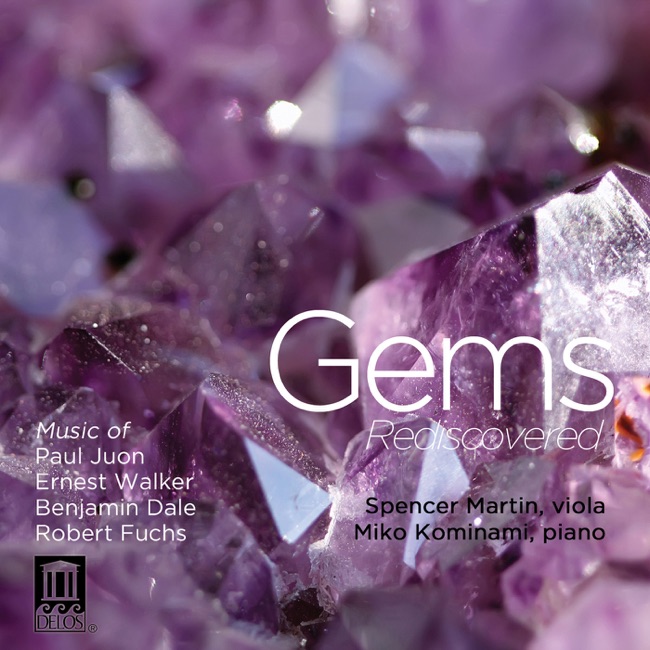 May 29, 2012
 -
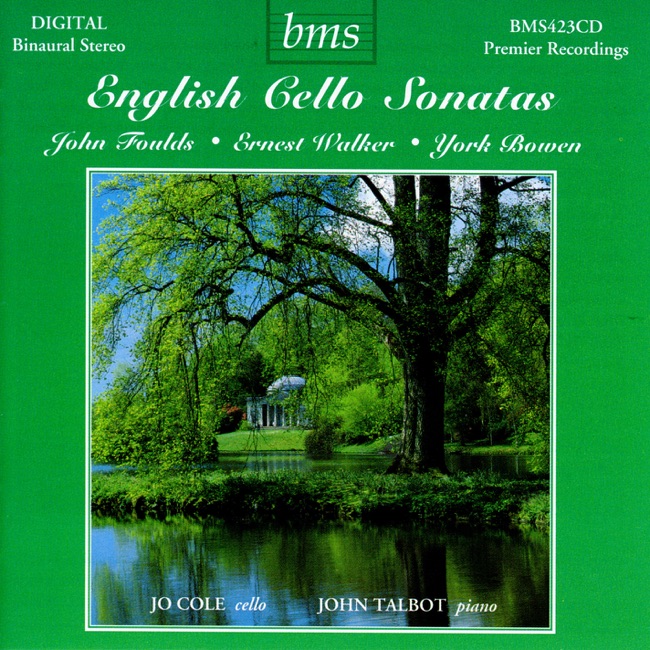 November, 2009
Artist Info
Role:ComposerBirth:1870Death:1949Period:ContemporaryErnest Walker was a British composer, conductor, and musicologist who made significant contributions to the classical music world during the early 20th century. Born on August 15, 1870, in London, England, Walker was the son of a music teacher and grew up in a musical family. He showed an early interest in music and began studying the piano and violin at a young age. Walker's musical education began at the Royal Academy of Music in London, where he studied composition with Frederick Corder and piano with Franklin Taylor. He later continued his studies at the University of Cambridge, where he earned a Bachelor of Music degree in 1894 and a Doctor of Music degree in 1900. As a composer, Walker was known for his ability to blend traditional classical forms with modern harmonies and rhythms. His early works, such as the String Quartet in D minor and the Piano Trio in B-flat major, showed a strong influence from the German Romantic tradition. However, as he matured as a composer, he began to incorporate more modernist elements into his music, such as in his Symphony in C minor and his Piano Sonata in F-sharp minor. In addition to his work as a composer, Walker was also a respected conductor and musicologist. He served as the conductor of the London Symphony Orchestra from 1910 to 1912 and was the first conductor of the BBC Symphony Orchestra from 1930 to 1931. He also wrote several books on music history and theory, including "A History of Music in England" and "The Theory of Music." One of Walker's most significant contributions to the classical music world was his work as a champion of the music of black composers. As a black man himself, Walker was acutely aware of the lack of representation of black musicians in the classical music world. He worked tirelessly to promote the music of black composers, both through his own compositions and through his advocacy work. One of Walker's most notable works in this regard was his "African Suite," which was composed in 1930. The suite was inspired by traditional African music and featured elements such as polyrhythms and call-and-response patterns. The work was well-received by audiences and critics alike and helped to raise awareness of the contributions of black composers to the classical music world. Another notable work by Walker was his "Piano Concerto in E-flat major," which was composed in 1911. The concerto is a virtuosic showcase for the soloist, featuring intricate passagework and complex harmonies. The work was premiered by the composer himself, who was widely praised for his performance. Despite his many accomplishments, Walker's career was not without its challenges. As a black man in a predominantly white field, he faced discrimination and prejudice throughout his life. He was often overlooked for conducting and composing opportunities, and his music was sometimes dismissed as being too "exotic" or "primitive." Despite these challenges, Walker remained committed to his craft and continued to produce music of the highest quality throughout his life. He died on June 22, 1949, at the age of 78, leaving behind a legacy as one of the most important composers and advocates for black musicians in the classical music world.More....
Recent Artist Music



4
Sonata for viola & piano in C major, Op. 29
1. Andante, sempre largamente, quasi un poco adagio
5:28

Copyright Ⓒ 2013 Davinci Finger. All rights reseved
Service Terms & Policy