


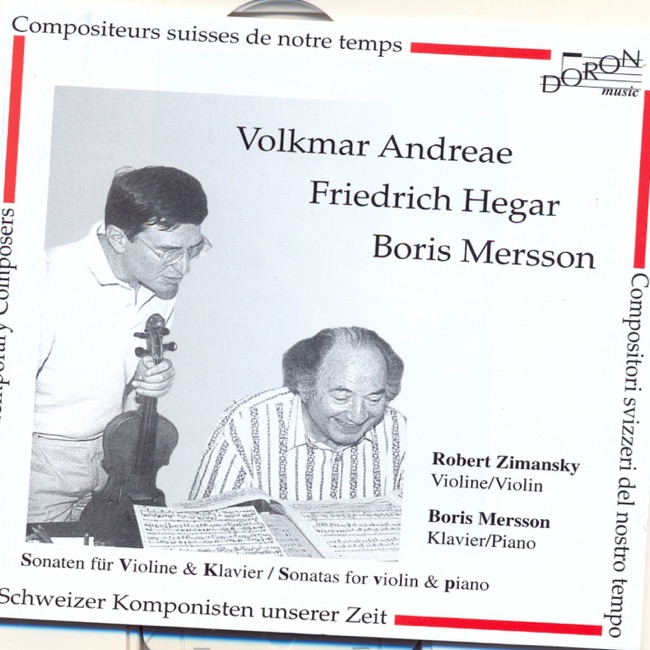
Friedrich Hegar
Artist Info
Role:ComposerCountry: SwitzerlandBirth:October 11, 1841 in Basel, SwitzerlandDeath:June 2, 1927 in Zürich, SwitzerlandPeriod:ModernGenre:ChamberVocalFriedrich Hegar was a Swiss composer, conductor, and violinist who lived from 1841 to 1927. He was born in Aarau, Switzerland, and showed an early interest in music. His father was a music teacher, and Hegar began playing the violin at a young age. He went on to study music at the Zurich Conservatory, where he was a student of Johann Carl Eschmann. After completing his studies, Hegar began his career as a violinist, playing in various orchestras throughout Europe. He also began composing music, and his early works were influenced by the Romantic style of the time. In 1870, he was appointed conductor of the Winterthur Symphony Orchestra, a position he held for 25 years. During this time, he also taught at the Zurich Conservatory. Hegar's compositions were well-received, and he became known for his skillful orchestration and use of folk melodies. He wrote a number of works for orchestra, including symphonies, overtures, and suites. One of his most famous works is his Symphony No. 1 in C minor, which was premiered in 1881. The symphony is notable for its use of Swiss folk melodies, which Hegar incorporated into the work in a way that was both innovative and respectful of tradition. In addition to his work as a composer and conductor, Hegar was also a respected music educator. He taught at the Zurich Conservatory for many years, and his students included the composer Frank Martin. Hegar was known for his rigorous teaching style, and he emphasized the importance of technical proficiency and musical expression. Hegar's later works show a shift away from the Romantic style and towards a more modernist approach. He began experimenting with atonality and other avant-garde techniques, and his music became more complex and challenging. Despite this, he remained committed to his roots in Swiss folk music, and many of his later works incorporate elements of this tradition. Hegar's legacy as a composer and conductor is significant. He was a pioneer in the use of folk music in classical compositions, and his work helped to establish a distinct Swiss musical identity. His influence can be seen in the work of later Swiss composers, such as Arthur Honegger and Frank Martin. Hegar's commitment to music education also had a lasting impact, and his teaching methods continue to be studied and emulated today. In conclusion, Friedrich Hegar was a Swiss composer, conductor, and violinist who made significant contributions to the world of classical music. His use of folk melodies in his compositions helped to establish a distinct Swiss musical identity, and his work as a music educator had a lasting impact on generations of musicians. Hegar's legacy continues to be felt today, and his music remains an important part of the classical repertoire.More....
Recent Artist Music
Copyright Ⓒ 2013 Davinci Finger. All rights reseved
Service Terms & Policy