


Sixto Manuel Herrero Rodes
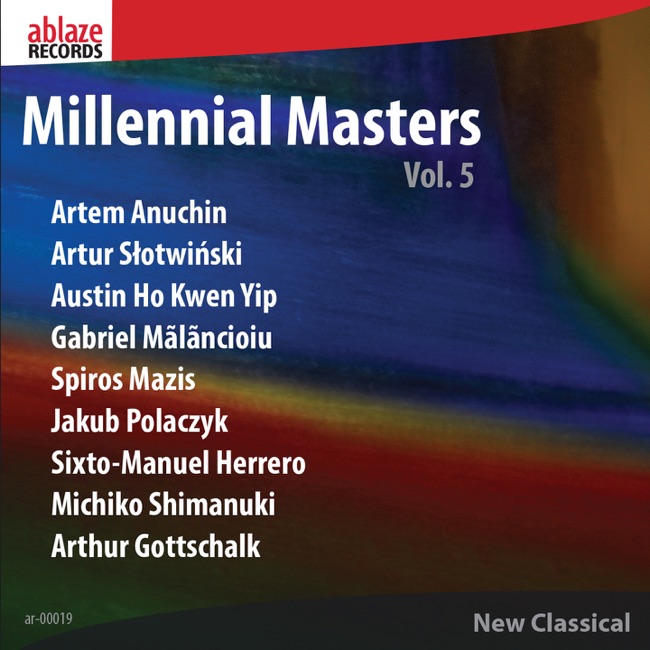
Artist Info
Role:ComposerBirth:1965 in SpainSixto Manuel Herrero Rodes was a Spanish composer born on January 6, 1937, in the city of Valencia. He was the youngest of three siblings and grew up in a family that was passionate about music. His father, a lawyer, was an amateur pianist, and his mother was a singer. From a young age, Herrero Rodes showed a keen interest in music, and his parents encouraged him to pursue his passion. Herrero Rodes began his musical education at the Conservatorio Superior de Música de Valencia, where he studied piano, harmony, and composition. He was a gifted student and quickly gained recognition for his talent. In 1959, he won first prize in the National Competition of Young Composers, which was organized by the Spanish Ministry of Education and Culture. After completing his studies in Valencia, Herrero Rodes moved to Paris to continue his musical education. He studied composition with Nadia Boulanger, one of the most influential music teachers of the 20th century. Boulanger had a profound impact on Herrero Rodes, and he often spoke of her as his mentor and inspiration. In Paris, Herrero Rodes also had the opportunity to meet and work with some of the leading composers of the time, including Pierre Boulez, Olivier Messiaen, and Karlheinz Stockhausen. These experiences had a significant influence on his musical style, which was characterized by a blend of traditional Spanish music and avant-garde techniques. Herrero Rodes returned to Spain in the early 1960s and began to establish himself as a composer. His early works were experimental and often challenging, reflecting his interest in contemporary music. However, he also drew on his Spanish heritage, incorporating elements of flamenco and other traditional music into his compositions. One of Herrero Rodes' most significant works from this period was his "Concerto for Piano and Orchestra," which he composed in 1964. The concerto was premiered by the Spanish National Orchestra, with Herrero Rodes himself as the soloist. The piece was well-received and established Herrero Rodes as one of the leading composers of his generation. Throughout the 1970s and 1980s, Herrero Rodes continued to compose prolifically, producing works for a variety of ensembles and instruments. He also became increasingly interested in electronic music, and in 1975, he founded the Electronic Music Studio of Valencia. The studio was one of the first of its kind in Spain and provided a platform for Herrero Rodes to experiment with new sounds and techniques. One of Herrero Rodes' most famous works from this period was his "Concerto for Guitar and Orchestra," which he composed in 1978. The concerto was written for the Spanish guitarist Narciso Yepes and was premiered by the Spanish National Orchestra. The piece was a critical and commercial success and is now considered one of Herrero Rodes' most significant works. In the 1990s, Herrero Rodes' music became more introspective and reflective. He began to draw on his personal experiences and emotions, creating works that were deeply personal and expressive. One of his most famous works from this period was his "String Quartet No. 2," which he composed in 1992. The piece was written in memory of his father, who had passed away the previous year, and is a poignant and moving tribute to his memory. Herrero Rodes continued to compose until his death in 2007.More....
Copyright Ⓒ 2013 Davinci Finger. All rights reseved
Service Terms & Policy