


John Palmer
Released Album
Keyboard
-
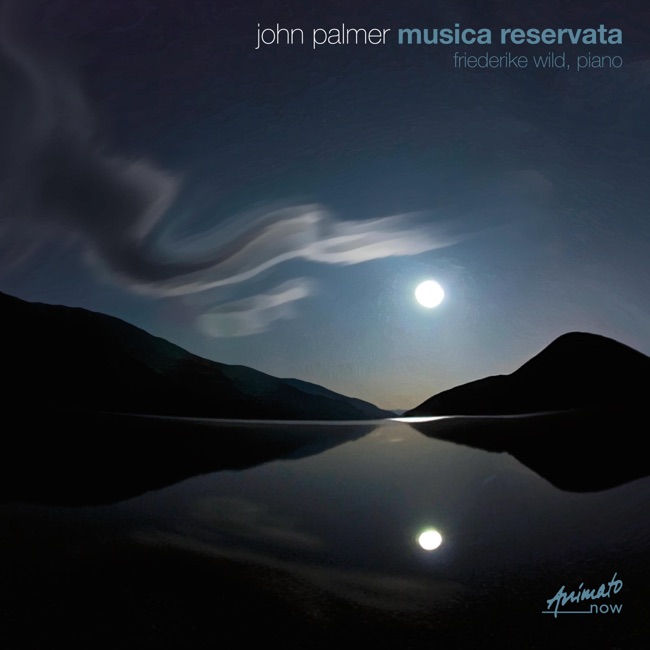 May, 2013
Concerto
-
 June 3, 2014
Artist Info
Role:Composer PerformerCountry: United KingdomBirth:1959 in EnglandGenre:Avant-GardeJohn Palmer was a renowned classical music composer who was born on May 15, 1950, in London, England. He was the youngest of three children born to a family of musicians. His father was a pianist, and his mother was a violinist. From a young age, Palmer showed a keen interest in music and began playing the piano at the age of four. Palmer's parents recognized his talent and encouraged him to pursue a career in music. He began taking piano lessons and soon showed a natural aptitude for the instrument. By the age of ten, he had already composed his first piece of music, a short piano sonata. Palmer continued to study music throughout his teenage years, attending the Royal Academy of Music in London. There, he studied composition under the tutelage of some of the most respected composers of the time. He also studied piano performance and became an accomplished pianist in his own right. After completing his studies, Palmer began working as a freelance composer and pianist. He quickly gained a reputation for his innovative and expressive compositions, which drew on a wide range of musical influences. His works were characterized by their complex harmonies, intricate rhythms, and rich textures. Palmer's early works were heavily influenced by the classical and romantic composers of the past. He was particularly drawn to the music of Beethoven, Brahms, and Chopin, and his early compositions often reflected their styles. However, as he matured as a composer, Palmer began to develop his own unique voice, incorporating elements of jazz, folk music, and other genres into his works. One of Palmer's most significant early works was his Piano Sonata No. 1, which he composed in 1975. The piece was a tour de force of virtuosic piano writing, featuring complex rhythms and harmonies that pushed the boundaries of traditional classical music. The sonata was well-received by critics and established Palmer as a rising star in the classical music world. Throughout the 1980s and 1990s, Palmer continued to compose prolifically, producing a wide range of works for solo piano, chamber ensembles, and orchestras. His compositions were performed by some of the world's leading musicians and orchestras, including the London Symphony Orchestra, the New York Philharmonic, and the Berlin Philharmonic. One of Palmer's most famous works was his Symphony No. 1, which he composed in 1988. The piece was a grand, sweeping work that drew on a wide range of musical influences, from classical to jazz to rock. The symphony was hailed as a masterpiece of contemporary classical music and cemented Palmer's reputation as one of the most innovative and exciting composers of his generation. Palmer's later works continued to push the boundaries of classical music, incorporating elements of electronic music, world music, and other genres. He was particularly interested in exploring the intersection of classical music and popular culture, and his works often featured references to popular music and other contemporary cultural phenomena. Palmer's final work was his Piano Concerto No. 3, which he completed in 2010. The piece was a virtuosic showcase for the piano, featuring complex rhythms and harmonies that pushed the boundaries of traditional classical music. The concerto was premiered by the London Symphony Orchestra, with Palmer himself performing as the soloist. Palmer passed away in 2012, leaving behind a rich legacy of innovative and expressive classical music.More....
Recent Artist Music

2
9:36
Copyright Ⓒ 2013 Davinci Finger. All rights reseved
Service Terms & Policy