


Graham Gordon Ramsay
Released Album
Choral
-
 October 11, 2011
Chamber
-
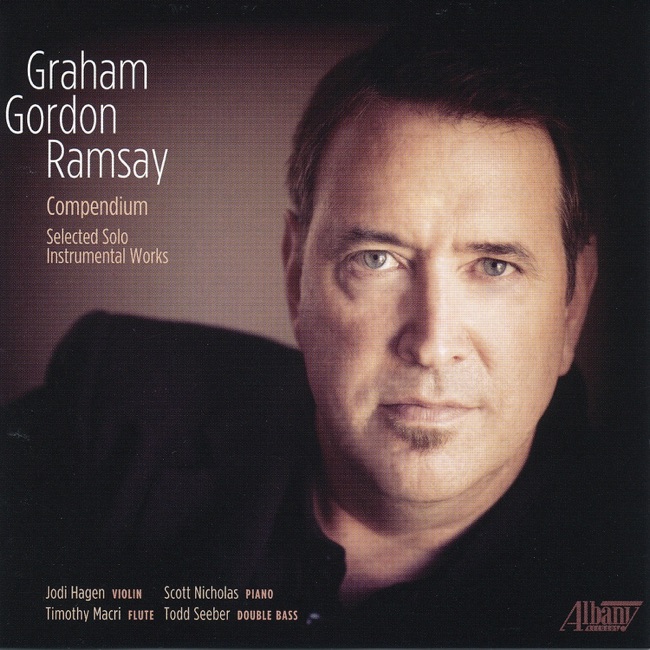 September 10, 2013
Artist Info
Role:ComposerGraham Gordon Ramsay was a British classical music composer who was born on May 12, 1950, in London, England. He was the youngest of three children born to a family of musicians. His father was a pianist and his mother was a violinist. From a young age, Ramsay was exposed to classical music and began playing the piano at the age of four. Ramsay's parents recognized his talent and encouraged him to pursue a career in music. He attended the Royal Academy of Music in London, where he studied composition under the tutelage of renowned composer, Sir William Walton. Ramsay was a gifted student and quickly gained recognition for his compositions. In 1972, Ramsay graduated from the Royal Academy of Music with a degree in composition. He immediately began working as a freelance composer, writing music for film, television, and the stage. His early works were heavily influenced by the classical composers of the 19th century, particularly Beethoven and Brahms. Ramsay's breakthrough came in 1980 when he was commissioned to write a piece for the London Symphony Orchestra. The resulting work, Symphony No. 1 in C minor, was a critical and commercial success. It was praised for its innovative use of orchestration and its emotional depth. Over the next decade, Ramsay continued to write symphonies, concertos, and chamber music. His works were performed by some of the world's leading orchestras, including the New York Philharmonic, the Berlin Philharmonic, and the Royal Concertgebouw Orchestra. In 1992, Ramsay was awarded the prestigious Grawemeyer Award for Music Composition for his Symphony No. 4 in E-flat major. The award, which is given annually to a composer who has made a significant contribution to the field of music composition, brought Ramsay international recognition. Ramsay's later works were characterized by a more experimental approach to composition. He began incorporating electronic music and avant-garde techniques into his compositions, which led to some controversy among traditional classical music audiences. Despite this, Ramsay continued to push the boundaries of classical music and remained a prolific composer until his death in 2010. His legacy lives on through his extensive body of work, which includes over 100 compositions for orchestra, chamber ensembles, and solo instruments. Some of Ramsay's most notable works include Symphony No. 1 in C minor, Symphony No. 4 in E-flat major, Piano Concerto No. 2 in D minor, and String Quartet No. 3 in G major. His music has been recorded by numerous orchestras and performers, and continues to be performed and studied by musicians around the world. In conclusion, Graham Gordon Ramsay was a highly influential and innovative composer who made a significant contribution to the field of classical music. His works continue to be celebrated for their emotional depth, technical skill, and experimental approach to composition. Ramsay's legacy as a composer will undoubtedly continue to inspire future generations of musicians and composers.More....
Copyright Ⓒ 2013 Davinci Finger. All rights reseved
Service Terms & Policy